

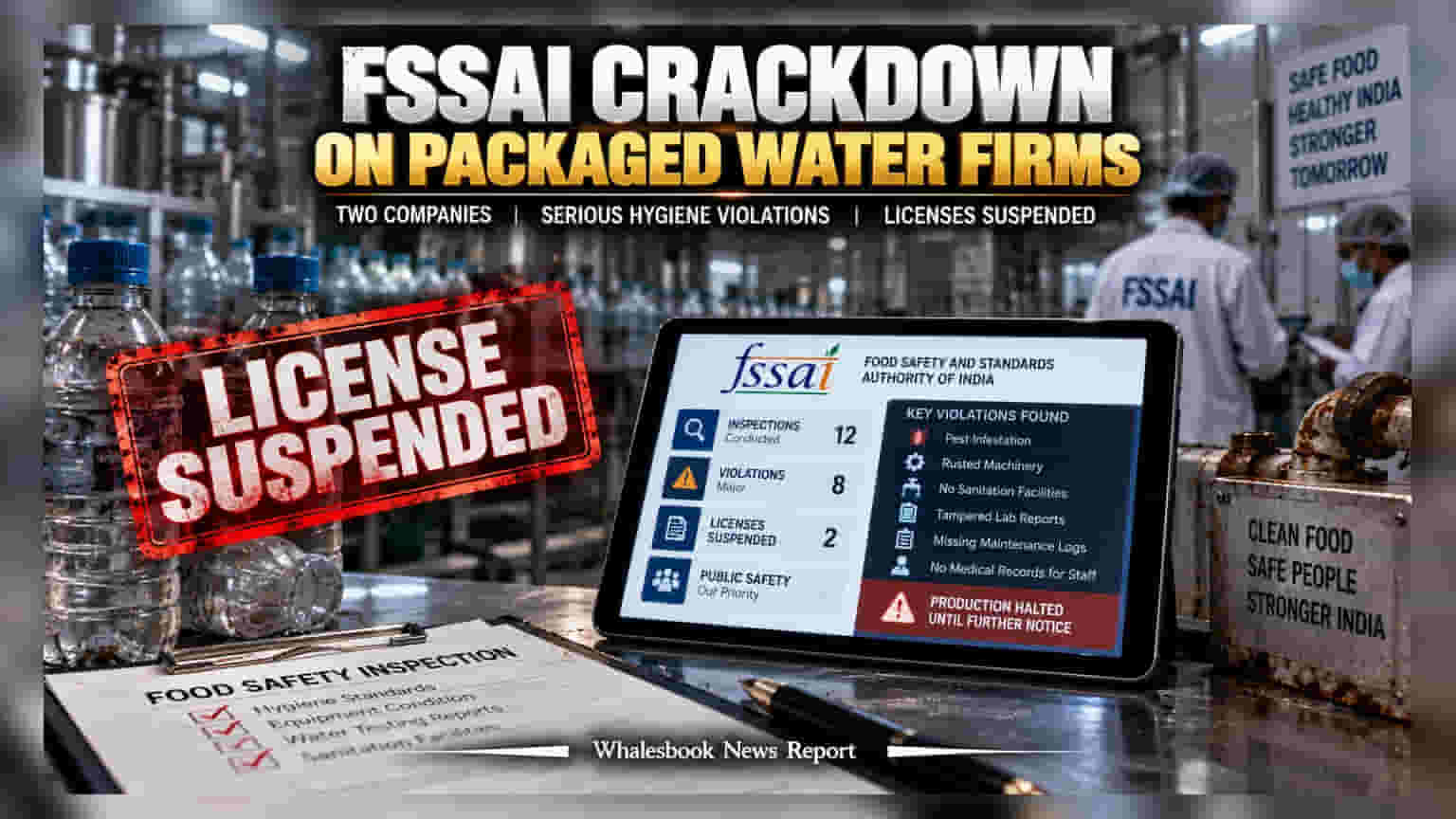
The Food Safety and Standards Authority of India (FSSAI) has suspended the operating licenses of West Bengal-based Kailash Formulation and Sanecure Water Project due to severe hygiene violations. The regulator uncovered serious issues ranging from pest infestations to falsified laboratory records. This action highlights the growing regulatory focus on safety and compliance standards across the packaged food and water industry.
The Food Safety and Standards Authority of India (FSSAI) has taken decisive action against the packaged water sector in West Bengal, suspending the operating licenses of two specific firms: Kailash Formulation and Sanecure Water Project. The decision follows a series of surprise enforcement drives conducted in the South Twenty-Four Parganas region, where regulators identified critical failures in basic safety and hygiene protocols.
During these inspections, authorities reported a concerning breakdown in maintenance and sanitation standards. Findings included widespread pest infestations, the use of rusted machinery, and a complete absence of necessary hand-washing and sanitation facilities for staff members. In the case of Sanecure Water Project, the investigation was particularly serious, revealing evidence of administrative fraud. Regulators found that the company’s water testing laboratory reports had been digitally altered, while essential logs for maintenance and medical records for food handlers were missing. Due to these lapses in safety and transparency, the regulator has halted all production activities at these facilities until further notice.
For the broader investment community, these companies operate as private, unlisted entities. Therefore, there is no direct impact on public stock markets or specific share prices. However, the action is highly relevant as it reflects a clear shift in the regulatory environment. The FSSAI is increasingly prioritizing strict oversight to curb systemic non-compliance across the country. This trend is visible in other recent enforcement actions, such as the intervention at a noodle manufacturing facility in Rajasthan, where thousands of kilograms of stock were seized over allegations of poor quality and misleading packaging.
This tightening of regulatory standards creates a new reality for the packaged food and beverage sector. Smaller and mid-sized companies may now face increased pressure to upgrade their infrastructure and improve testing processes to avoid operational shutdowns. For investors tracking listed FMCG and beverage companies, it is important to monitor how these businesses manage their compliance, supply chain safety, and quality control. Higher spending on safety measures may become a standard requirement rather than an option. The long-term risk for players who fail to maintain these standards includes not only the immediate loss of production licenses but also significant reputational damage and potential legal penalties under the Food Safety and Standards Act.
Investors should continue to track future updates from the regulator, as the FSSAI is likely to maintain this stricter stance on manufacturing quality. The key monitorable for the industry will be the potential for increased operating costs as companies across the sector work to align with these heightened safety expectations.