

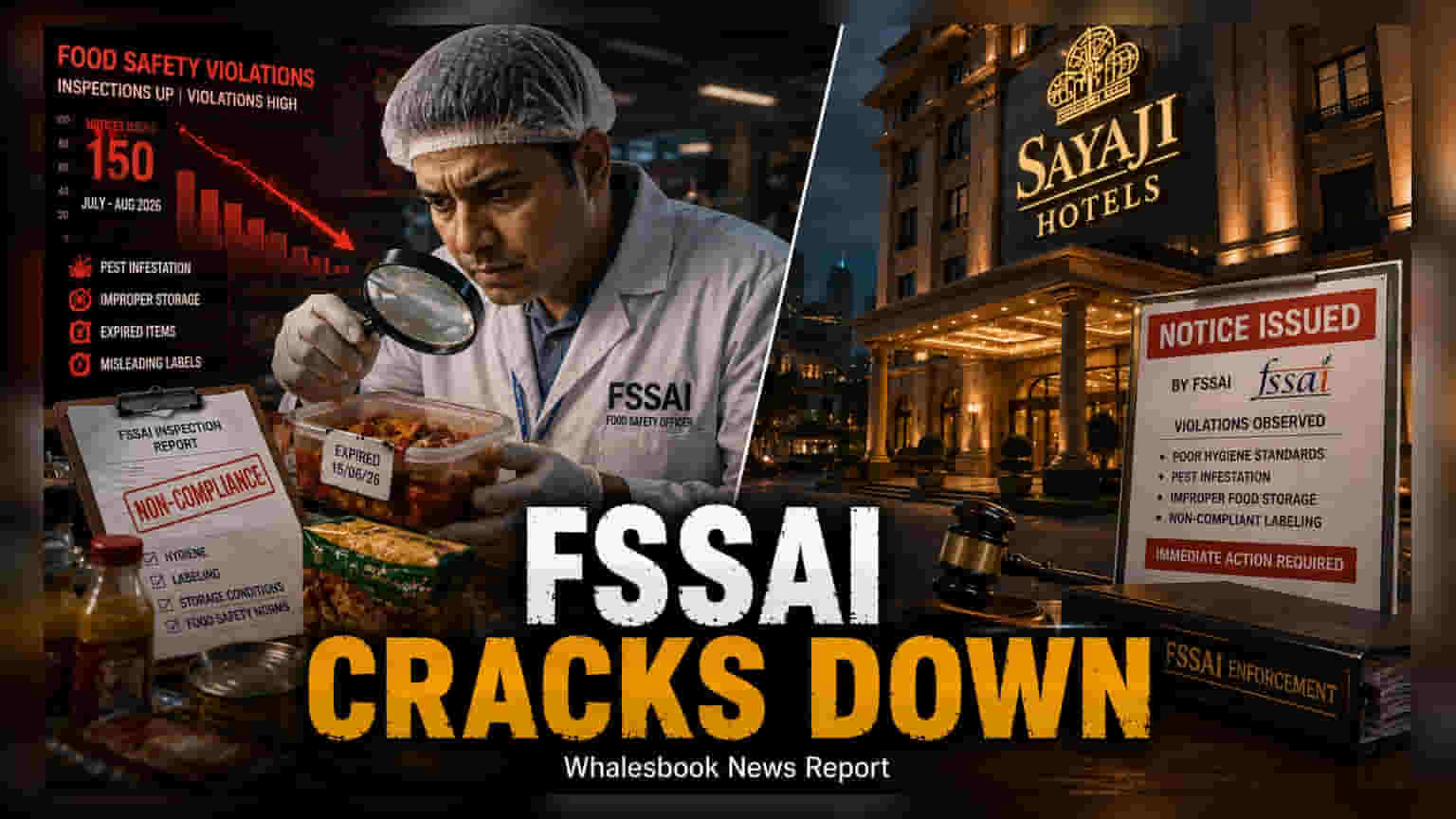
The FSSAI has launched a major enforcement campaign in August 2026, issuing over 150 notices to leading QSR chains, five-star hotels, and food brands. The drive focuses on hygiene violations and labeling non-compliance, leading to temporary license suspensions for some outlets. Investors should watch for potential operational disruptions and rising compliance costs for impacted companies.
The Food Safety and Standards Authority of India (FSSAI) has significantly increased its regulatory enforcement actions across the country, focusing on hygiene, product labeling, and safety standards. This drive, which has gained momentum throughout July and August 2026, involves widespread inspections that have resulted in 150 notices issued to major food companies, restaurant operators, and luxury hospitality establishments.
Impact on QSR Chains and Hotels
The enforcement efforts have targeted several prominent quick-service restaurant (QSR) chains and hotel properties. Reports and filings indicate that regulatory authorities have issued notices to various national QSR brands, with some instances of license suspensions. For example, outlets belonging to Domino's (operated by Jubilant FoodWorks) in locations like Mumbai and Karad have faced suspensions, as have some units of luxury hotel chains such as Sayaji Hotels. The nature of these actions typically stems from issues such as pest infestations, improper food storage, and the presence of expired items. For hospitality and restaurant businesses, even temporary closures of individual outlets can disrupt regional revenue streams and require immediate operational changes to restore compliance.
Wider Industry Scrutiny
Beyond restaurants and hotels, the regulatory spotlight has expanded to include food brands and quick-commerce platforms. Various notices have been served regarding product labeling, specifically targeting misleading claims related to health benefits or product composition. Beverage companies and several imported product distributors have also been directed to rectify labeling issues or withdraw products. Additionally, quick-commerce platforms have received notices regarding their fulfillment processes and labeling standards, marking a broad attempt by the regulator to tighten oversight across the entire food supply chain.
Business and Operational Implications
For investors, these developments highlight several monitorable factors. First is the risk of operational disruption; immediate closures directly limit the sales capacity of the impacted outlets. Second, companies may face increased compliance costs as they invest in better monitoring, hygiene testing, and administrative processes to meet stricter regulatory expectations. Finally, there is the risk to brand equity. When hygiene or safety failures become public, they can damage consumer trust, which is a key intangible asset for QSR and hospitality companies.
Investors may monitor future management commentary from these companies regarding their compliance spending and steps taken to rectify the specific issues raised by the FSSAI. The final financial impact will depend on the duration of these suspensions, the scale of corrective measures required, and whether the operational issues are isolated incidents or point to broader systemic problems within their supply chains.