 Whalesbook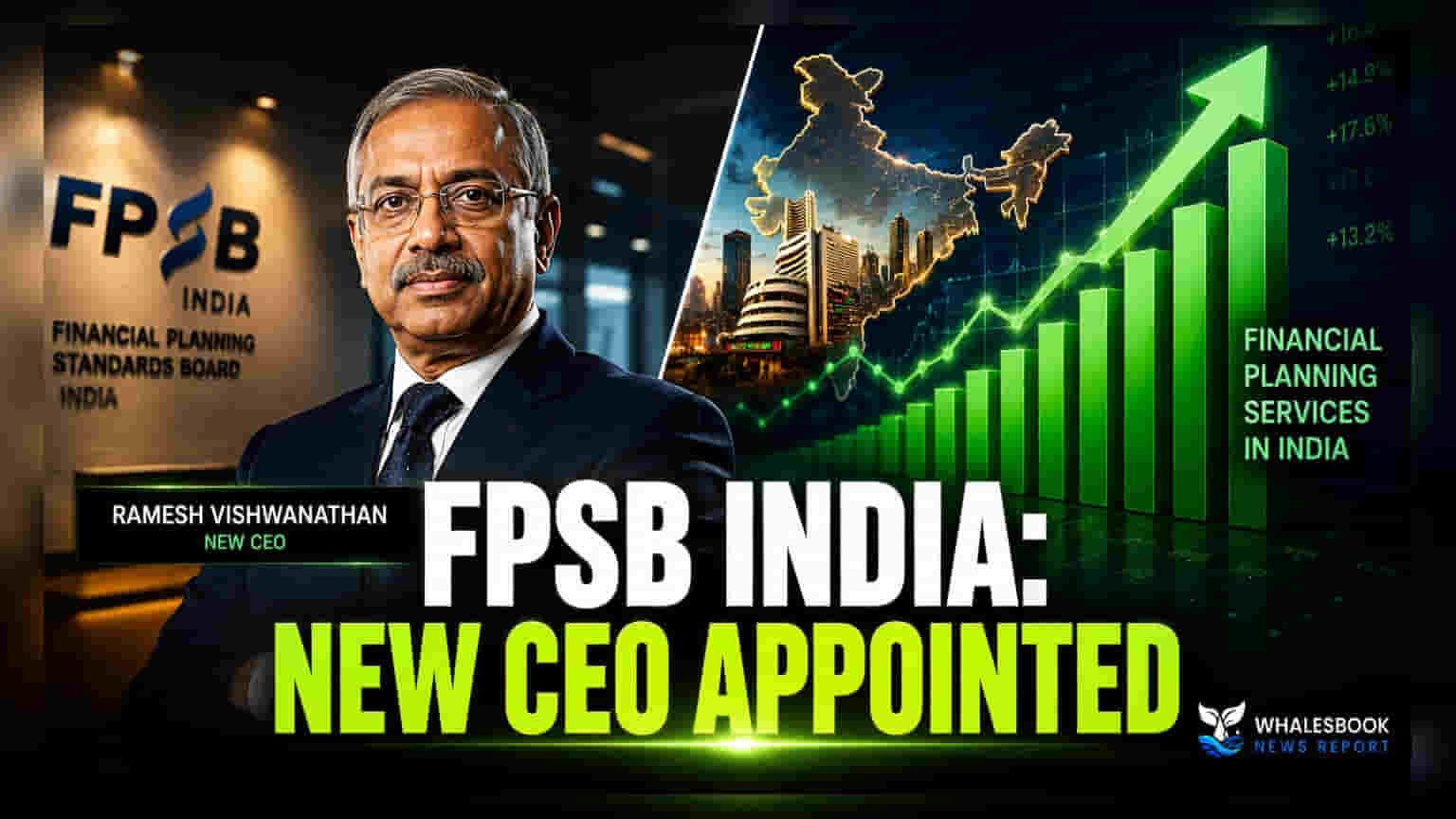


The Scaling Mandate
The appointment of Ramesh Vishwanathan as Chief Executive Officer of FPSB India arrives at a critical juncture for the domestic financial services sector. While the organization reported a 9.9% year-on-year increase in Certified Financial Planner (CFP) professionals through 2025—reaching 3,534 total practitioners—this figure remains statistically negligible against India's massive population and expanding wealth pool. Vishwanathan inherits a mandate that transcends mere recruitment; he is tasked with professionalizing an advisory ecosystem that is currently struggling to keep pace with rapid retail participation and increasingly complex household financial needs.
The Structural Talent Deficit
The fundamental friction in the Indian market is the widening chasm between the supply of credentialed advisors and the demand for institutional-grade financial guidance. Previous leadership and global executives have openly acknowledged that the current number of CFP-certified professionals is insufficient to meet the needs of a nation with over 1.4 billion people and a rapidly digitizing investment culture. The market is currently populated by a high volume of informal, often non-fiduciary, entities. Vishwanathan’s success will likely be measured by his ability to position the CFP designation not just as a badge of excellence, but as a mandatory standard that separates high-integrity, holistic wealth management from product-driven distribution.
The Forensic Risk: Trust and Tech Overload
Beyond the recruitment challenge, the organization faces significant headwinds in an era of aggressive digital transformation and shifting investor behavior. The rise of AI-driven robo-advisory tools and low-cost digital platforms creates a distinct threat to human-centric planning. The bear case for the sector centers on whether human-led certification bodies can remain relevant when cost-sensitive retail investors opt for algorithmic solutions. Furthermore, the regulatory environment governed by SEBI continues to tighten, forcing a pivot from commission-based sales models to fee-based, fiduciary frameworks. This transition is naturally hostile to incumbents who have historically thrived on volume-driven compensation, making the path to widespread CFP adoption a potential site of friction for existing industry players who view new, higher standards as a competitive, rather than collaborative, threat.
Strategic Horizon
Vishwanathan’s background in building strategic partnerships and customer-centric innovation will be tested as he attempts to harmonize the interests of banks, fintech firms, and independent wealth practices. The long-term objective remains the integration of the CFP certification into the mainstream financial infrastructure—a goal bolstered by recent regulatory progress, such as the PFRDA’s move to permit CFP professionals to act as pension agents. Future growth will depend on whether he can effectively translate the 'value of advice' into actionable outcomes for a broader demographic, moving the industry further away from transactional mindsets toward sustainable, long-term wealth management.