 Whalesbook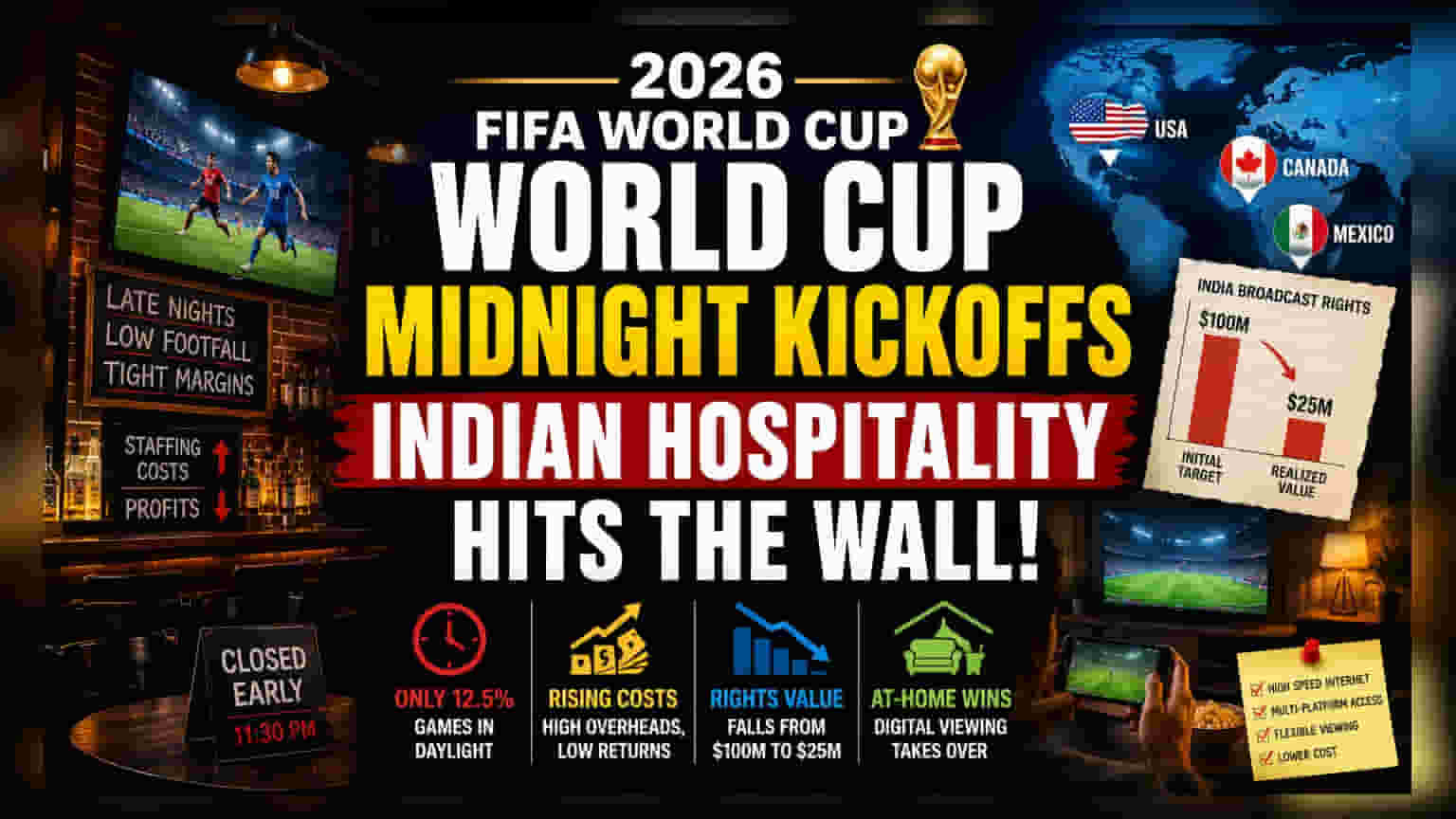


The impending 2026 FIFA World Cup has created an unprecedented operational friction point for the Indian hospitality sector. While tournament organizers and media partners anticipate global enthusiasm, local venue operators are facing a stark reality: the geographical location of the host nations—the United States, Canada, and Mexico—has decimated the commercial viability of prime-time sports gatherings in India. Unlike the 2022 Qatar edition, which benefited from favorable time zones that allowed for consistent evening match traffic, the 2026 schedule forces a decoupling of the live sports experience from the traditional out-of-home dining model.
The Operational Mismatch of the Midnight Problem
The fundamental challenge lies in the sheer lack of daylight hours available for live broadcasts in the Indian subcontinent. Data indicates that only 12.5% of the tournament’s 104 games will occur during daylight hours in India, with the vast majority kicking off well after 10 PM IST. For sports bars and pubs, this timeline creates a hostile operating environment. Maintaining a full-service hospitality environment requires significant overhead—staffing, energy, and security—yet the potential for customer throughput is capped by strict municipal closing times and the natural attrition of diners who cannot sustain late-night hours on weeknights. This creates a high fixed-cost trap where establishments must bet on late-night crowds that are statistically unlikely to materialize for non-marquee, midweek fixtures.
The Structural Weakness of Football Monetization
Beyond the logistical hurdle of operating hours, the Indian sports market is facing a broader commercial correction. Broadcasters and rights holders have already signaled trouble; initial valuation expectations for the Indian broadcast rights package faced steep declines, dropping from an initial $100 million target to realized valuations closer to $25 million. This reflects a shift in how media companies perceive the value of non-cricket sports. In the Indian context, cricket remains the gold standard for monetization because it allows for frequent ad breaks—after every over, wicket, and boundary—whereas football’s restrictive ad windows limit revenue generation. This inability to extract premium advertising value during live events compounds the issue for hospitality operators, who rely on high-volume spenders to justify premium pricing during big-ticket sporting events.
The Forensic Bear Case: Regulatory and Supply Chain Risks
Investors in the hospitality space should view the tournament with skepticism, particularly regarding its ability to drive tangible, net-new revenue. The sector is already grappling with systemic headwinds, including volatile commercial fuel costs and regulatory scrutiny regarding turnover reporting. Many operators currently prioritize streamlining operations to manage tighter margins, often cutting elaborate menu options to focus on high-efficiency, fast-cooking items. Betting on a revenue spike from a tournament that restricts peak-hour dining is a high-risk gamble. Furthermore, the rising trend of 'mindful drinking' and the shift toward premium mocktails and functional beverages, while profitable, may not be enough to compensate for the lost footfall of the traditional, alcohol-led sports viewing crowd. Establishments that fail to pivot toward flexible, delivery-first models or cost-efficient service offerings risk finding themselves overstaffed and under-utilized during the tournament period.
The Future Outlook
The long-term trend in the Indian sports media ecosystem is clearly diverging from the physical venue model. As rights holders move toward multi-platform digital distribution, the emphasis has shifted to at-home viewing, accelerated by widespread high-speed internet penetration. The 2026 World Cup is likely to cement this transition, serving as a case study for why future global events will increasingly favor streaming services over traditional hospitality venues. For the Indian hospitality industry, the path forward involves focusing on diversified revenue streams rather than relying on the fleeting, and increasingly inaccessible, spectacle of global mega-events.