 Whalesbook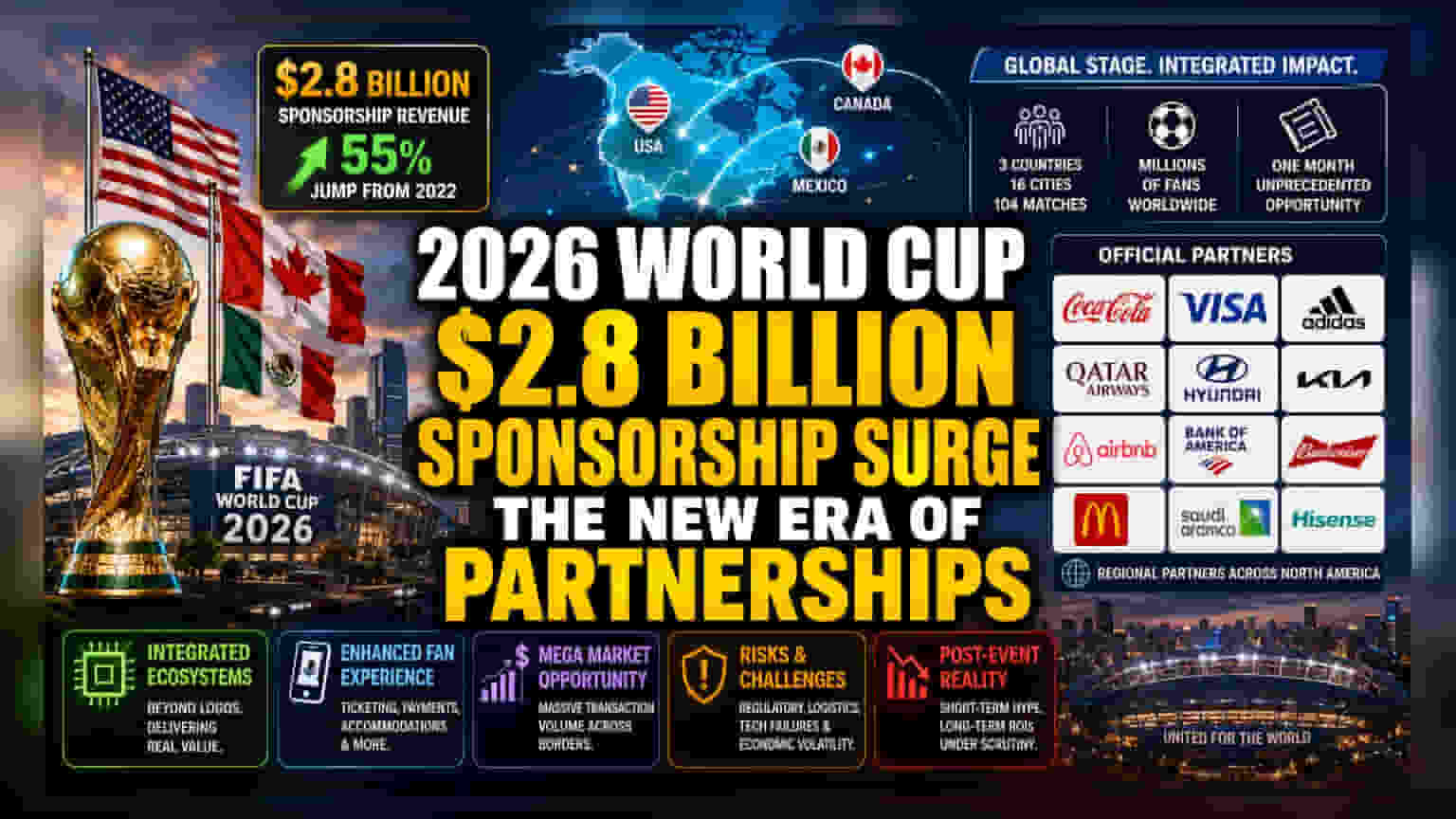


The Commercial Velocity of 2026
While the headline figure of $2.8 billion in sponsorship revenue reflects a 55% jump from the 2022 tournament, the true financial architecture of the 2026 World Cup lies in its shift toward integrated consumer ecosystems. FIFA has moved beyond traditional logo placement, opting for deep service-layer partnerships that embed corporate platforms into the attendee experience. This is best exemplified by the partnership with Airbnb, which aims to leverage the tournament to solve accommodation shortages across North American host cities, effectively turning the platform into a critical infrastructure partner rather than a mere advertiser.
Strategic Alignment and Sector Sensitivity
Market participants should observe the varying levels of exposure across the partner lineup. The involvement of Visa and Bank of America signals a focus on the massive transaction volume expected during the month-long event, with both institutions positioning for a spike in cross-border payment activity. Conversely, the inclusion of Saudi Aramco highlights the tournament's role as a vehicle for global brand repositioning, contrasting with the consumer-staple focus of partners like Coca-Cola and McDonald's. Unlike previous cycles, the 2026 model prioritizes regional tiers, allowing FIFA to capture localized market value that might otherwise be lost in a purely global-only sponsorship structure.
The Forensic Risk Assessment
Beneath the surface of projected revenue growth, the event carries significant operational and reputation risks. The massive scale of the tournament across three countries creates a complex regulatory and logistical environment. For consumer-facing brands like Airbnb or DoorDash, the reliance on real-time app performance and physical infrastructure availability leaves them vulnerable to technical failures or service bottlenecks that could damage brand equity. Furthermore, the reliance on regional sponsors introduces exposure to currency volatility and localized economic downturns in the host regions. Investors should also note the historical volatility associated with major sporting events, where the post-event hangover often results in reduced capital expenditure and marketing pullbacks among mid-tier partners who over-leveraged their budgets for short-term visibility.
Forward Trajectory
Analysts are currently monitoring the anticipated conversion of these sponsorships into localized revenue for the participating firms. While the upfront investment is substantial, the long-term utility of the integrated platforms—particularly in digital ticketing and logistics—will likely dictate whether these partnerships offer a tangible return on investment or simply represent an expensive exercise in visibility.