 Whalesbook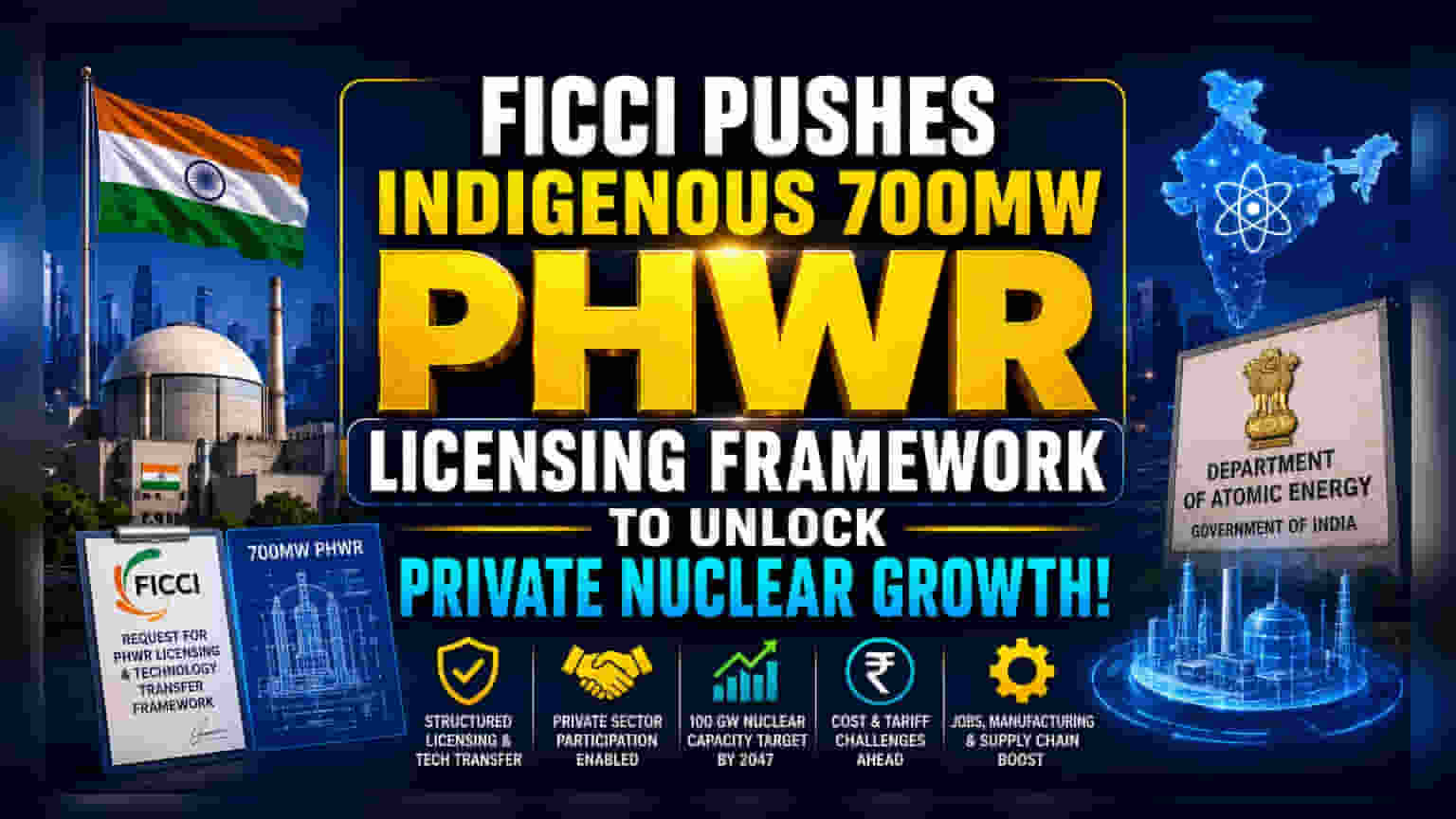


What Happened
The Federation of Indian Chambers of Commerce and Industry (FICCI) has formally requested the government to create a structured framework for licensing and technology transfer of India’s indigenous 700MW Pressurised Heavy Water Reactor (PHWR) to private sector developers. This proposal is aimed at streamlining the deployment of nuclear energy projects, which have traditionally been the exclusive domain of state-run entities like the Nuclear Power Corporation of India Limited (NPCIL).
By establishing a standardized design and clearer licensing guidelines, the industry body aims to empower private companies to forge partnerships and make long-term manufacturing commitments. The initiative is part of a broader push to align India's nuclear energy program with the country's target of reaching 100 GW of installed nuclear capacity by 2047.
Why This Matters For Investors
The move represents a significant structural shift in India’s energy sector. Historically, nuclear power in India has been a state-controlled monopoly under the Atomic Energy Act. However, recent legislative reforms—including the passage of the SHANTI Act—have legally opened the sector to private participation. If the government accepts FICCI’s proposal for indigenous tech transfer, it could lower the barrier to entry for domestic conglomerates looking to enter the clean energy space.
This shift allows private firms to consider nuclear power as a strategic asset for baseload clean energy, complementing intermittent solar and wind capacity. For listed entities like NTPC, which are already exploring partnerships with global players like Rosatom and EDF, or other engineering majors that could participate in the supply chain, this framework is critical for assessing the economic feasibility and scale of future projects.
The Cost and Tariff Challenge
A key monitorable for investors is the economics of these projects. A September 2025 report indicated that PHWR reactors have substantial capital costs, with electricity tariffs potentially reaching ₹6 to ₹9 per unit upon commissioning. Achieving competitive tariffs—vital for long-term viability—depends heavily on reducing these capital costs through indigenization, fleet-mode construction, and standardized designs.
While the prospect of private participation is gaining momentum, the actual financial impact will depend on the government's ability to balance attractive investment returns with affordable power tariffs. Investors should note that nuclear projects have long gestation periods and high capital intensity, which require specialized financing models and clear regulatory support.
Risks and Regulatory Environment
While the sector is opening up, it is not without challenges. Investors must remain mindful of the complexities involved in nuclear energy. Regulatory oversight remains stringent, and the liability framework, though reformed by the SHANTI Act, still presents a unique risk profile compared to other infrastructure sectors. Other hurdles include long project execution timelines, land acquisition difficulties, and the need for rigorous safety compliance, which can lead to unforeseen project delays or cost overruns.
Furthermore, the success of private entry depends on the operational framework that the Department of Atomic Energy and other regulators finalize. The market will look for details on how risks—such as construction delays or fuel supply security—will be allocated between the government and private operators.
What Investors Should Track
Moving forward, the primary monitorables are the government’s response to the licensing framework proposal and the rollout of specific guidelines for private sector entry. Investors should track:
- Official notifications on PHWR technology transfer protocols.
- Any move toward viability gap funding or tariff guarantees that could impact project profitability.
- Updates on NTPC’s and other conglomerates’ nuclear project roadmaps.
- Progress on fleet-mode construction efficiency, which is essential to lowering overall capital costs.
The evolution of the nuclear sector from a state monopoly to a regulated market is a multi-year transition. Clear policy frameworks will be the most critical indicator of whether private sector participation can meaningfully contribute to the 100 GW by 2047 target.