

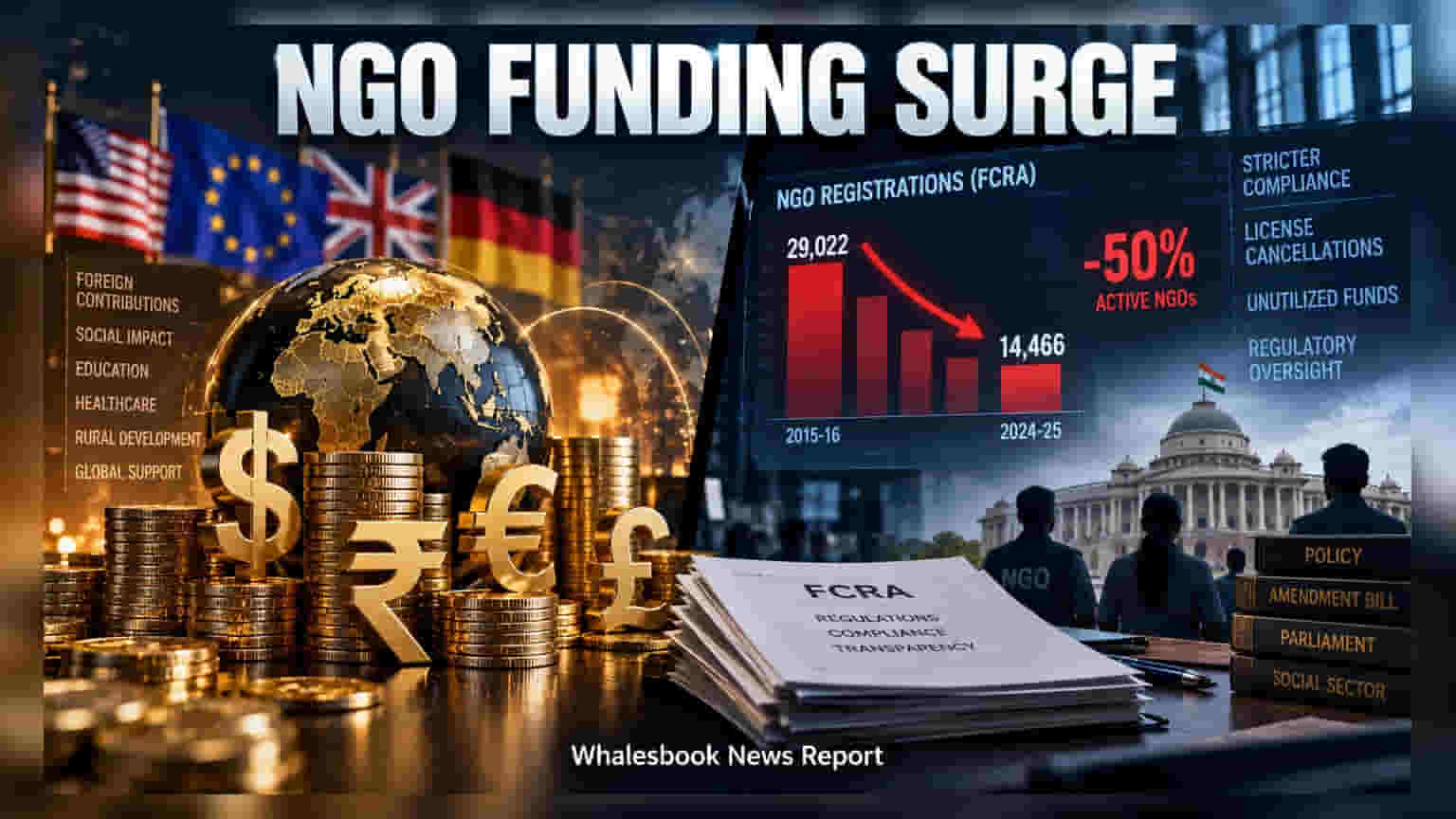
India’s active FCRA-registered NGOs have halved to 14,466 over the last decade due to stricter compliance rules, yet foreign funding has risen to ₹22,974 crore in 2024-25. The government is currently reviewing new legislation that may introduce stricter asset control powers, triggering a high-stakes legislative debate regarding the oversight of the non-profit sector.
The regulatory framework for foreign contributions in India has undergone a significant transformation over the past decade. Data presented to the Joint Committee of Parliament indicates that the number of active non-governmental organizations (NGOs) registered under the Foreign Contribution (Regulation) Act (FCRA) has fallen by 50%, declining from 29,022 to 14,466. This sharp reduction is largely attributed to administrative consolidation and stricter compliance requirements. Government records show that 91% of the license cancellations resulted from the failure of organizations to file their mandatory annual returns.
Despite the reduction in the number of active entities, the total volume of foreign capital entering the Indian social sector has grown. In the 2024-25 fiscal year, foreign contributions reached ₹22,974 crore, up from ₹17,832 crore in 2015-16. This suggests a trend of sector consolidation, where funding is increasingly concentrated among fewer, larger, and more compliant organizations. The United States remains the largest source of foreign funds, contributing ₹12,113 crore in the latest fiscal year, followed by the United Kingdom and Germany. Within India, the capital city of Delhi remains the primary hub for receipt, accounting for ₹5,834 crore of the total inflow.
The sector-specific focus of these funds remains heavily tilted toward social work and education, which together attracted over ₹20,000 crore. A point of concern noted in the data is the high volume of unutilized capital. Approximately ₹35,968 crore remains currently unspent, with a significant portion of these funds held in fixed deposits, raising questions about fund deployment efficiency and the operational capacity of the remaining NGOs.
Legislative tensions are currently running high as the Joint Committee of Parliament reviews a proposed amendment bill. The government maintains that stricter oversight is necessary to ensure financial transparency and prevent the potential misuse of funds for activities like forced conversions. The proposed powers under discussion include provisions that would allow the state to seize assets from NGOs if their licenses are revoked or if they cease operations. Opposition members, however, have criticized these measures, arguing that they are punitive and may disproportionately affect minority-led institutions. The committee is expected to submit its final report before the upcoming Winter Session, which will likely dictate the future operational rules for foreign-funded non-profits. Investors and stakeholders in the social sector will be watching the final report for clarity on future compliance costs and the extent of state oversight on NGO assets.