

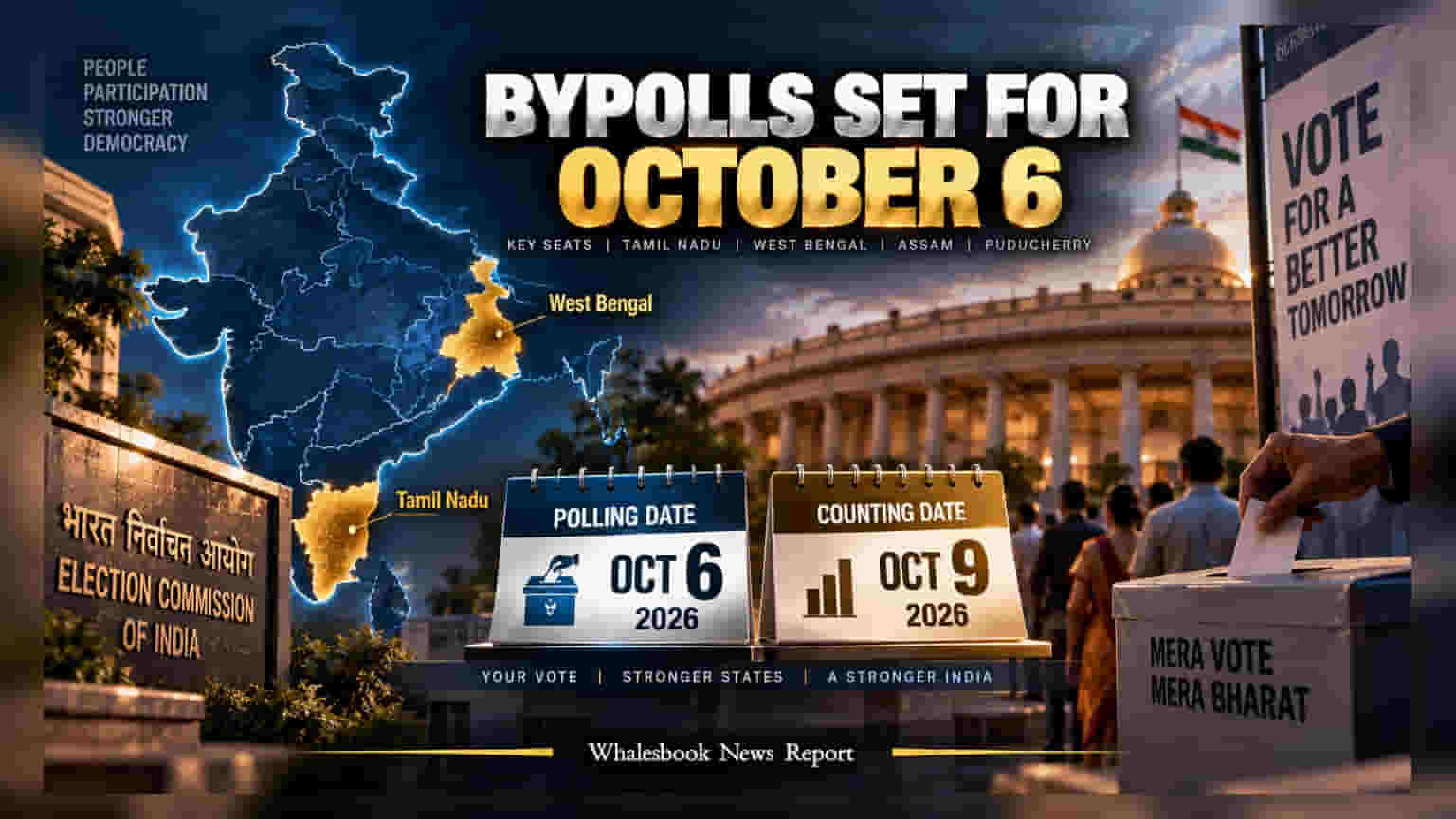
The Election Commission of India has scheduled by-elections for five Assembly seats and one Lok Sabha constituency across Tamil Nadu, West Bengal, Puducherry, and Assam. Voting will take place on October 6, 2026, with results to be declared on October 9. The Model Code of Conduct is now in effect in these regions, temporarily impacting administrative policy announcements.
The Election Commission of India (ECI) has officially announced the schedule for by-elections across multiple states, addressing legislative vacancies that emerged following recent political realignments. Polling is set for October 6, 2026, and the counting of votes will take place on October 9, 2026. This process covers five Assembly constituencies and one Lok Sabha seat.
The affected Assembly constituencies include Madurantakam and Dharapuram in Tamil Nadu, Thattanchavady in Puducherry, and the Nandigram and Rejinagar seats in West Bengal. Additionally, the Nagaon Lok Sabha constituency in Assam will also head to the polls on the same day. These vacancies arose due to various factors, including resignations of sitting legislators and decisions by representatives to retain other seats following electoral successes.
With the announcement, the Model Code of Conduct has come into immediate effect in the specific districts where these by-elections are being held. For investors and regional businesses, this is a standard administrative development. The Model Code of Conduct restricts the state and central governments from announcing new schemes, launching projects, or making policy decisions that could influence voters in these specific constituencies until the election process is complete.
While this is a political event and not a corporate disclosure, investors often monitor regional elections to gauge political stability, which can influence the business environment in the respective states. There is no direct financial impact on the stock market or corporate earnings from this announcement. The immediate effect is limited to the temporary pause in local government policy announcements in the affected areas. Stakeholders may watch for the election outcomes, as the results could reflect local political sentiments and influence future administrative priorities in these states.