 Whalesbook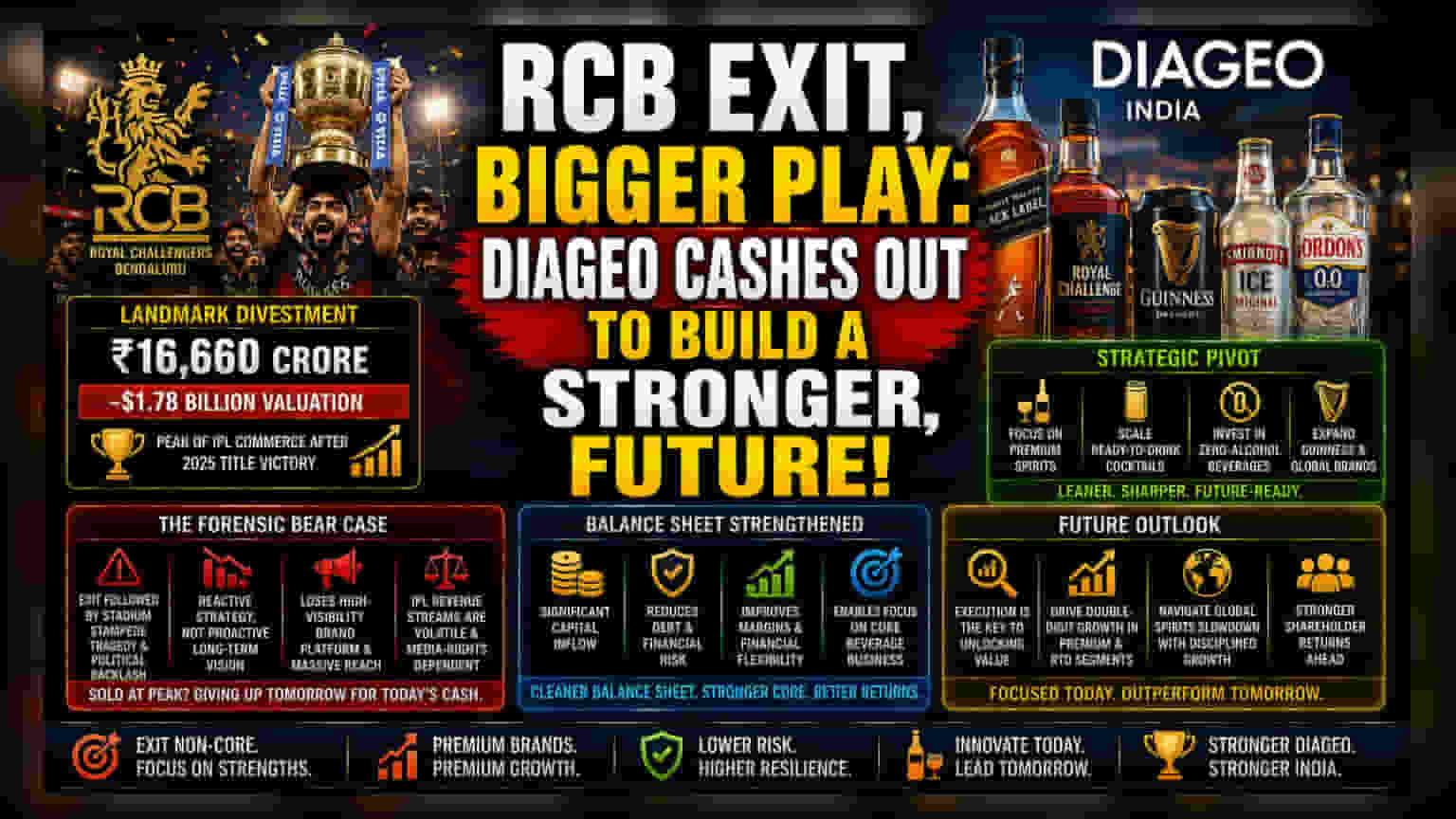


The Valuation Reality Check
The divestment of Royal Challengers Bengaluru (RCB) for ₹16,660 crore represents more than a simple corporate housecleaning. It is a landmark exit from a high-growth, high-profile asset that had become a lightning rod for operational and reputational risk. While management emphasizes a return to core beverage operations, the valuation—at roughly $1.78 billion—captures the peak of the Indian Premier League’s recent commercial explosion, following the team's maiden title victory in 2025. This deal successfully offloads a non-core entity that, despite its massive popularity, sat awkwardly within a portfolio primarily driven by global spirits and premium Scotch brands.
The Strategic Pivot
Diageo India, through its subsidiary United Spirits Limited, has long operated under the mandate of streamlining its balance sheet. The company has aggressively moved to reduce debt and improve margins, a mission now reinforced by the capital influx from the RCB sale. Moving forward, the focus shifts to 'future-ready' categories: zero-alcohol beverages, ready-to-drink cocktails, and the aggressive scaling of global power brands like Guinness in the domestic market. By exiting the sports franchise, management is betting that the premiumization trend in Indian spirits will deliver more stable, long-term shareholder returns than the volatile, media-rights-dependent revenue streams of franchise cricket.
The Forensic Bear Case
Critics argue that the timing of the exit suggests reactive management rather than proactive strategy. The decision followed a series of public controversies in Bengaluru, including a tragic stadium stampede that escalated into political friction, potentially hindering the franchise’s operational stability. Unlike competitors such as Anheuser-Busch or local players who have remained focused on singular market segments, Diageo has been forced to navigate a complex regulatory and social environment in India. Furthermore, by selling at what may be the height of the IPL valuation cycle, the company effectively trades a high-visibility marketing asset—which served as a vital, if surrogate, brand platform—for cash in a market where marketing spend is increasingly constrained by regulatory hurdles.
Future Outlook
The market’s interpretation of this move rests on execution. Investors are looking for tangible results from the promised reinvestment in premium spirits and the expansion of the ready-to-drink portfolio. With a cleaner balance sheet and the elimination of sports-related public relations risks, the company is positioning itself for a leaner, more focused operational profile. Analysts remain focused on whether this sharpened internal focus can yield the sustained double-digit growth required to justify its current valuation as it navigates a broader global deceleration in spirits consumption.