

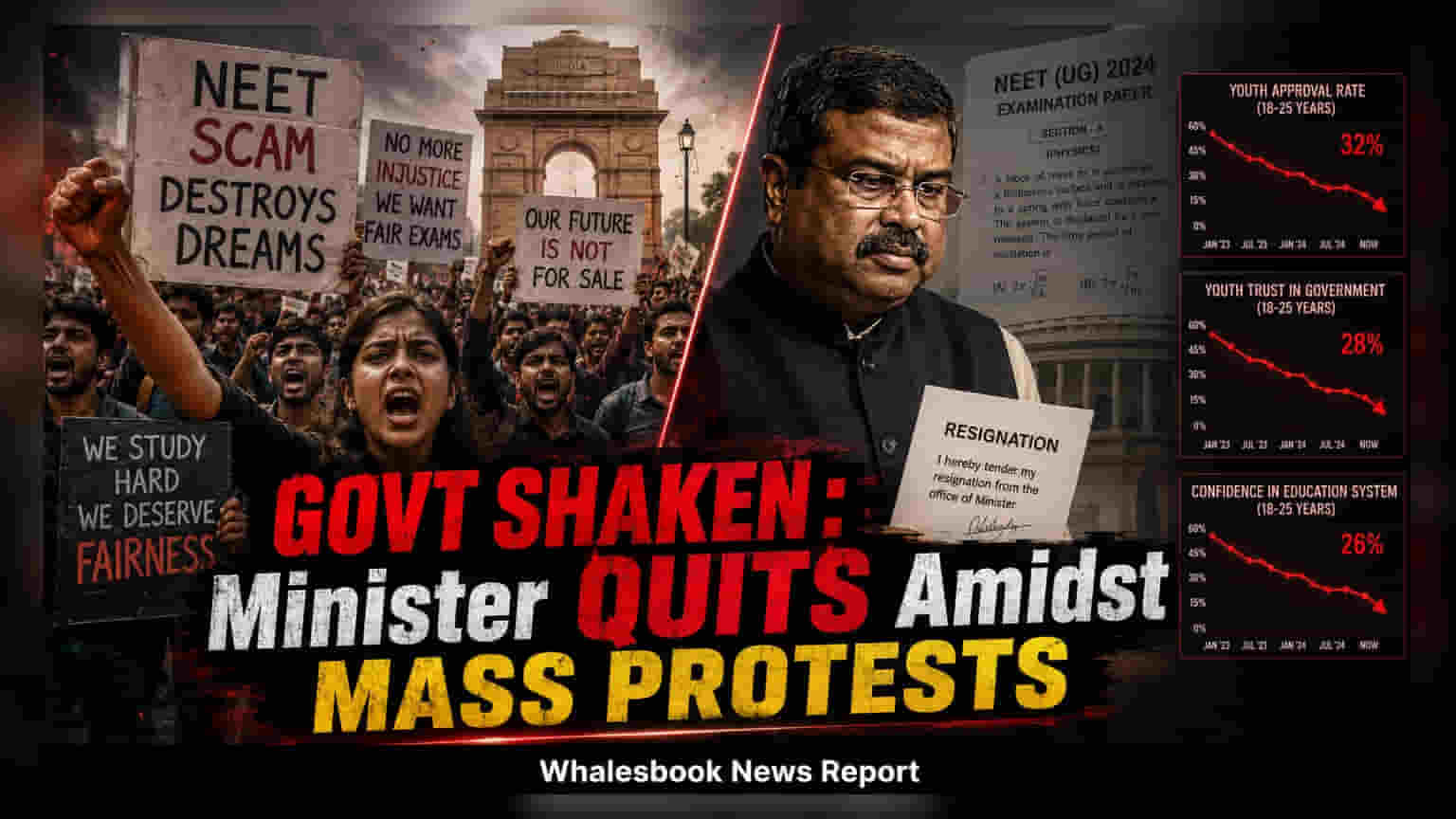
Union Education Minister Dharmendra Pradhan resigned on July 25, 2026, following widespread protests over the NEET-UG exam paper leaks. In response, the government appointed Pralhad Joshi as the new minister and terminated 47 National Testing Agency officials to address systemic concerns. This leadership change marks a significant move to stabilize the education sector and address youth dissatisfaction.
Following weeks of protests in New Delhi centered on the management of the NEET-UG 2026 entrance examination, Union Education Minister Dharmendra Pradhan stepped down from his post on July 25, 2026. The resignation came after sustained agitation by a youth-led movement that mobilized thousands of protesters at Jantar Mantar. The protests, which highlighted widespread frustration regarding examination paper leaks and unemployment, posed a significant challenge to the government's narrative on governance and accountability.
In the wake of these events, the government acted to overhaul the National Testing Agency (NTA), the body responsible for conducting major entrance exams. Authorities confirmed the termination of 47 officials within the agency, a step aimed at purging systemic inefficiencies. Pralhad Joshi has been appointed as the new Union Minister of Education, tasked with stabilizing the administration and overseeing the implementation of stricter examination protocols. The government has also initiated steps to strengthen the Public Examinations (Prevention of Unfair Means) Act to prevent future irregularities.
From a governance perspective, the protest movement—which adopted the satirical name 'Cockroach Janta Party'—succeeded in bringing national attention to flaws in the examination system. Analysts note that while the agitation has largely subsided, the event underscored the sensitivity of the youth demographic and the middle class regarding transparency in public service and competitive examinations. The government's swift decision to change leadership and initiate administrative action is seen as a move to regain public trust and minimize political friction.
For investors and observers tracking the broader political climate, the key monitorable will be the effectiveness of the new leadership in implementing structural reforms. The educational sector is a critical component of the country’s human capital development, and policy stability in this area is vital. While the immediate political storm has passed, the long-term impact on the government’s policy-making process and its ability to manage large-scale public grievances remains a point of interest. The administration will likely prioritize restoring confidence in national testing mechanisms to avoid further disruption to academic and career calendars for students across the country.