

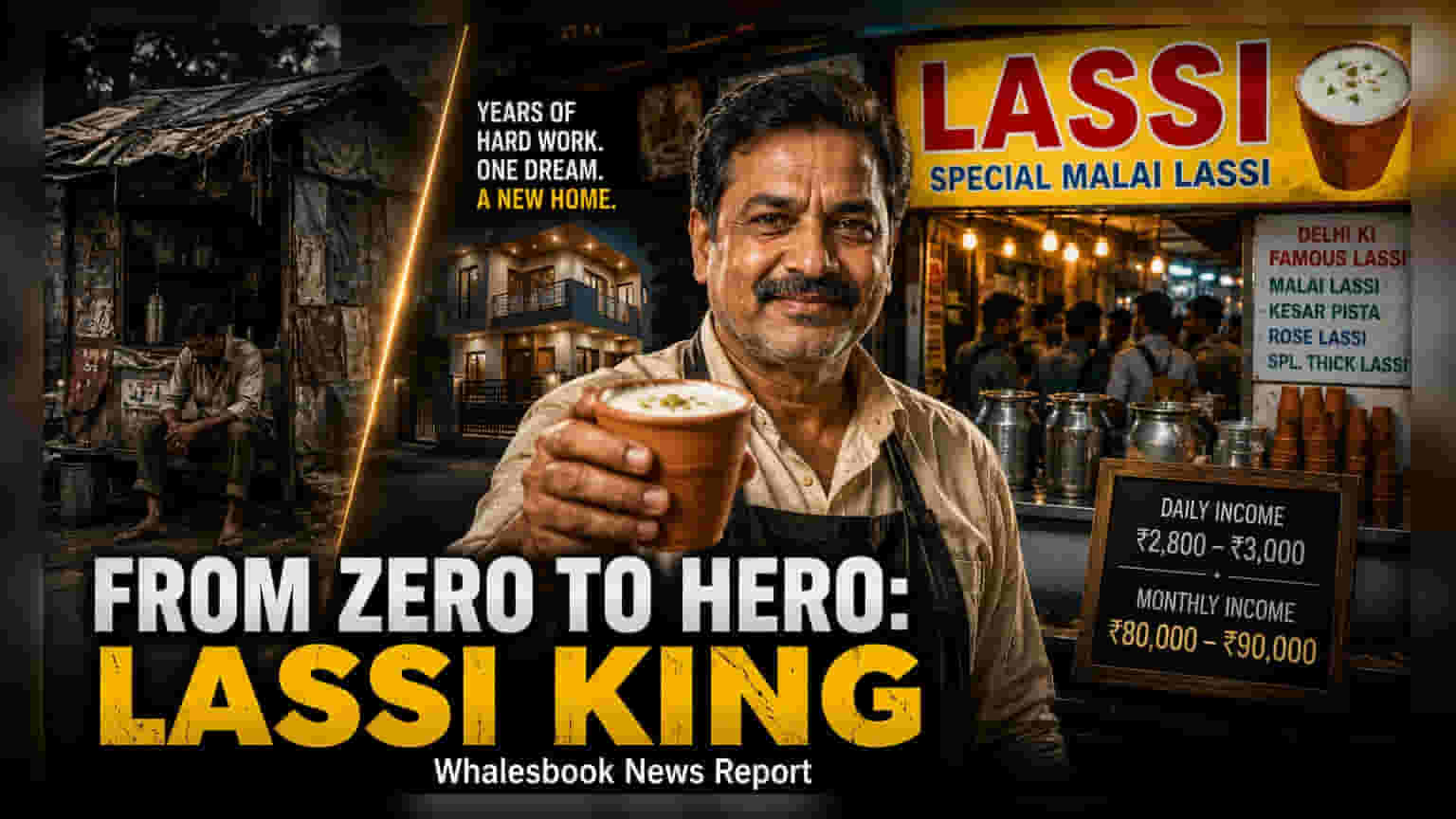
A Delhi-based lassi vendor’s journey from childhood hardship to earning ₹80,000–₹90,000 monthly highlights the resilience within India's informal economy. His success in building a home through disciplined daily labor serves as a case study in personal financial management and long-term asset creation for micro-entrepreneurs.
The story of a Delhi-based lassi vendor, whose journey from overcoming personal tragedy to achieving financial stability has gone viral, offers a compelling look at the economics of India's vast informal sector. While this operation is not a corporate entity with public filings, it serves as a practical case study in micro-entrepreneurship, where consistent daily effort is often the primary driver of capital accumulation.
From Daily Struggle to Micro-Enterprise Growth
The vendor’s transition from earning daily wages to a monthly income of ₹80,000–₹90,000 reflects a high level of operational efficiency and customer retention. In many informal businesses, scalability is limited by physical constraints, such as foot traffic and labor capacity. However, by maintaining a consistent product and building a loyal customer base over years of operation, the vendor has managed to move beyond subsistence-level income.
His primary capital allocation—directing earnings toward the construction of a home—is a classic example of how micro-entrepreneurs prioritize long-term asset creation over liquid savings. This behavior provides a hedge against the high cost of living in urban centers and creates generational value, despite the absence of formal retirement or insurance schemes.
Managing Risks in the Informal Sector
For investors and students of the economy, it is important to distinguish between this type of micro-enterprise and a formal business. A single-person, street-level venture carries inherent risks that differ significantly from those found in the corporate world.
The business is entirely dependent on the individual’s physical health and ability to work. Unlike a corporation, there is no redundancy, no professional management team, and no institutional safety net. A prolonged period of illness or an external shock, such as a major regulatory change in street vending policies or local market disruptions, could significantly impact or halt cash flow. Furthermore, the lack of formal credit lines or insurance means that the business is highly susceptible to unexpected costs, which can quickly erode the savings built over time.
This story underscores that while the informal sector is a major engine of livelihood for millions, it remains highly exposed to structural risks. The financial success described is a testament to the individual's resilience, but it also highlights the vulnerability of millions of similar micro-businesses that operate without the protections of the formal economy. Tracking the sustainability of such income levels requires monitoring variables like changing consumer habits, raw material inflation, and the evolving regulatory environment for street vendors in major cities.