

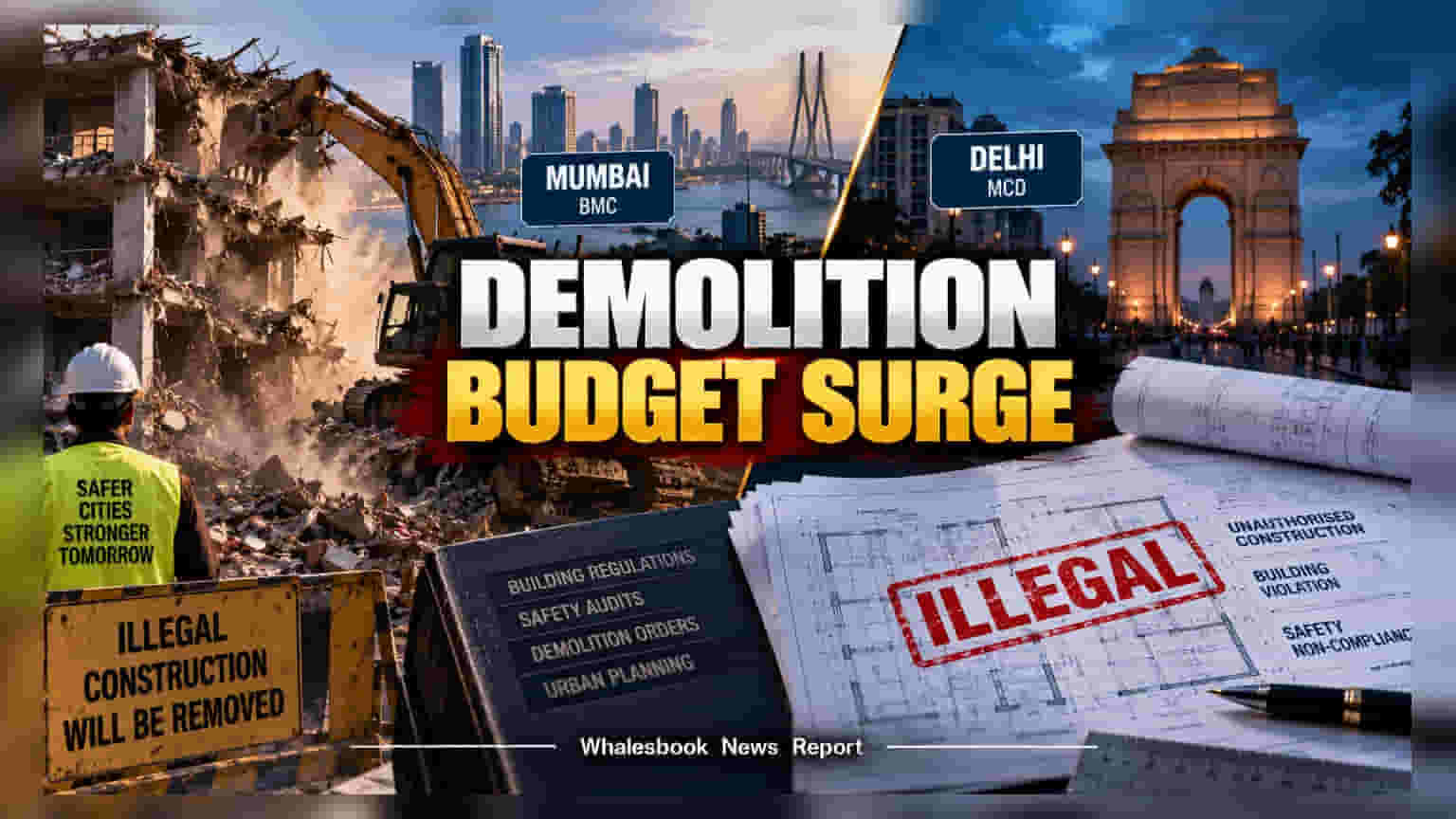
The Municipal Corporation of Delhi and the Brihanmumbai Municipal Corporation have raised their combined demolition and enforcement budgets to ₹34.1 crore for the 2026-27 fiscal year. This increase follows intensified safety audits and a crackdown on illegal construction in both cities after recent structural collapses.
Civic authorities in India’s two largest urban centers are adopting a stricter enforcement strategy regarding building safety and unauthorized construction. Data shows a significant increase in funds allocated for demolition and enforcement actions, with the Municipal Corporation of Delhi (MCD) and the Brihanmumbai Municipal Corporation (BMC) setting a combined budget of ₹34.1 crore for the 2026-27 fiscal cycle.
Mumbai’s Shift in Enforcement Spending
The Brihanmumbai Municipal Corporation has reported the most substantial change in its fiscal approach. Its enforcement budget has risen to ₹17.5 crore for the 2026-27 period, a sharp increase from the ₹3.31 crore allocated in 2023-24. This fivefold rise suggests a pivot toward more frequent structural audits and strict action against illegal floor-space index usage and other building violations across the city.
Delhi’s Response to Structural Safety
In the capital, the Municipal Corporation of Delhi has also increased its enforcement spending, allocating ₹16.6 crore for the current fiscal cycle. This represents a 54% increase compared to 2024-25. The move comes after heightened scrutiny regarding building safety following tragic structural collapses, including the incident in Satya Niketan. Municipal authorities are currently conducting widespread audits of student hostels, PGs, and commercial buildings in residential zones to identify and act against unauthorized constructions.
Operational and Fiscal Challenges
While the budget increases reflect a tougher stance on illegal construction, the actual cost of enforcement may exceed these allocations. Civic bodies face high operational costs, including legal support, demolition logistics, and site clearance. With thousands of properties already identified as unauthorized and awaiting action, the actual expense per demolition operation could strain the current budget. If the volume of enforcement exceeds initial estimates, these municipal bodies may face the need for supplementary funding or reallocations from other infrastructure projects.
For citizens and observers of urban governance, the key monitorable remains the pace of these demolition drives. The success of these enforcement campaigns will depend on the civic bodies’ ability to execute these orders legally and efficiently without exceeding their available fiscal resources. Future municipal filings will clarify if these budgets are sufficient or if additional financial measures are required to sustain the current crackdown on urban safety violations.