

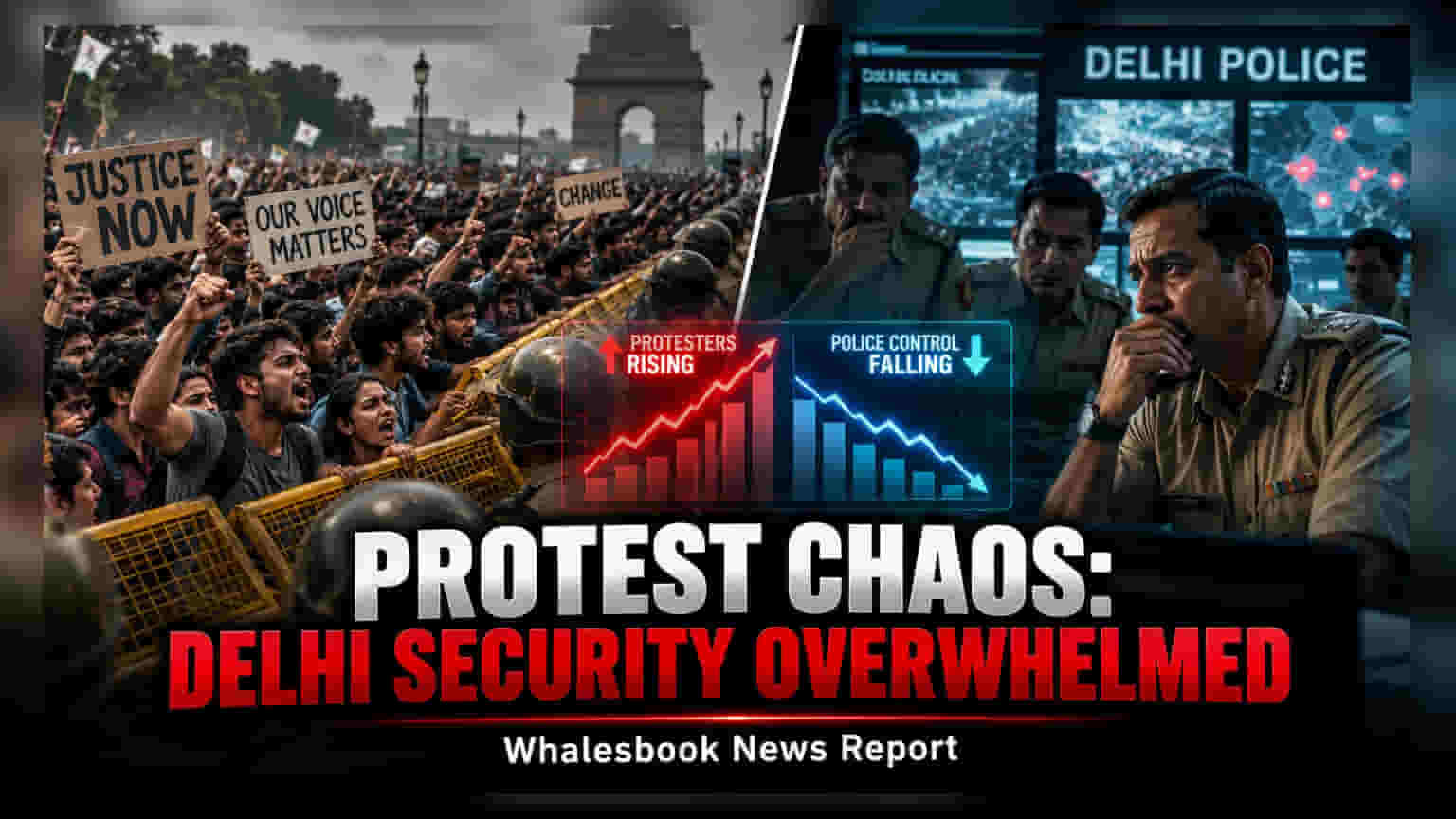
A large-scale protest march in Delhi led to significant security deployments and metro station closures on July 20. The event, which escalated after activist Sonam Wangchuk's detention, highlights challenges in urban management and public order during high-tension public demonstrations.
Detailed Coverage
The national capital faced significant civic and logistical disruptions on July 20 as tens of thousands of participants joined the 'Sansad Chalo' march toward Parliament. The protest, centered on grievances regarding educational reforms and recent examination irregularities, resulted in widespread security measures that impacted normal city operations, including public transport and traffic flow.
Operational Impact on Delhi Metro and Traffic
To manage the unexpected surge in crowd size, which local reports indicate significantly exceeded initial security estimates, the Delhi Metro Rail Corporation (DMRC) shuttered five major stations in the vicinity. This decision caused substantial inconvenience for daily commuters across the city, leading to long delays and the redirection of public transport routes. Beyond metro closures, the heavy deployment of police personnel and the use of barricades created significant traffic bottlenecks in central Delhi, affecting movement throughout the day.
Security and Public Order Management
The scale of the mobilization led to heightened security measures, including the extension of internet suspension orders in specific zones until 6 pm. The event witnessed clashes that resulted in multiple detentions and injuries, prompting authorities to initiate investigations using CCTV and drone surveillance to determine if external groups were involved in the escalation. The situation underscores the challenges faced by local law enforcement in managing large-scale, unpermitted public gatherings where crowd estimates prove to be inaccurate compared to initial intelligence.
Government Engagement and Next Steps
Following the escalation, the central government initiated engagement with the organizers, represented by the CJP movement. Union Health Minister J.P. Nadda met with delegation members to discuss their demands, which include institutional reforms in the education sector and specific actions related to recent exam controversies. As of now, the government has acknowledged the grievances presented by the protest leaders, though no formal agreement on the core demands has been announced. Investors and residents may continue to monitor for further updates on potential policy shifts regarding education sector oversight, as well as any long-term changes to protest management protocols in the capital that could affect future commercial or civic activity.