

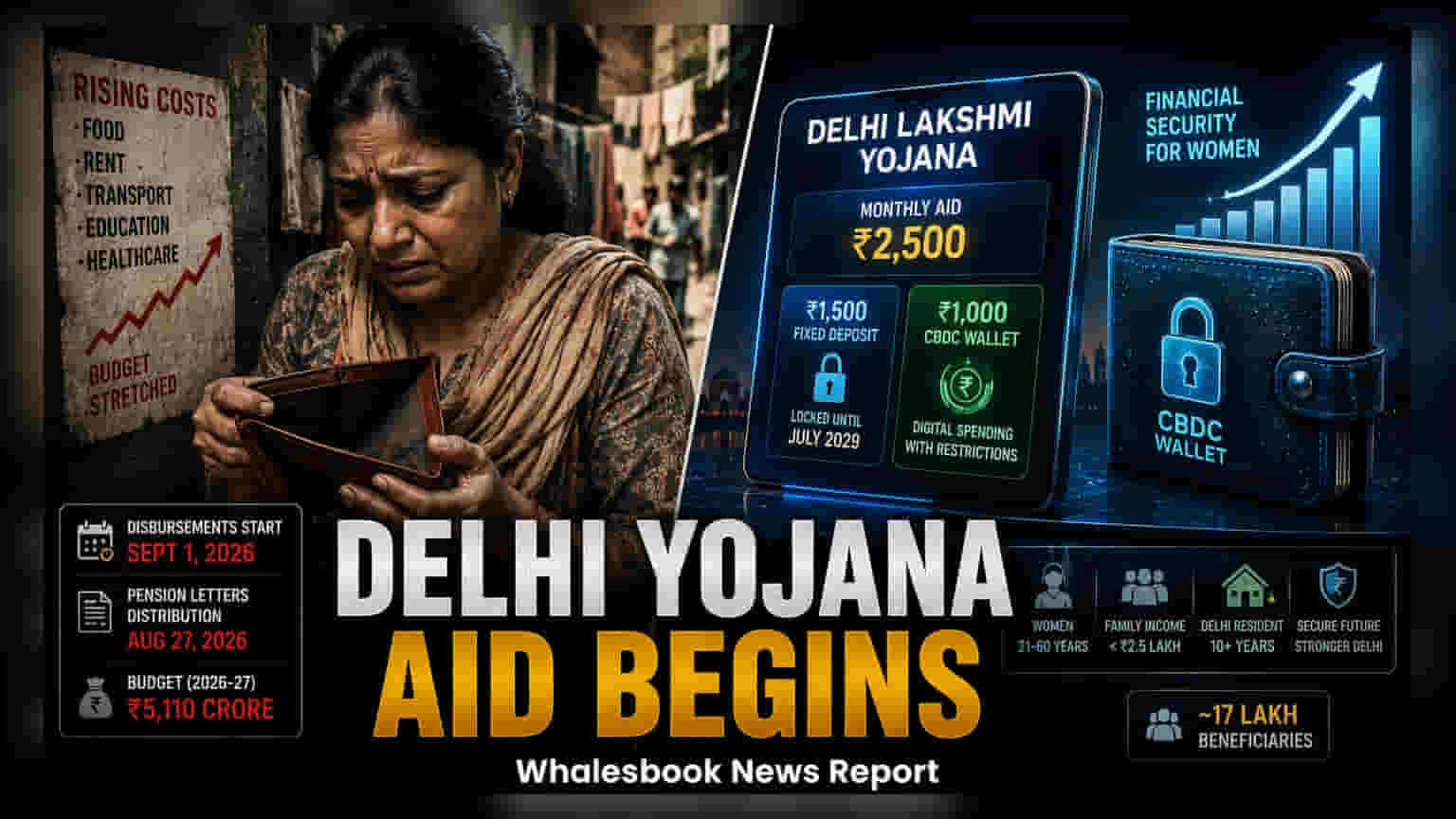
The Delhi government will begin monthly financial aid of ₹2,500 for eligible women on September 1, 2026. This state welfare initiative has an allocated budget of ₹5,110 crore for the current fiscal year. While this is a government program and not a corporate event, the distribution mechanism involves fixed deposits and digital currency, which may influence local economic activity.
The Delhi government has confirmed that the Delhi Lakshmi Yojana will commence disbursements on September 1, 2026. This social welfare program provides monthly financial assistance of ₹2,500 to eligible women aged between 21 and 60 from low-income households. The state has earmarked a budget of ₹5,110 crore for the 2026-27 financial year to support the scheme, which aims to reach approximately 17 lakh beneficiaries.
The payout structure is notable for its blend of long-term savings and immediate digital liquidity. Of the ₹2,500 monthly transfer, ₹1,500 will be deposited into a fixed deposit, which remains locked until July 2029. The remaining ₹1,000 will be credited to a Central Bank Digital Currency (CBDC) wallet, aimed at encouraging digital transactions with specific usage restrictions. This model reflects a shift toward integrating digital public infrastructure with direct benefit transfers.
Eligibility is strictly defined to target specific lower-income groups. Applicants must have a family income below ₹2.5 lakh per year and must have resided in Delhi for at least 10 years. Exclusions apply to individuals who pay income tax, file GST, are government employees, have a family with more than three children, or live in households consuming more than 2,400 units of electricity annually. The distribution of pension letters to verified beneficiaries is scheduled to begin on August 27, 2026.
It is important for market participants to note that this is a government-run social welfare initiative and has no direct correlation with listed stock market entities. Confusion may arise due to the word Lakshmi in the scheme's name, which appears in various listed company names. This initiative does not impact the share price or financial performance of any corporate entity.
Observers of economic policy may track the operational efficiency of this distribution model, particularly the integration of CBDC wallets for social transfers. The long-term impact on household savings and digital payment adoption will depend on the successful implementation and the adherence to eligibility criteria over the initial three-year approved period.