

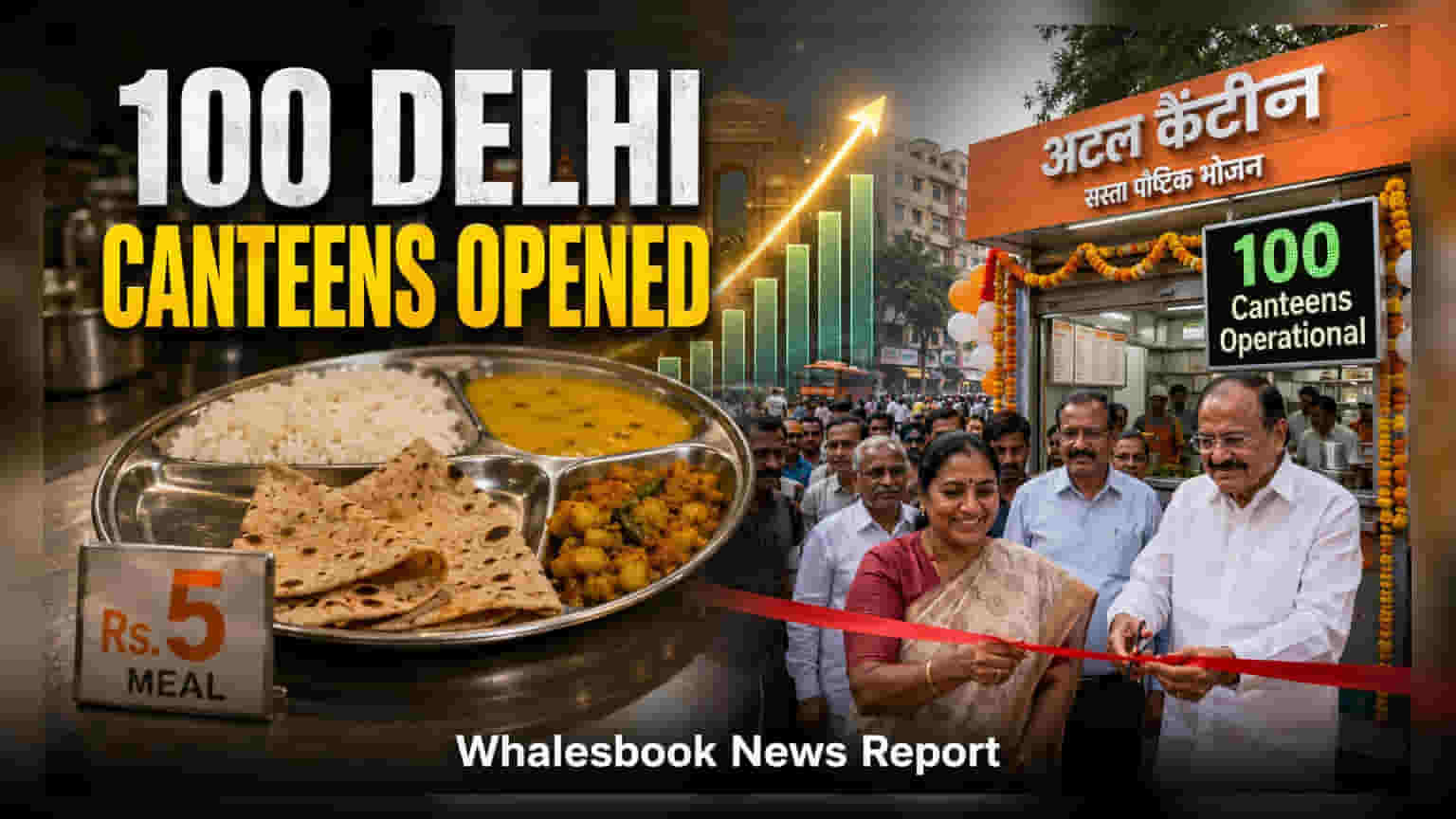
Delhi Chief Minister Rekha Gupta and former Vice President M. Venkaiah Naidu inaugurated 25 new Atal Canteens on August 16, 2026. This expansion brings the total number of operational centers to 100, providing subsidized meals at Rs 5 to approximately one lakh people daily. The initiative, managed by the Delhi Urban Shelter Improvement Board, aims to support students and daily wage earners.
The Delhi government has reached a significant milestone in its social welfare infrastructure with the inauguration of 25 additional Atal Canteens on Sunday, August 16, 2026. This expansion, led by Delhi Chief Minister Rekha Gupta and former Vice President M. Venkaiah Naidu, brings the city’s total network of operational canteens to 100. The launch coincides with the eighth death anniversary of former Prime Minister Atal Bihari Vajpayee.
These new centers are strategically placed near high-traffic areas, including major hospitals such as AIIMS and LNJP, as well as densely populated urban clusters in districts like Janakpuri and Vikaspuri. The program is designed to provide meals at a subsidized rate of Rs 5 per plate, specifically targeting the economically vulnerable segments of the capital's population, including construction laborers, migrants, and students residing in hostels or paying guest facilities.
The implementation of the scheme falls under the Delhi Urban Shelter Improvement Board (DUSIB). According to official statements, the network is currently serving approximately one lakh individuals daily, with an annual capacity target of 3.65 crore meals. To ensure the quality of service, the government has integrated operational upgrades such as computerized billing systems, digital tokens for customers, and CCTV surveillance to monitor food quality and hygiene standards.
From a fiscal perspective, the sustainability of the Atal Canteen scheme relies heavily on consistent public funding and efficient logistics. As a government-funded welfare project, the initiative requires ongoing budgetary support to cover the cost difference between the nominal Rs 5 charge and the actual production expense. Previous reports have highlighted that successful large-scale food distribution programs often face operational hurdles, such as managing supply chain consistency for raw materials and ensuring reliable access to commercial utilities like LPG connections at all 100 locations.
For residents and observers, the key monitorables moving forward will include the maintenance of food quality across all 100 sites and the ability of the government to handle the logistical demands of such a widespread network. The effectiveness of this scheme will be measured by its ability to maintain consistent, daily operations without service disruptions, ensuring that the intended beneficiaries—the city’s workforce and students—have reliable access to these services.