 Whalesbook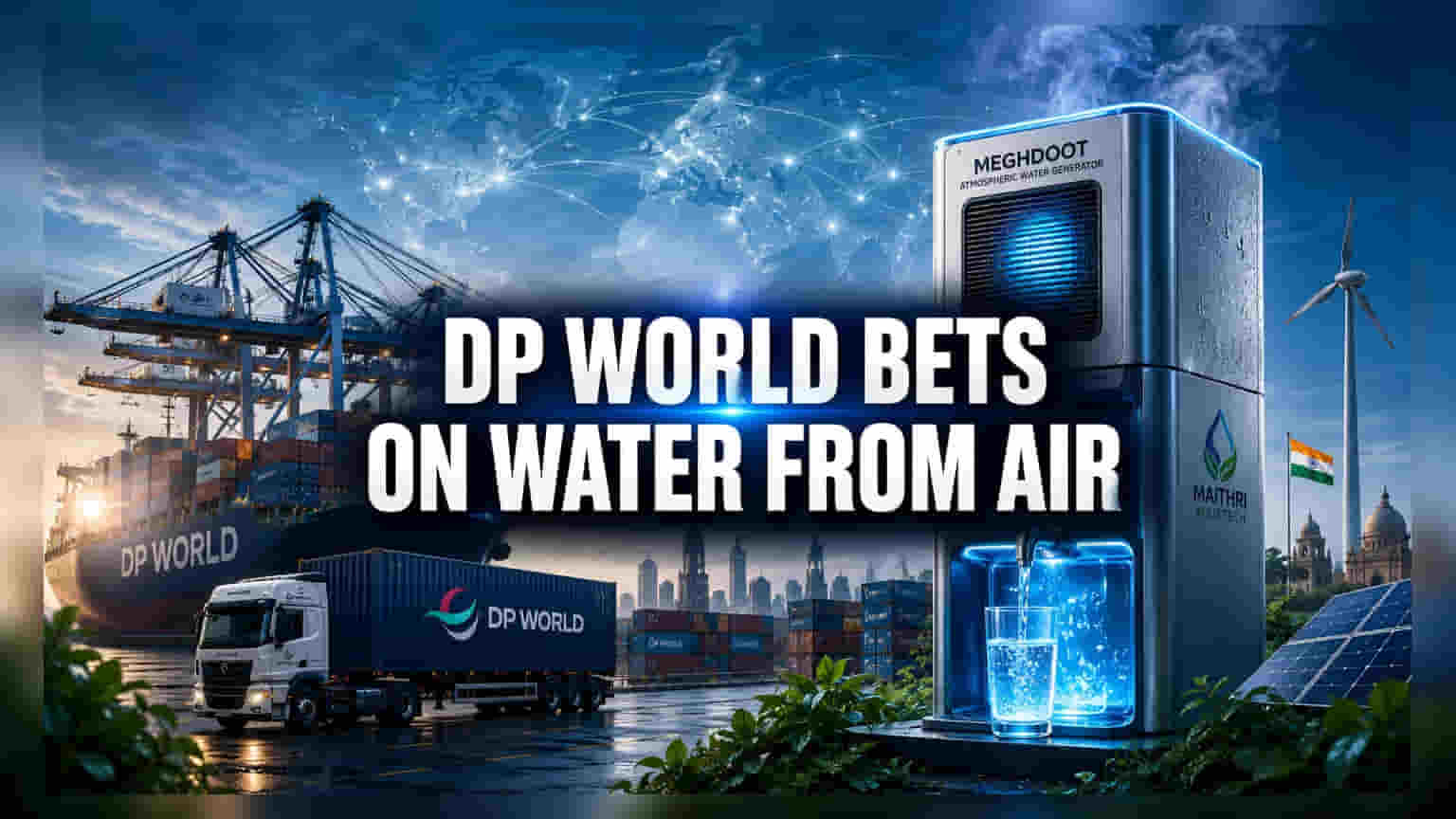


Global logistics major DP World has acquired a 14% stake in Hyderabad-based Maithri Aquatech. This strategic move highlights the growing importance of sustainable water solutions in global supply chains. For investors, it underscores the rising global appetite for Indian climate-tech and ESG-focused infrastructure solutions.
What Happened
DP World, a leading global trade and logistics provider, has acquired a 14% equity stake in Maithri Aquatech, an Indian startup specializing in atmospheric water generation (AWG) technology. The Hyderabad-based company is known for its flagship product, 'MEGHDOOT,' which extracts potable water directly from humidity in the air. While the financial details of the transaction were not disclosed, the deal marks a significant step in DP World’s effort to integrate sustainable, decentralized water solutions across its global network of ports, logistics hubs, and communities.
Why This Matters for Investors
This investment is a strong indicator of the shifting focus in global infrastructure and logistics. As companies worldwide move to meet strict Environmental, Social, and Governance (ESG) mandates, they are increasingly looking for technologies that reduce their reliance on traditional, stressed water sources. For the Indian market, this deal highlights that domestic climate-tech innovations are gaining global visibility and corporate backing. It validates the potential of 'Make in India' solutions to scale globally, attracting interest from international giants looking to solve critical resource challenges.
The Technology: Water from Air
Maithri Aquatech’s technology works on the principle of atmospheric water generation. The 'MEGHDOOT' systems condense moisture from the air, filter it, and mineralize it to produce drinking water. This decentralized, 'plug and play' model is particularly useful for areas where traditional water infrastructure is scarce or unreliable, such as remote port locations or isolated logistics sites. Because the system does not require access to ground or surface water, it offers a way for large organizations to reduce their water footprint, effectively turning them into water-secure hubs rather than just water consumers.
The Sustainability Play
DP World has been actively building a sustainability strategy titled 'Our World, Our Future,' which focuses on reducing environmental impact. Integrating this technology aligns with their goals to achieve a 'net positive' water impact by 2030. By deploying these solutions at scale, they aim to influence water management in dozens of water-stressed basins globally. For a logistics operator, controlling water sources—or creating them onsite—can significantly improve operational resilience and reduce costs associated with sourcing, transporting, or desalinating water.
Risks and Monitorables
While the technology offers significant promise, investors and observers should remain aware of the practical challenges in such business models. Atmospheric water generation efficiency is highly dependent on humidity levels, which vary by geography, potentially limiting the output in arid regions compared to humid ones. Furthermore, maintaining and scaling these decentralized units across diverse global environments involves operational risks, including technical maintenance and energy costs. The long-term success of this partnership will depend on how efficiently DP World can integrate these units into their existing infrastructure and whether the technology can maintain cost-effectiveness against more traditional water supply methods over time. Investors tracking the climate-tech sector should look for updates on the scale of deployment and the reliability of these units in different climates.