

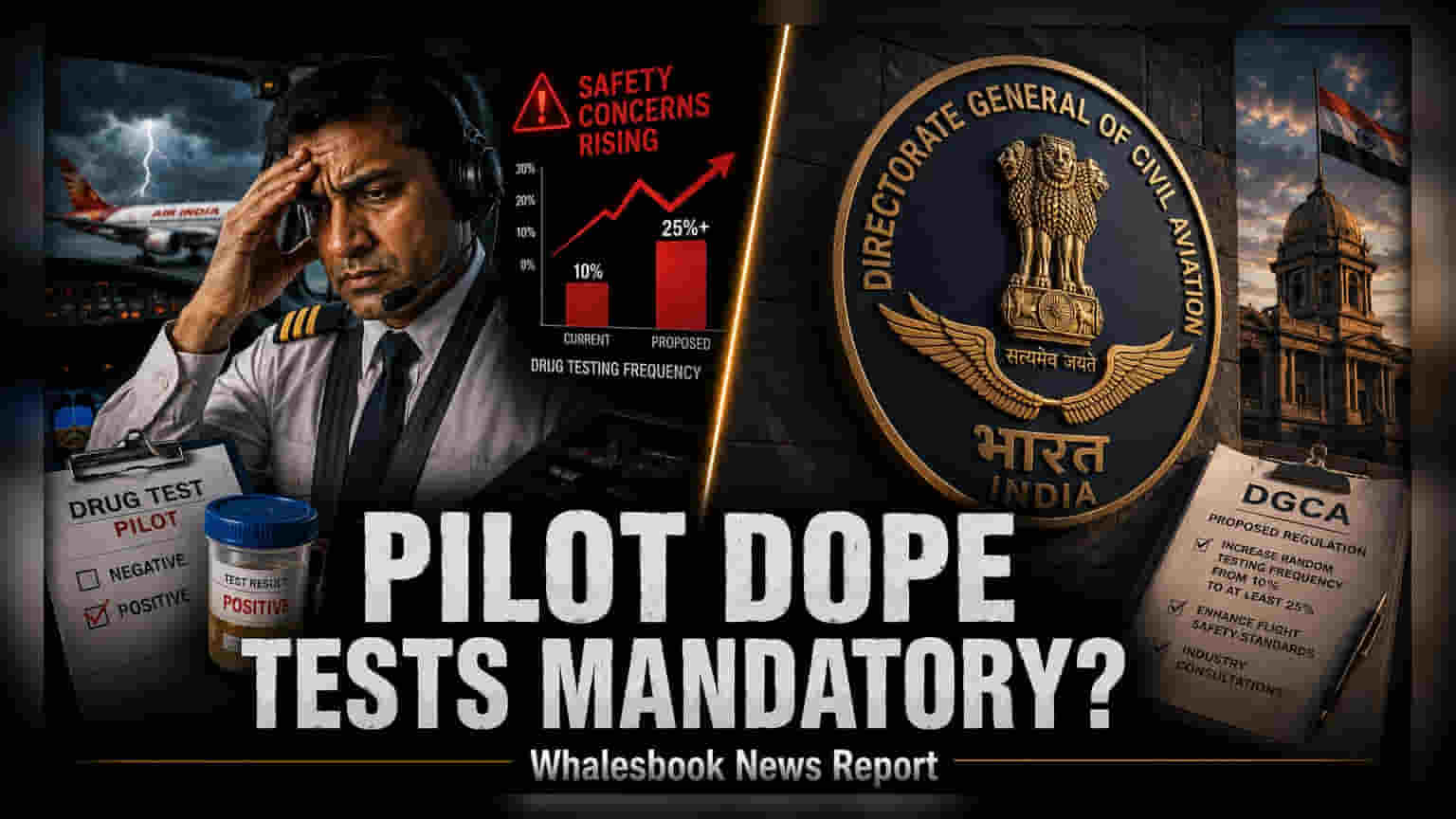
The Directorate General of Civil Aviation is consulting on increasing annual random drug tests for pilots to 25%, following a safety incident on an Air India flight. This regulatory review comes amid ongoing operational challenges at the airline, which recently reported significant financial losses for FY26.
The Directorate General of Civil Aviation is currently evaluating a proposal to tighten drug testing protocols for flight crews across all Indian airlines. The regulator is engaging in discussions with industry stakeholders to increase the frequency of random psychoactive substance testing from the current 10 percent to at least 25 percent of all flight crew members annually. This move is a direct response to a safety incident on August 4, 2026, involving an Air India flight from Phuket to Delhi, where the operating pilot reportedly tested positive for marijuana after the aircraft experienced a 300-foot altitude loss.
Following the incident, Air India initiated mandatory one-time drug testing for all its pilots effective August 13, 2026, to address internal safety concerns. As the company operates as an unlisted entity under the ownership of the Tata Group, which holds 73.82 percent, and Singapore Airlines, which holds 25 percent, there is no direct impact on stock markets. However, the incident has drawn significant attention to the operational and reputational challenges facing the carrier.
From a financial perspective, Air India continues to navigate a difficult turnaround phase. The company, along with its subsidiary Air India Express, reported a combined net loss of ₹22,238 crore for the financial year 2026. Experts have noted that the airline's turnaround timeline, originally envisioned to be shorter, is now estimated to stretch over the next five to ten years due to various structural and operational hurdles. These include high fuel costs, complex airspace restrictions, and the need for significant capital investment to modernize the fleet and service quality.
For investors and industry observers, the tightening of regulatory norms represents a broader shift toward stricter safety compliance within the Indian aviation sector. While the immediate focus is on pilot fitness, the operational risks remain substantial. The airline industry in India is currently characterized by intense competition and razor-thin profit margins, meaning that any incident requiring regulatory investigation or changes in pilot operating procedures can impact operational efficiency and increase compliance costs.
Moving forward, the primary monitorable for the industry is the formalization of the new DGCA testing mandate. Stakeholders will track how the implementation of these higher testing targets affects crew scheduling and operational costs for carriers. Additionally, the continued financial performance of Air India, particularly its ability to manage debt and operational cash flow, will remain under scrutiny as the group works through its long-term modernization plan.