 Whalesbook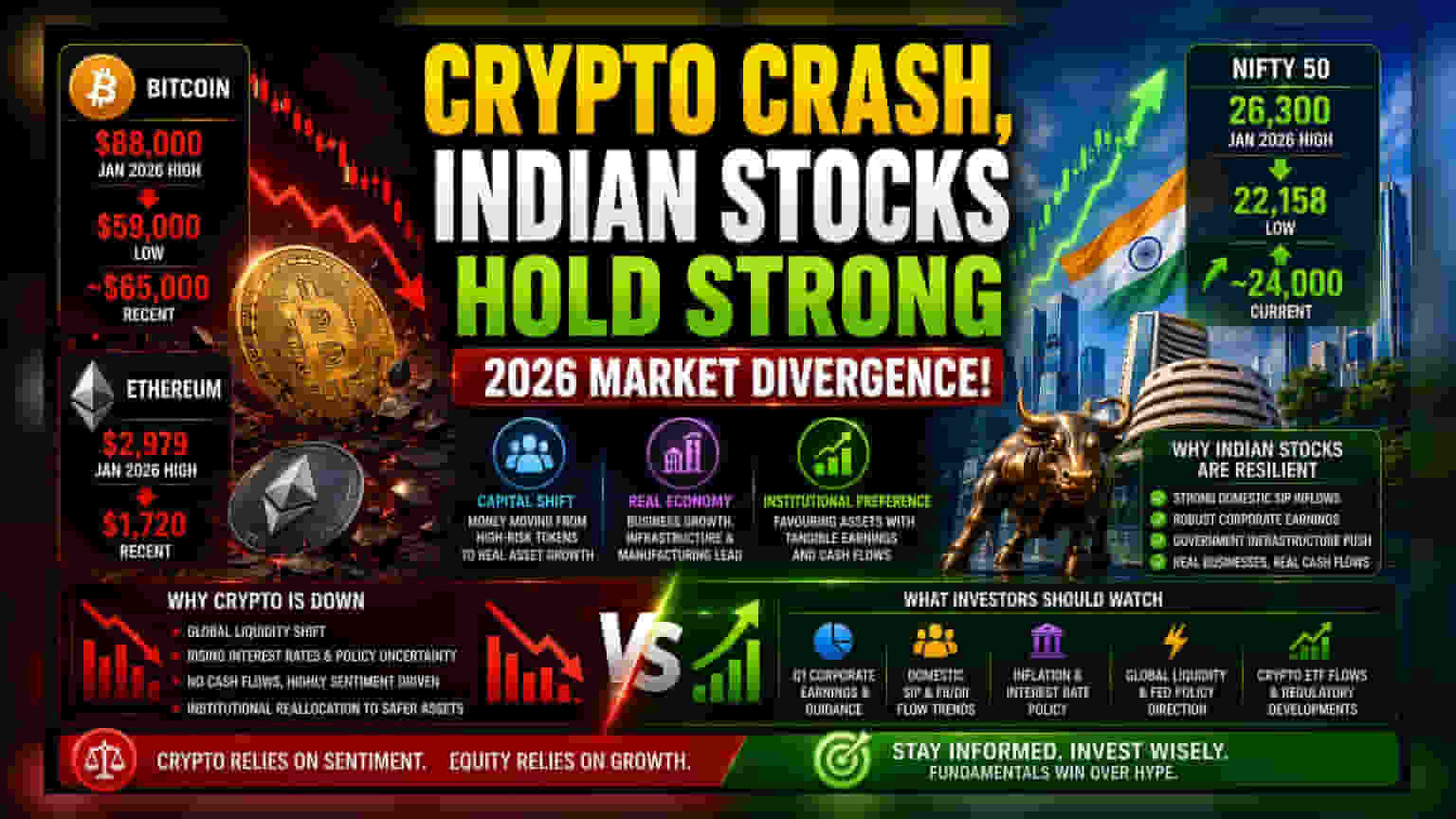


In 2026, cryptocurrency markets have faced a sharp downturn, with Bitcoin and Ethereum suffering losses of over 25% and 40% respectively. Meanwhile, Indian equity benchmarks like the Nifty 50 have demonstrated resilience, recovering from earlier volatility. Investors are shifting focus from speculative digital assets toward Indian corporate stocks, driven by steady domestic SIP inflows and growth in sectors like infrastructure and energy.
What Happened
The financial landscape in 2026 has witnessed a sharp divergence between digital assets and traditional equity markets. While cryptocurrencies have faced significant selling pressure, Indian stocks have maintained a steady ground. Bitcoin, which opened the year above $88,000, fell to around $59,000 before a partial recovery to the $65,000 range. Similarly, Ethereum has seen its value drop significantly, with prices falling from near $2,979 to $1,720. For context, these assets are trading well below their late 2025 highs.
In contrast, the Indian stock market, represented by the Nifty 50 index, has shown the ability to bounce back. After slipping from a January high of 26,300 to a low of 22,158, the index has regained momentum, currently trading near the 24,000 mark. This recovery highlights a clear preference among investors for assets backed by corporate performance over speculative digital tokens.
Why This Matters For Investors
This trend signals a major shift in how capital is moving. Institutional investors appear to be moving funds out of high-risk, sentiment-driven digital assets and into sectors that promise tangible returns, such as artificial intelligence, defense, and energy infrastructure.
For the average investor, this highlights the difference between assets with underlying cash flows and those that rely purely on market sentiment. Equities in India are supported by real business growth, manufacturing expansion, and government infrastructure projects, which provide a cushion during volatile times. Crypto markets, conversely, are highly sensitive to global liquidity shifts and changes in monetary policy, particularly in the United States.
Understanding The Equity Resilience
The stability seen in the Indian equity market is largely attributed to domestic strength. The culture of regular monthly investing through Systematic Investment Plans (SIPs) remains robust. This steady inflow of domestic capital acts as a buffer against selling by global investors. Furthermore, strong corporate earnings and the government's push for infrastructure development have kept the long-term outlook for Indian businesses positive, helping the market recover after the initial dip experienced earlier this year.
The Risks Behind The Crypto Slide
The decline in crypto prices is not an isolated event but reflects a broader adjustment in global investment portfolios. As interest rates and economic policies evolve in major economies like the U.S., capital flows tend to move toward safer or more productive assets. Crypto, lacking traditional revenue streams like dividends or profits, is often the first to be sold off when institutional investors look to 'reallocate'—a term used when money is moved from one asset class to another to optimize risk and return. This explains why digital assets have struggled while broader markets have shown signs of improvement.
What Investors Should Monitor
Moving forward, several factors will influence the direction of both markets. For equity investors, the key monitorables include quarterly corporate earnings results, which provide proof of growth, and the ongoing trend of domestic SIP inflows. Any significant change in inflation or interest rate policy, both globally and locally, will also impact market sentiment.
For those observing the digital asset space, it is important to watch for changes in global monetary policy and spot exchange-traded fund (ETF) flows. These factors often act as the primary drivers for price changes in digital assets. As always, the fundamental difference remains: equities are tied to the growth of businesses that create products and services, whereas the current performance of digital assets remains highly dependent on investor mood and global liquidity conditions.