

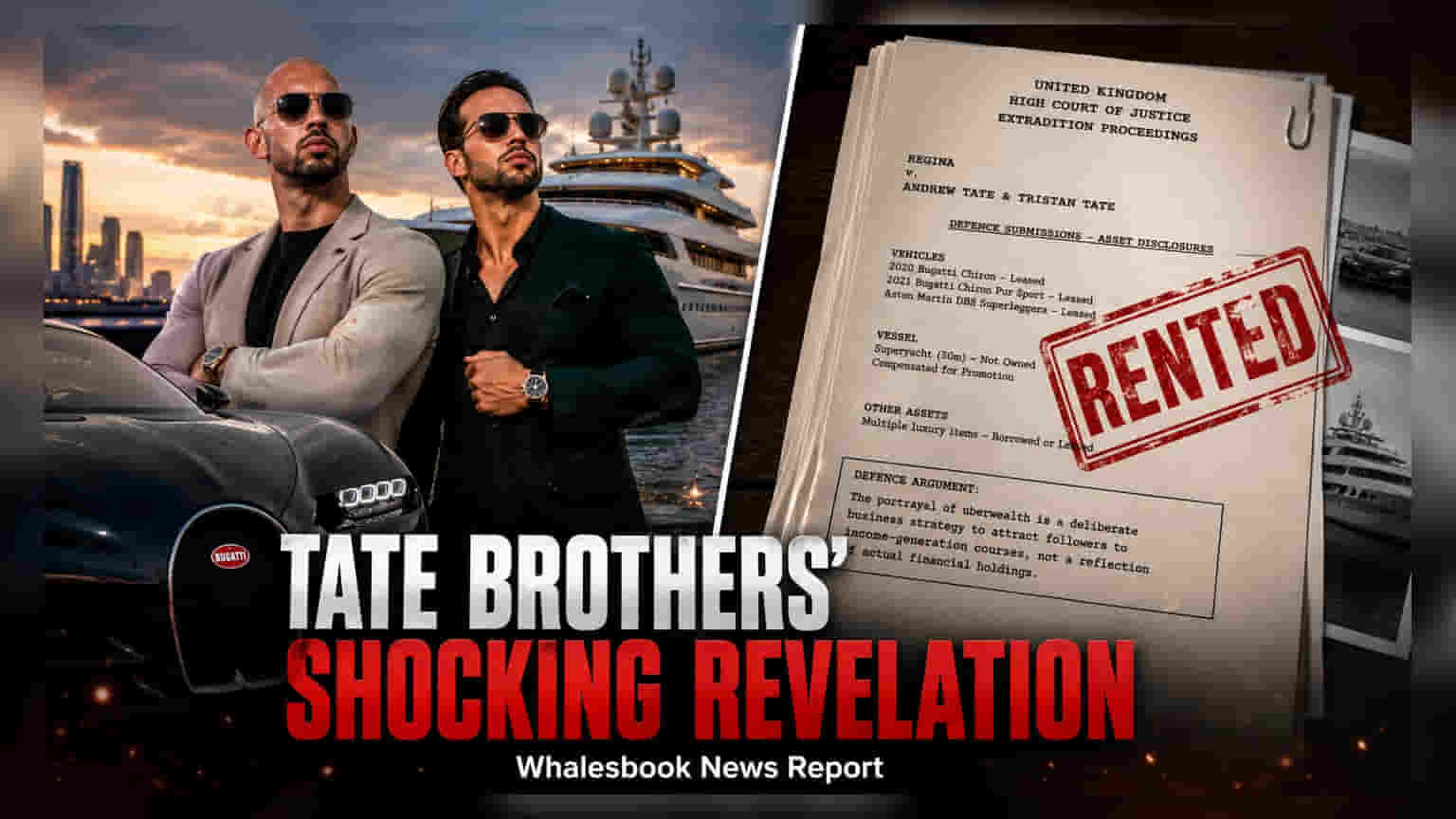
New court filings in the extradition battle for Andrew and Tristan Tate reveal that luxury vehicles and a superyacht featured on their social media were leased, not owned. This disclosure challenges the 'self-made' wealth image central to their business model. The brothers currently face 59 charges in the U.K. related to tax evasion and other crimes, marking a major legal and reputational challenge for their ventures.
Court documents submitted during the ongoing extradition proceedings for Andrew and Tristan Tate have revealed that many luxury assets frequently showcased in their social media content were rented or borrowed rather than owned by the brothers. These disclosures came to light as part of the legal battle regarding their potential transfer from the United States to the United Kingdom, where they face 59 criminal charges.
The documents detailed that multiple high-value vehicles, including Bugattis and an Aston Martin, were leased to maintain an online persona of extreme wealth. Additionally, the brothers did not own the $50 million superyacht often associated with their lifestyle; instead, they were reportedly compensated to promote it. This information was presented by the defense team to challenge prosecution arguments that the brothers possess vast liquid wealth and therefore represent a high flight risk. The defense contended that the brothers’ online portrayal of being "uberwealthy" was a deliberate business strategy intended to attract followers to their income-generation courses, rather than a reflection of their actual financial holdings.
The implications of these disclosures extend beyond the courtroom. The brothers’ business model, which revolves around selling educational content and coaching, is heavily dependent on their public image. The revelation that the physical markers of their success were rented, rather than purchased, impacts the credibility of the brand they have built. This comes at a time when they are under significant legal and financial pressure in multiple jurisdictions.
Currently, the brothers face a complex legal situation, including allegations of rape, human trafficking, and tax evasion. U.K. authorities have previously authorized the seizure of millions in assets related to tax investigations involving roughly £21 million in business revenue. The ongoing extradition process is the primary immediate challenge, with the resolution of these legal cases set to determine the future viability of their operations. The combination of potential asset forfeitures, tax-related legal battles, and the loss of their primary brand image creates a difficult environment for the continuation of their business ventures.