

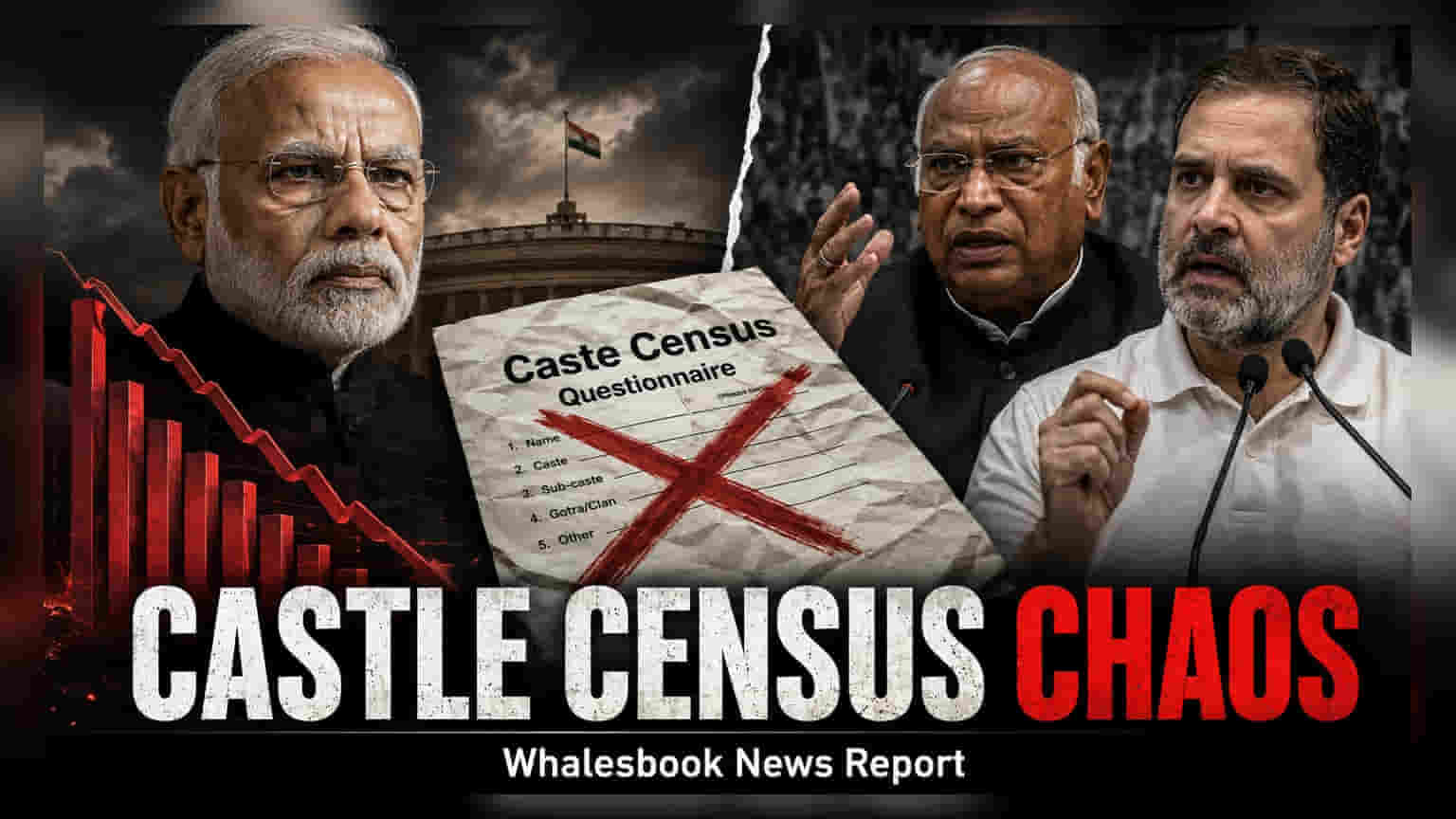
Congress leaders have asked Prime Minister Narendra Modi to withdraw the current open-ended caste census questionnaire. The party claims the format could lead to fragmented data, potentially impacting the accuracy of future government welfare and economic policies. They have suggested using a standardized list of castes instead.
Congress party leaders, including Mallikarjun Kharge and Rahul Gandhi, have written to Prime Minister Narendra Modi, requesting the withdrawal of the current caste census questionnaire. They described the existing open-ended format as misleading and have called for immediate revisions to ensure data accuracy for the national census.
The central argument put forward by the Congress party involves the methodology of data collection. Under the current framework, respondents are asked to provide their caste information in an open-ended manner. The party leaders contend that this approach will lead to fragmented results. They warn that the same caste could be recorded in thousands of different ways due to spelling variations, linguistic differences, or regional sub-caste names. They argue that this lack of standardization would render the final dataset difficult to use for official demographic and economic planning.
To address these concerns, the party has proposed replacing the open-ended question with a pre-defined, standardized list of castes. They believe this method would provide cleaner, more reliable information. The party cited the caste surveys previously conducted in Bihar in 2022 and Telangana in 2024 as successful examples of this approach. Furthermore, the leadership noted that the current format lacks a dedicated 'Backward Class' category, which they argue would prevent an accurate count of the Other Backward Classes (OBC) population.
Census data serves as a foundational element for public policy. Accurate information is required for the government to design effective programs for education, employment, and social welfare. If the collected data is fragmented or inaccurate, it could complicate future budget allocations and the implementation of social justice schemes. For policy observers, the methodology used for the census is essential for long-term demographic planning and the understanding of consumption and welfare patterns across different sections of society.
This communication marks the latest effort by the opposition to influence the census methodology. The government has not reported a formal response to the request. The key monitorable for the public and policy analysts will be whether the government decides to maintain the current questionnaire design or incorporates revisions to the data collection process.