

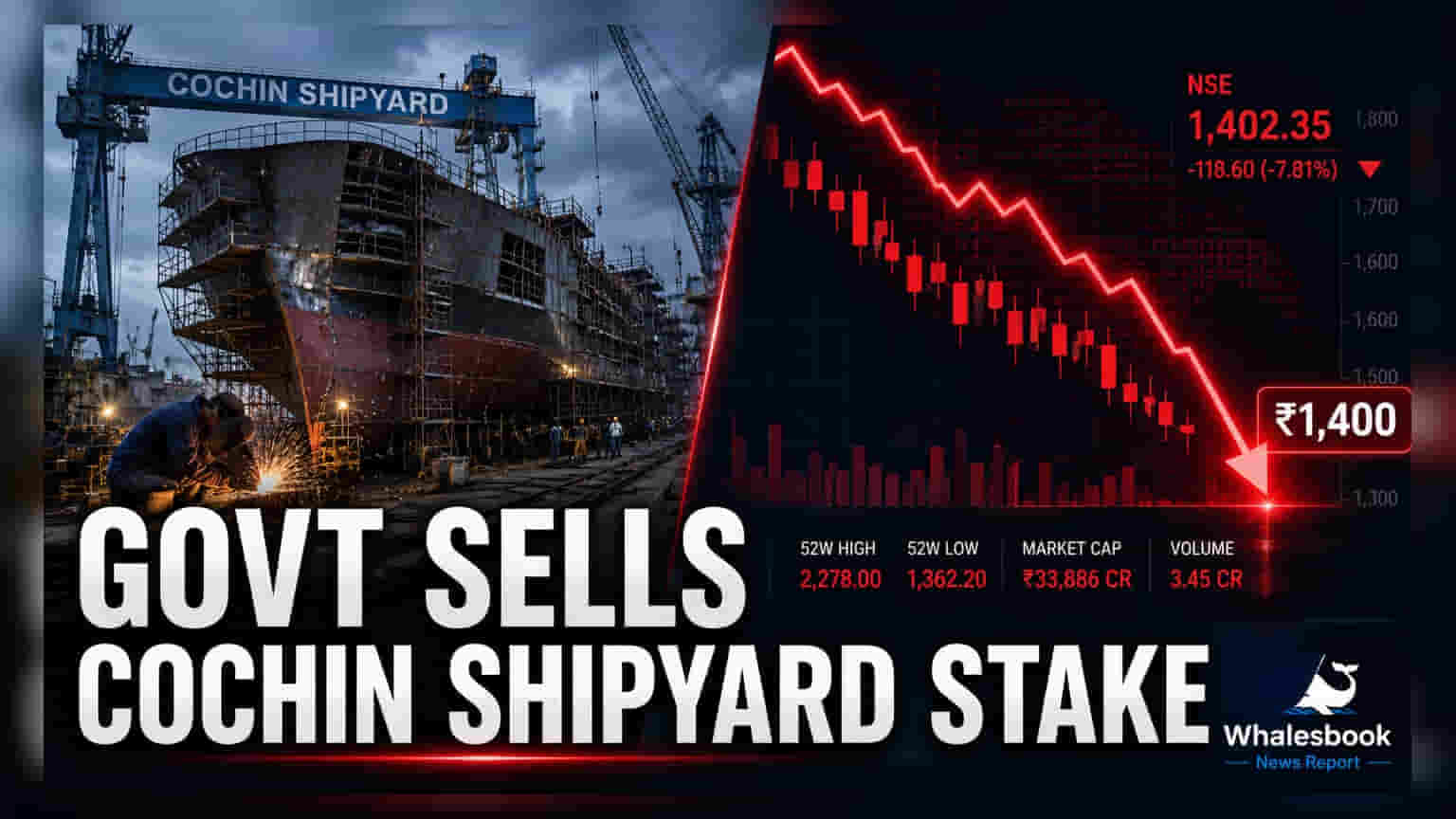
The government is selling up to 5.04% of its stake in Cochin Shipyard through an Offer for Sale starting July 7. The floor price is set at ₹1,400 per share, a discount to the recent market closing price. This divestment helps the company meet SEBI's minimum public shareholding requirements.
The Government of India is proceeding with a stake sale in Cochin Shipyard Ltd via an Offer for Sale (OFS), scheduled to begin on July 7, 2026. This transaction involves an initial sale of 2.52% of the company's equity, with a green-shoe option to sell an additional 2.52% if demand from investors exceeds the initial offering. The government has fixed the floor price at ₹1,400 per share for this exercise.
Transaction Schedule and Pricing
The OFS will follow a staggered timeline to allow different categories of investors to participate. Non-retail investors will have the opportunity to place their bids on July 7, 2026. Retail investors will be eligible to bid the following day, on July 8, 2026. The floor price of ₹1,400 represents a discount compared to the stock's closing price of ₹1,504.75 on the BSE on July 6, 2026.
Regulatory Compliance and Disinvestment Strategy
This sale is driven by the necessity to comply with the Securities and Exchange Board of India (SEBI) norms, which require listed public sector undertakings to maintain a minimum public shareholding of 25%. Recent shareholding data showed the government's stake exceeded this limit, necessitating a dilution. Beyond regulatory compliance, the move is part of the central government's ongoing effort to raise funds by reducing its ownership in various public sector companies. Since May 2026, the government has successfully utilized similar OFS mechanisms to mobilize over ₹16,000 crore from stakes in various state-owned enterprises.
Sector and Market Context
Cochin Shipyard, which operates in the shipbuilding and repair sector, has seen significant activity as the government pushes for maritime self-reliance. Historically, recent government-led stake sales in other public sector units have witnessed healthy participation, often leading to the full exercise of green-shoe options due to investor interest in companies with strong order books and consistent dividend payouts. However, investors often track the impact of such large share supplies on the stock price in the near term, as the sudden increase in liquidity can sometimes lead to volatility.
For investors, the key monitorable following this OFS will be the final subscription levels across both institutional and retail categories and the subsequent settlement of shares. The company’s ability to maintain its profit margins and execute its current order book will remain the primary business focus beyond this one-time liquidity event.