

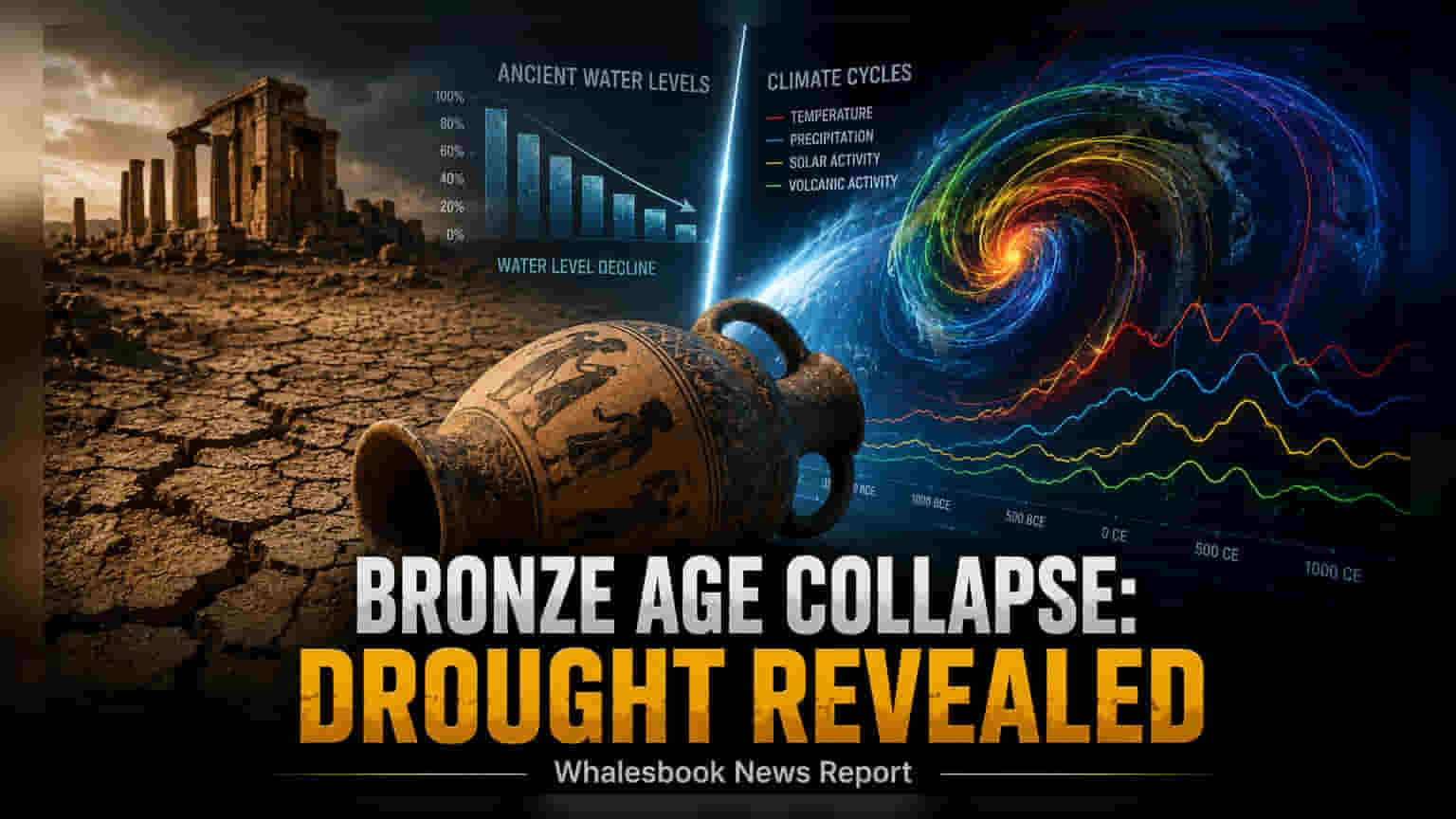
Researchers at Stockholm University have identified that overlapping natural climate cycles caused severe droughts, leading to the collapse of Bronze Age civilizations. This study reveals how these ancient societies struggled with food security when environmental conditions crossed critical water thresholds. Understanding these historical patterns is now being used to assess modern-day climate risks in the Mediterranean.
New research published by scientists from Stockholm University provides a fresh perspective on the sudden decline of major Bronze Age civilizations, including the Minoans, Mycenaeans, and the Hittite Empire. Rather than attributing their collapse to a singular event, the study demonstrates that these ancient societies were destabilized by a convergence of multiple, synchronized climate cycles.
Climate Patterns and Ancient Droughts
To understand the environmental conditions of the past, the research team reconstructed the Mediterranean climate over an 8,000-year period using advanced climate modeling. They found that a long-term drying trend, resulting from slow changes in Earth's orbit, was the primary driver. However, this gradual process was significantly worsened by shorter-term fluctuations originating from the Atlantic Ocean and the atmosphere.
The most destructive droughts occurred when these different cycles aligned, effectively reinforcing each other. This synchronization created intense dry periods that far exceeded the impact of the gradual drying trend alone. According to the study, this convergence pushed the Eastern Mediterranean region beyond a critical threshold for water availability, which severely hampered agriculture and undermined food security in these vulnerable ancient societies.
Implications for Modern Climate Risks
The study offers valuable insights for current climate research, particularly as the Mediterranean is increasingly identified as a climate change hotspot. Projections suggest that the region faces a warmer and drier future, raising concerns about agricultural stability and water management.
The findings suggest that future drought risks will not be determined solely by human-influenced warming. Instead, modern societies must account for how human-driven climate change interacts with natural variability in oceanic and atmospheric systems. By studying these historical interactions, scientists aim to build better models to mitigate the impact of future extreme weather events and ensure better preparedness for potential water shortages in the region.