

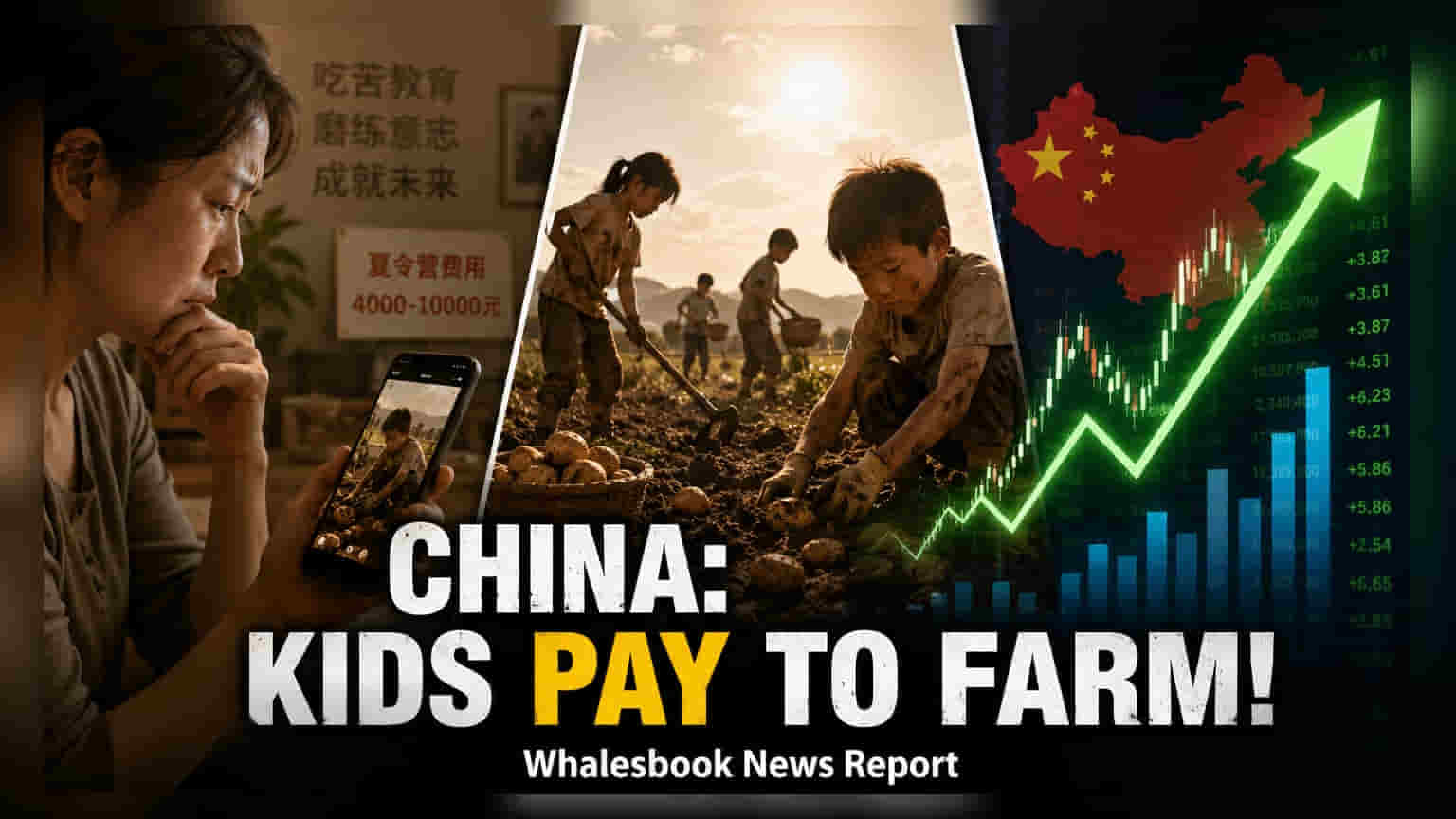
Chinese parents are paying thousands of yuan to enroll children in rural farm labor camps to build character. This trend highlights a shift in consumer spending within China's education sector as families move away from traditional tutoring toward experiential learning. However, the rise of these private, unregulated programs brings potential regulatory and safety risks for operators.
A growing trend in China has seen parents spending between 4,000 and 10,000 yuan—roughly Rs 56,000 to Rs 1.4 lakh—to enroll their children in so-called 'hardship summer camps.' These programs, primarily located in southwestern provinces like Sichuan and Yunnan, require children to perform physical farm labor, such as digging potatoes, peeling bark, and feeding livestock. The programs explicitly prohibit mobile devices and ration food based on work output, with the stated objective of teaching children the value of money and the struggles of past generations.
For investors and market analysts, this trend reflects a significant evolution in the Chinese education and child-care market. Following the government’s 2021 'Double Reduction' policy, which severely restricted private after-school tutoring and academic coaching, the industry has undergone a major transformation. Many education providers and private firms have been forced to pivot away from traditional subject-based tutoring toward sports, extracurricular activities, and 'character-building' experiences. These hardship camps appear to be an extension of this shift, as parents seek competitive advantages for their children outside of the standard curriculum.
However, the rapid rise of these private, often local, operators presents clear risks. Because these camps frequently operate on the fringes of the formal education system, they face limited oversight regarding safety standards, child protection protocols, and operational transparency. As viral videos depicting distressed children in these programs gain traction on social media, the potential for public backlash grows. If such incidents lead to physical injuries or widespread mental health concerns, the government may introduce stricter regulations to control the industry, as it has done in other segments of the consumer services market.
For those monitoring the sector, the sustainability of this trend remains a key question. While the current demand stems from parents who value 'grit' and traditional values, the effectiveness of short-term, high-intensity labor as a pedagogical tool is debated. Investors should track whether this niche evolves into a regulated sub-sector of the broader Chinese experience-based education market or if it faces a crackdown due to safety and welfare concerns. The future of this market will likely depend on whether operators can balance the demand for 'hardship' experiences with necessary safeguards, or if regulatory bodies will intervene to protect participants.