

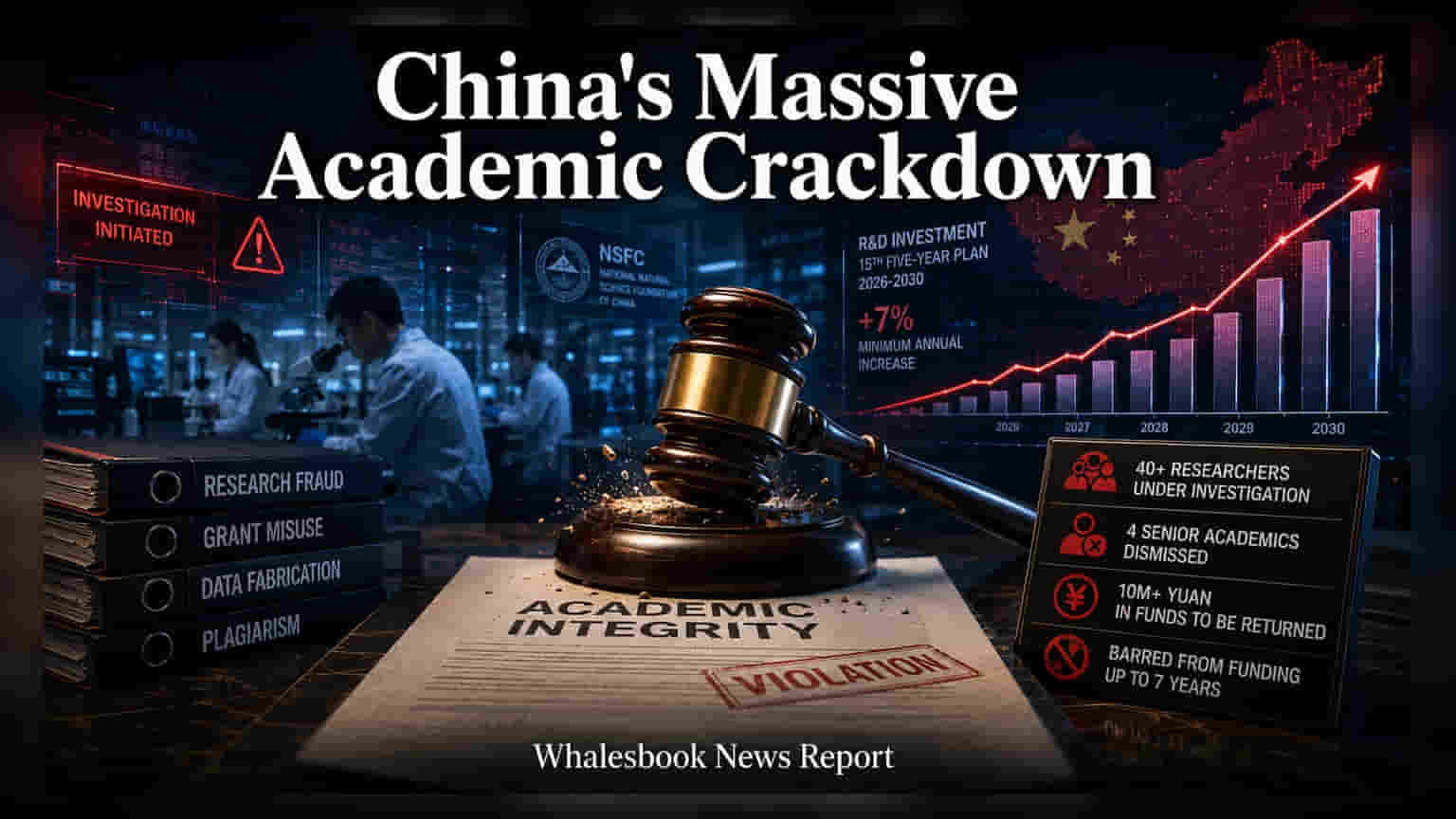
China's National Natural Science Foundation has launched a major crackdown on academic misconduct, investigating over 40 researchers to curb corruption. This initiative aims to ensure the efficiency of the country's rising R&D spending, targeted to grow 7% annually through 2030. Investors and stakeholders should watch how this governance shift impacts capital allocation in Chinese tech and scientific sectors.
The National Natural Science Foundation of China (NSFC) has initiated its largest-ever public investigation into academic integrity, targeting over 40 researchers across the country. The move, officially announced in late August 2026, represents a sharp increase in government oversight of scientific output. Authorities are moving to address systemic issues in how government research funds are managed, as the country pushes to secure its position in global technological development.
Four senior academics have been stripped of their professional titles and future funding access as part of this crackdown. These individuals are required to return over 10 million yuan in government grants and are barred from applying for future funding for up to seven years. The investigation was reportedly triggered by public accusations made earlier this year by a prominent blogger, which forced authorities to acknowledge and act on research malpractice concerns.
For those monitoring the Chinese economic landscape, this development is closely linked to the 15th Five-Year Plan. Beijing has committed to a minimum annual increase of 7% in R&D spending between 2026 and 2030. The government is now prioritizing the elimination of fraud to ensure these massive capital investments result in legitimate technological advancement rather than being lost to mismanagement. This crackdown serves as a strong signal that the state is shifting from passive monitoring to active, data-driven enforcement.
This shift creates a stricter regulatory environment for universities, hospitals, and tech-focused institutions that rely on state funding. While the primary goal is to improve research quality, it also increases the operational risk for entities that may have relied on less rigorous oversight in the past. The key factor to monitor will be how these tougher compliance standards change the distribution and speed of R&D grant approvals. Enhanced auditing practices, likely involving AI and big data, are expected to become the new standard, creating a more disciplined and scrutinized environment for China’s scientific and technological sectors.