

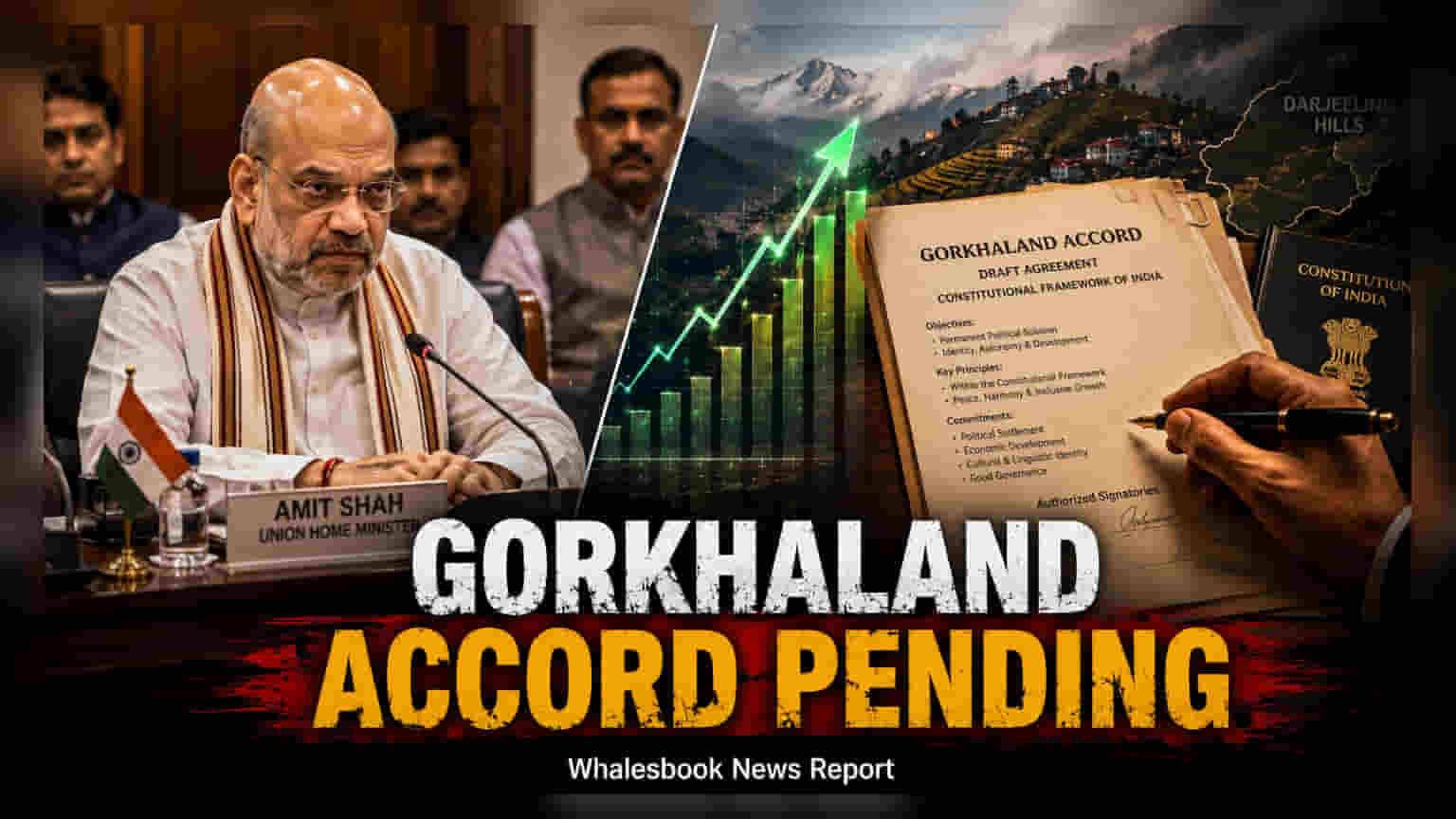
The Union Government has set up a committee to finalize a permanent political solution for the Gorkha identity issue in West Bengal. Led by former interlocutor Pankaj Kumar Singh, the panel aims to create an agreement within the constitutional framework. This development is significant for regional stability, which is essential for local tourism and economic activity in the Darjeeling hills.
The Centre has officially constituted a high-level committee to draft an agreement aimed at providing a permanent political solution to the Gorkha identity issue in West Bengal. This announcement followed a crucial tripartite meeting in Siliguri, attended by Union Home Minister Amit Shah, West Bengal Chief Minister Suvendu Adhikari, and various representatives from Gorkha community groups. The move is part of the central government's efforts to address long-standing demands for distinct identity and autonomy in the Darjeeling region.
The committee will be headed by Pankaj Kumar Singh, who has served as the Centre’s interlocutor for the region since October 2025. A former deputy national security advisor, Singh is tasked with finalizing the technical and political details of the proposed accord. The government has emphasized that any final agreement will remain strictly within the constitutional framework of India. Union Home Minister Amit Shah also pledged that the Centre would provide financial support for regional development to address pending local issues.
Historically, the demand for autonomy in the Darjeeling hills has led to various administrative setups, including the Darjeeling Gorkha Hill Council and the Gorkha Territorial Administration. While these bodies were created to address local grievances, they have often struggled to provide a long-term solution that satisfies all stakeholder demands. The current initiative marks a fresh attempt by the central government to move beyond these previous structures toward a more definitive settlement.
For regional businesses and economic observers, this development is relevant due to the historical context of political unrest in the area. The Darjeeling hills are a significant hub for tourism and the tea industry. Prolonged periods of instability or agitation have historically disrupted these sectors, impacting local business operations and supply chains. A permanent political solution could potentially offer a more predictable and stable environment for tourism, hospitality, and regional trade.
However, the success of this initiative depends on balancing the diverse demands of various Gorkha factions and the state government. The path to a final agreement involves navigating complex political dynamics, and past experience suggests that building consensus among all stakeholders will be the primary challenge. For market participants with an interest in businesses heavily dependent on local regional operations, the progress of this committee serves as a signal of potential long-term regional stability.
The key monitorable will be the specifics of the draft agreement and how effectively the committee can align the interests of the Centre, the West Bengal government, and the different Gorkha community groups. Investors and local stakeholders will likely track updates on the committee's timeline and the acceptance of its proposals by the various community leaders.