

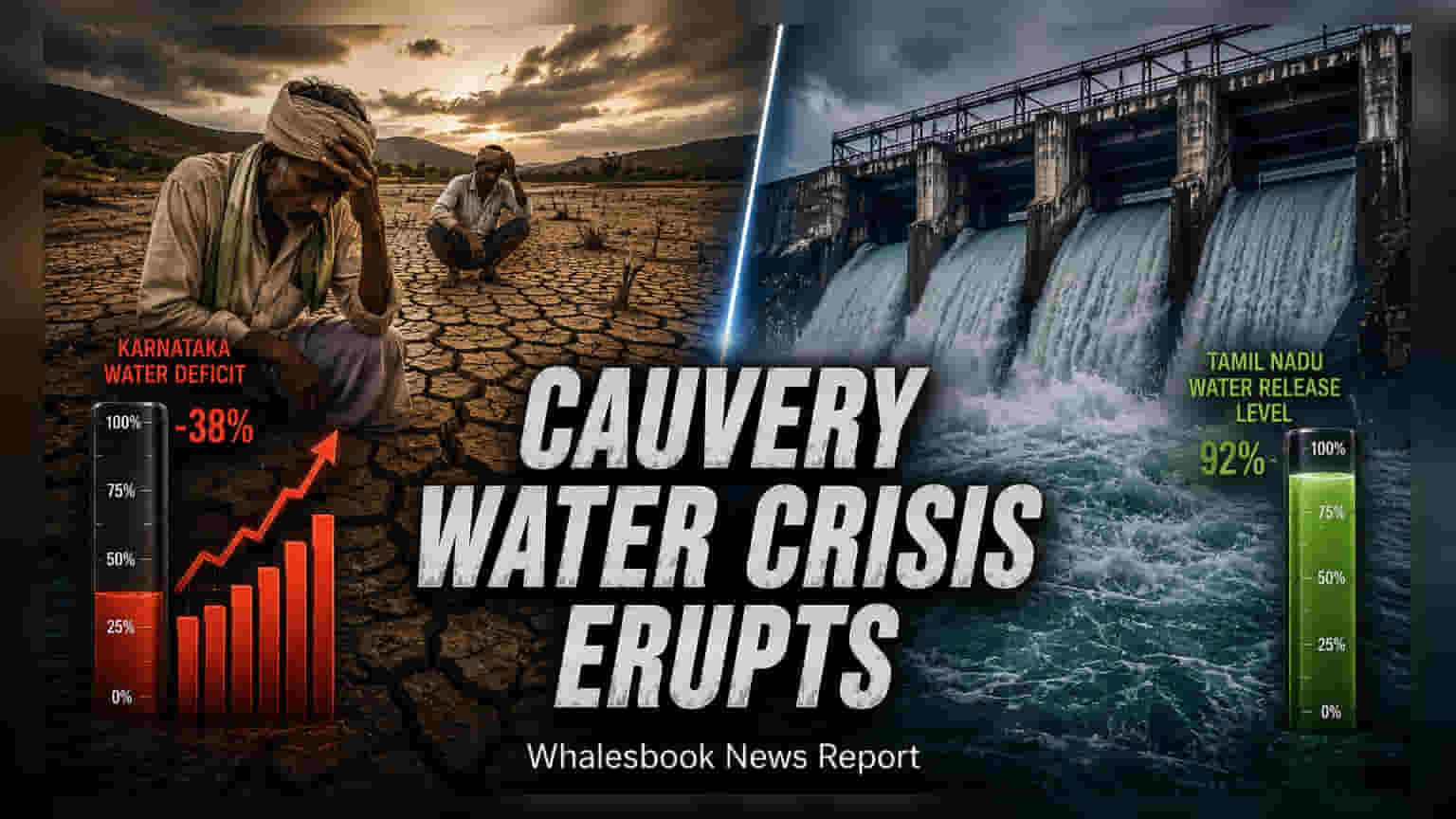
Karnataka is facing statewide protests following a regulatory order to release 3,500 cusecs of Cauvery water daily to Tamil Nadu. The decision comes as Karnataka reports critically low reservoir levels, raising concerns over water availability for local irrigation and the urban supply in Bengaluru.
Statewide demonstrations are expected across Karnataka on Friday in response to a directive from the Cauvery Water Regulation Committee (CWRC). The committee has ordered the state to release 3,500 cusecs of water daily at the Biligundlu border point to meet the requirements of downstream Tamil Nadu. This development has reignited the long-standing water-sharing dispute between the two states, causing significant concern among farming communities and urban residents alike.
Reservoir Storage and Local Impact
The dispute centers on the critical state of Karnataka's major reservoirs. During recent committee meetings, state representatives presented data showing that inflows into the four primary Cauvery reservoirs between June 1 and July 27 were approximately 65.86 percent lower than the 30-year average. Government officials have argued that the current water levels are only sufficient to address local drinking water and essential irrigation needs, leaving little to no surplus for release to neighboring states.
Potential Risks for Urban and Agricultural Sectors
The impact of this water scarcity is not limited to rural farming areas. Protests are also organized near the Krishna Raja Sagara (KRS) dam, which serves as a vital water source for the Bengaluru Water Supply and Sewerage Board (BWSSB). If water levels continue to drop, the state capital could face increasing pressure on its municipal water distribution, which is already stretched by high demand. For the agricultural sector, the lack of sufficient water for standing crops could lead to reduced yields, potentially affecting local supply chains for water-intensive commodities in the region.
Monitoring the Regulatory Path
Investors and stakeholders in sectors dependent on local water availability—including agriculture, food processing, and certain manufacturing industries in the region—are tracking the situation closely. The core issue remains a conflict between the regulatory mandate for inter-state water sharing and the physical limitations imposed by low rainfall and reservoir storage. Future updates will depend on the state government's response to the CWRC order, potential legal challenges in judicial forums, and upcoming weather patterns that may influence reservoir inflows. The stability of the urban water supply and the management of regional irrigation priorities will be the most critical aspects to observe in the coming weeks.