

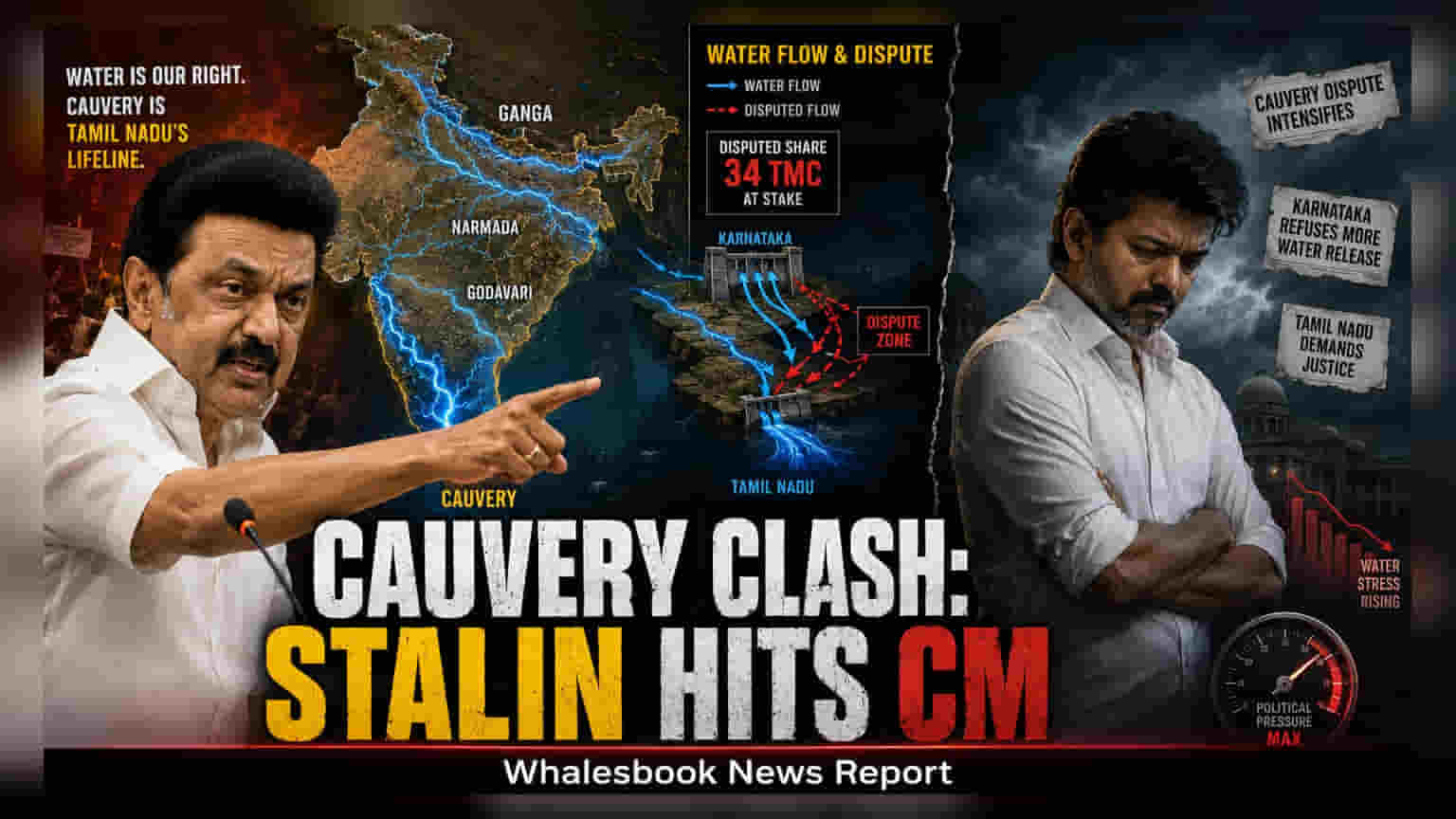
Tamil Nadu political leaders are debating the state's strategy for the Cauvery water dispute with Karnataka amid disagreements over direct negotiations. The central issue remains water sharing and the proposed Mekedatu dam project, which continues to face strong opposition from downstream Tamil Nadu.
The ongoing Cauvery water-sharing dispute has intensified as political leaders in Tamil Nadu express significant concern over the current administration's approach to negotiations with Karnataka. Opposition leaders have criticized Chief Minister C Joseph Vijay for attempting direct talks with Karnataka leadership, arguing that this strategy has left the state isolated. They are instead calling for an all-party meeting to establish a unified political position within Tamil Nadu.
Impact of the Mekedatu Project
At the heart of the dispute is the proposed Mekedatu dam project in Karnataka. The Karnataka government maintains that the reservoir is essential to secure water supply for Bengaluru and to support power generation. They have asserted that the project will not negatively affect the water share allocated to Tamil Nadu. Conversely, Tamil Nadu has consistently opposed the project, arguing that any new storage structures on the river could restrict water flow to downstream areas. The Tamil Nadu administration has previously petitioned the central government to reject the Detailed Project Report for the dam, citing the need for prior consent from downstream states before construction moves forward.
Strategic Challenges and Legal Recourse
Critics of the current administration argue that legal channels remain the most reliable path for resolving water-sharing conflicts. They point to historical precedents where court-led interventions and the Cauvery Water Management Authority have been the primary mechanisms for securing water releases. There is growing concern among political observers and farmer groups that direct negotiations may lack the authority to enforce compliance from upstream states, potentially resulting in delays for crucial agricultural water requirements.
Political Dynamics and Regional Cooperation
Regional political unity has become a key point of comparison. While Karnataka has moved to convene an all-party meeting to consolidate its stance, similar efforts in Tamil Nadu have faced obstacles. Editorial commentary in state-based publications has suggested that the political relationship between the ruling parties in Tamil Nadu and Karnataka, specifically regarding their ties to the Congress party, may be complicating the negotiation process. For investors and stakeholders monitoring the region, the primary focus remains on whether these political tensions will lead to further legal delays or impact regional infrastructure projects. The next major update to track will be any formal outcomes from potential all-party meetings in Tamil Nadu and further directives from the Cauvery Water Management Authority regarding seasonal water release schedules.