

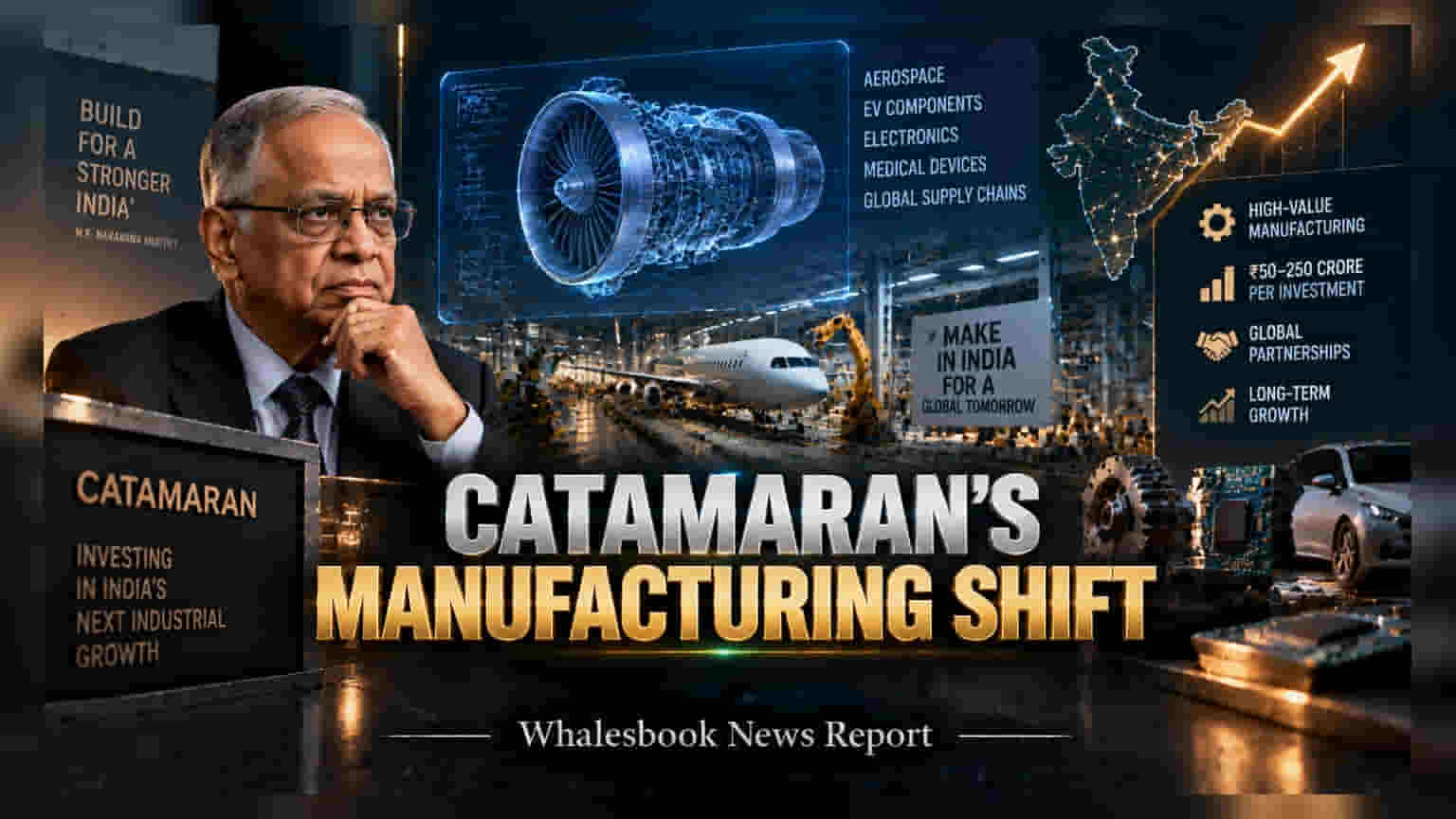
N.R. Narayana Murthy's family office, Catamaran, is shifting its investment focus toward growth-stage manufacturing companies. The firm plans to deploy ₹50 crore to ₹250 crore annually in sectors like aerospace and electronics to strengthen India’s industrial supply chain. This move signals a strategic pivot away from early-stage technology ventures toward more mature industrial businesses with established market presence.
Catamaran, the investment office managing the wealth of Infosys co-founder N.R. Narayana Murthy, is changing its investment strategy to focus on growth-stage manufacturing and supply-chain companies in India. The firm, led by President Deepak Padaki, is moving away from its historical emphasis on early-stage technology startups to target more mature businesses that have already proven their product-market fit.
Targeting High-Growth Manufacturing
The new investment strategy focuses on sectors where India is aiming to build global competitiveness, including aerospace, electric vehicle components, high-end electronics, and medical devices. The firm intends to invest between ₹50 crore and ₹250 crore in each company, targeting three to four deals every year. The objective is to identify and back component manufacturers that can either replace imports or serve demanding international clients, thereby boosting India's industrial capabilities.
Strategic Cross-Border Partnerships
Beyond just providing capital, Catamaran is looking to build strategic partnerships by connecting Indian companies with mid-market manufacturers from Japan, South Korea, Taiwan, and Vietnam. The goal is to bring foreign manufacturing technology into the Indian market, helping local players scale up by combining global technical expertise with domestic execution. Unlike typical venture capital funds that operate on rigid exit timelines, Catamaran plans to hold these investments for longer cycles, aiming for long-term growth rather than quick, short-term exits.
Execution Risks and Market Context
While the firm is optimistic about the potential for returns—targeting approximately 20 percent on these growth-stage bets—investors should note that the manufacturing sector carries specific risks. Unlike software businesses, which can scale with lower capital requirements, manufacturing ventures require significant investment in land, machinery, and logistics. The primary challenge cited by the firm is execution risk, as these projects depend on complex supply chains and large-scale industrial operations.
This shift by Catamaran comes as many institutional investors increasingly look toward the Indian government's production-linked incentive schemes and broader manufacturing growth, which aim to make the country a global production hub. For investors, the success of this strategy will depend on the firm’s ability to pick companies that can maintain margins while managing the high capital expenditure and operational demands of the manufacturing sector. The next steps will involve watching how Catamaran selects its initial partners and whether it can successfully integrate foreign technical expertise with domestic operations.