

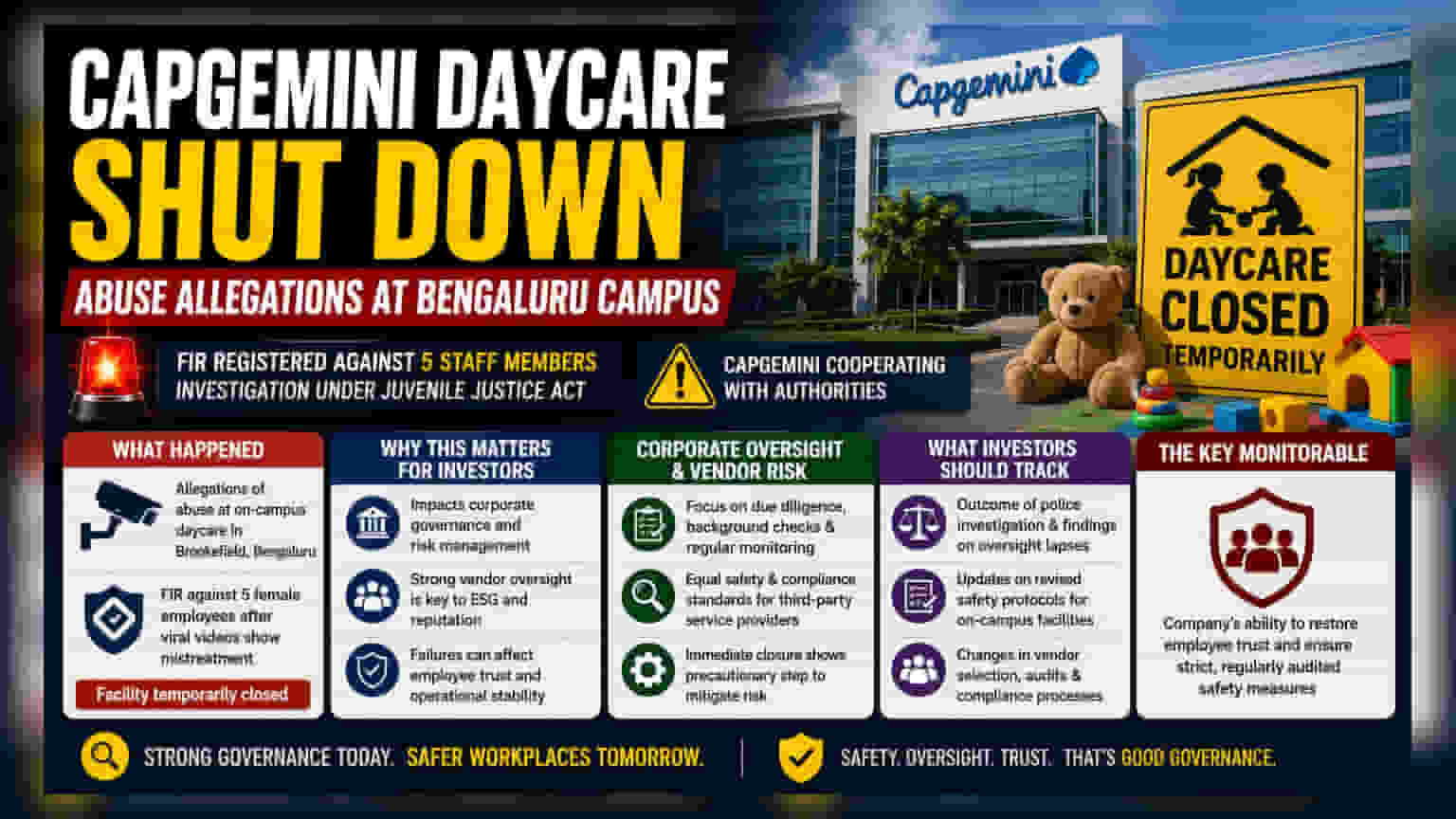
Capgemini has temporarily closed its on-campus daycare facility in Bengaluru following an FIR against five caregivers for the alleged abuse of toddlers. The company stated it is cooperating fully with police investigations. For investors, this incident highlights the importance of corporate governance and vendor oversight regarding third-party service providers on company premises.
What Happened
Capgemini has announced the temporary closure of its on-campus daycare facility at its Brookefield campus in Bengaluru. This decision follows serious allegations of abuse involving toddlers left in the care of center staff. Bengaluru police have registered a First Information Report (FIR) against five female employees of the facility—identified as Manjula, Vijayalakshmi, Sindhu, Bhavani, and Bindu—following viral videos that reportedly showed mistreatment, including intimidation and physical abuse. The investigation is currently ongoing under the Juvenile Justice (Care and Protection of Children) Act. Capgemini has confirmed it is cooperating with the authorities to establish the facts.
Why This Matters For Investors
While this incident is operational and social in nature, it carries implications for corporate governance and risk management. Large IT organizations frequently host third-party service providers, such as childcare, transport, or catering vendors, within their campuses. For shareholders and analysts, the event brings attention to how effectively a company manages these external relationships.
Strong vendor oversight is a critical part of a company’s Environmental, Social, and Governance (ESG) framework. Investors often track how companies vet their partners, monitor service quality, and maintain safety protocols. A failure in oversight—even when outsourced—can lead to reputational damage and increased regulatory scrutiny, which may affect employee morale and operational stability.
Corporate Oversight and Vendor Risk
For major corporations, the challenge lies in maintaining the same level of safety and compliance standards for outsourced services as they do for internal operations. When such incidents occur, the focus shifts to whether the company had robust due diligence, background verification, and regular monitoring mechanisms in place for the service provider.
In this case, the immediate closure of the facility reflects a precautionary step to mitigate further reputational risk. The outcome of the police investigation will likely determine whether the company needs to revise its vendor management policies, safety audits, or contract terms to prevent such occurrences in the future.
What Investors Should Track
Investors may monitor the company’s subsequent actions regarding its facility management policies. Important aspects to watch include:
- The final outcome of the police investigation and any subsequent findings regarding lapses in vendor oversight.
- Updates from the company regarding revised safety protocols for on-campus facilities.
- Whether the company announces changes in how it selects or audits third-party service providers to strengthen compliance.
The key monitorable remains the company’s ability to restore trust among its employees and ensure that safety measures for on-campus facilities are strictly enforced and regularly audited.