 Whalesbook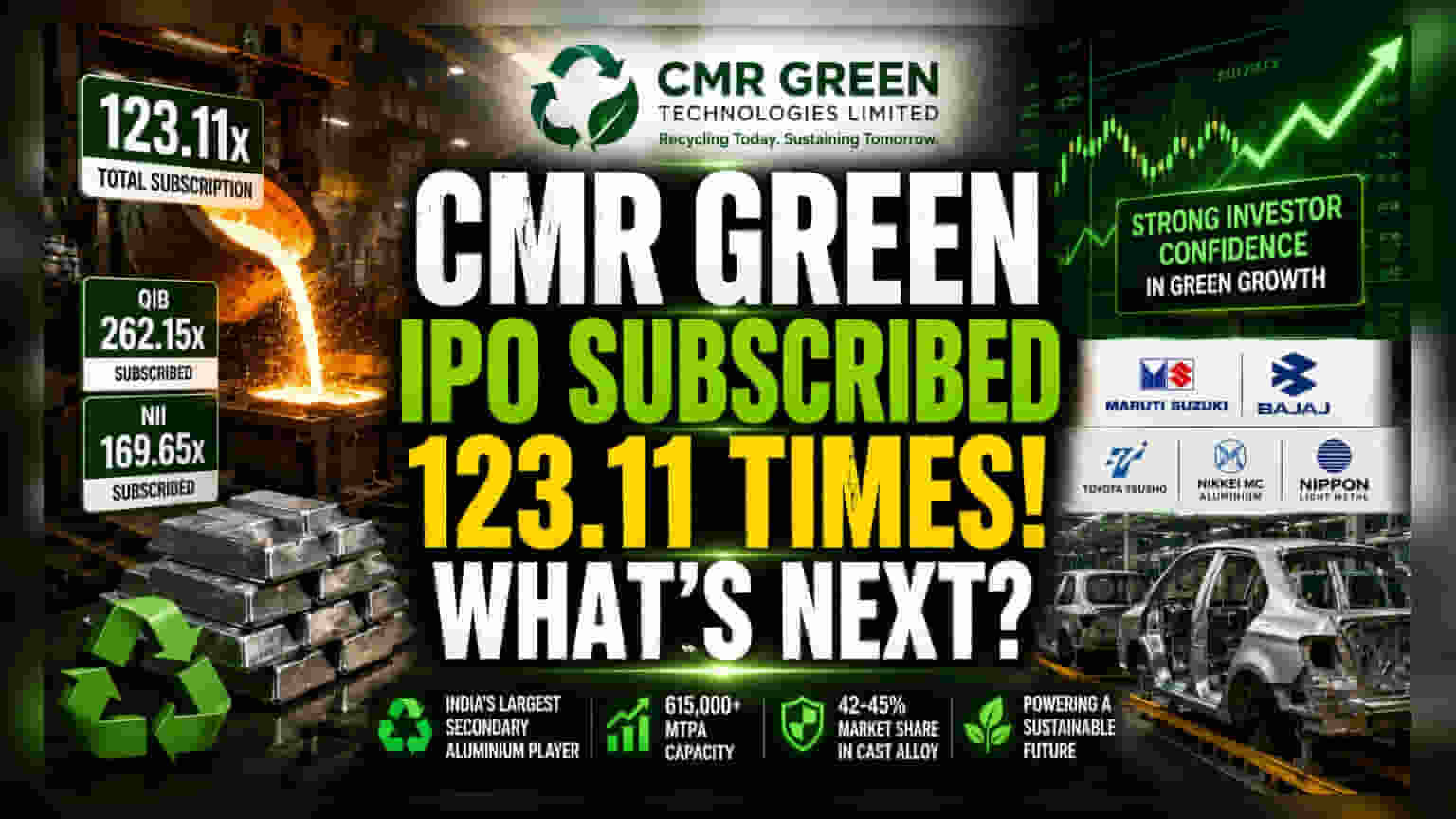


The Subscription Surge
The public offering for CMR Green Technologies closed with a subscription rate of 123.11 times, signaling a strong appetite for industrial recycling plays despite a volatile primary market. Qualified Institutional Buyers spearheaded the demand, booking their allocation 262.15 times, while non-institutional investors followed with 169.65 times coverage. This enthusiasm arrived against a backdrop of wider Indian market caution, where investors have become increasingly selective following recent fluctuations in the Nifty 50 and rising inflationary pressures.
The Operational Moat
As the largest player in India’s secondary aluminium industry by installed capacity, the firm functions as a critical link in the automotive supply chain. With a production capacity exceeding 615,000 MTPA, the company has secured long-term relationships with major OEMs, including Maruti Suzuki and Bajaj Auto. Its strategic joint ventures with Japanese partners—Toyota Tsusho, Nikkei MC Aluminium, and Nippon Light Metal—provide an operational edge in advanced casting technology and molten metal supply. These partnerships serve as significant entry barriers, protecting its market share of approximately 42% to 45% in the cast alloy automotive segment.
The Forensic Bear Case
While the subscription figures appear robust, the company’s underlying financials invite a cynical view. Because this is a 100% offer-for-sale, the company receives zero proceeds from the IPO; all funds flow directly to existing promoters and shareholders. Profitability has historically been erratic, with a sharp loss of ₹838.56 crore reported in FY24, largely attributed to goodwill write-offs, before a recovery to ₹155 crore in FY25.
Operational risks remain high. The firm is deeply exposed to London Metal Exchange (LME) price volatility, as its thin margins are highly sensitive to the cost of imported scrap, which accounted for over 70% of raw materials in recent fiscal periods. Furthermore, client concentration is a structural weakness; with nearly a third of revenue generated by the top five customers, the loss of any single major automotive contract could disproportionately impact cash flows. Additionally, the company has operated with negative free cash flow, a reality that necessitates constant working capital management and exposes the business to foreign exchange fluctuations.
Future Outlook
Market participants are now looking toward the June 10 listing date to determine if the grey market premium of approximately ₹70 can be sustained. While long-term tailwinds—such as the transition to lightweight electric vehicles and India’s broader push for a circular economy—support the industry, short-term performance will likely be dictated by raw material price stability and the company's ability to maintain its margin profile in an increasingly competitive recycling environment.