 Whalesbook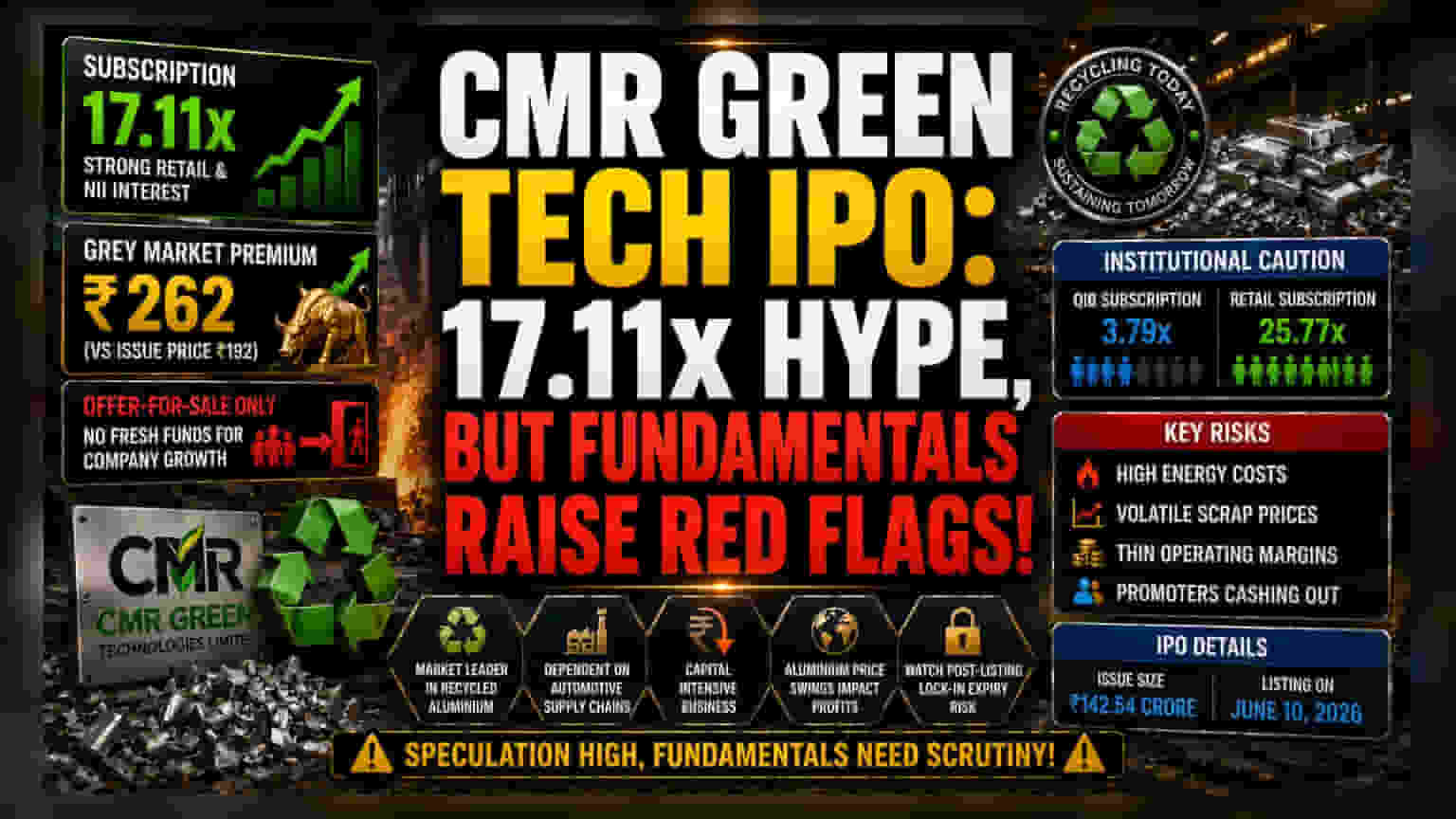


The Valuation Gap
While the 17.11x subscription rate points to intense retail and non-institutional enthusiasm, the underlying financial structure of CMR Green Technologies suggests a more tempered reality. The offering consists entirely of an Offer-for-Sale, meaning capital is flowing directly to existing shareholders rather than into the company’s balance sheet for expansion or debt reduction. This exit-heavy strategy often signals that insiders are capitalizing on current metal recycling market valuations, leaving new public shareholders to bear the brunt of future capital requirements.
The Analytical Deep Dive
The surge in grey market premiums to ₹262 against a ₹192 ceiling reflects speculative fervor rather than fundamental shifts in the secondary aluminium space. Comparatively, peers in the non-ferrous metal recovery sector often command different valuation multiples based on their ability to source raw materials from diverse automotive and industrial ecosystems. CMR’s reliance on specific supply chains in the Indian automotive market exposes it to cyclical downturns that the broader metallic recycling industry has sought to hedge against by diversifying into industrial waste streams. Market participants should note that while the IPO timing aligns with a localized recovery in recycled metal demand, institutional buy-in remained relatively cautious, with QIBs showing a significantly lower subscription interest compared to the retail segment.
The Forensic Bear Case
Investors should remain skeptical of the growth narrative given the thin operating margins characteristic of the metal reclamation process. The firm faces intense pressure from fluctuating scrap prices and the high energy costs required for processing. A primary point of concern remains the capital-intensive nature of the business and the decision by existing promoters to liquidate such a substantial portion of their holdings. Unlike industry leaders that utilize IPO proceeds to optimize smelting technology or improve environmental compliance, CMR is utilizing the public market as a liquidity event. Furthermore, the company’s history of narrow margins indicates that any minor fluctuation in global aluminium spot prices could disproportionately impact bottom-line profitability, rendering the current valuation sensitive to macroeconomic volatility.
The Future Outlook
As the company prepares for its June 10 debut, the disconnect between speculative grey market sentiment and institutional caution remains the primary risk factor. Future performance will likely be tied to the company's ability to maintain its market leadership in the recycled aluminium space despite high promotional turnover and input cost inflation. Analysts will be monitoring the post-listing lock-in expiry and the firm's ability to demonstrate margin expansion without the benefit of the fresh capital that typically characterizes growth-stage companies.