 Whalesbook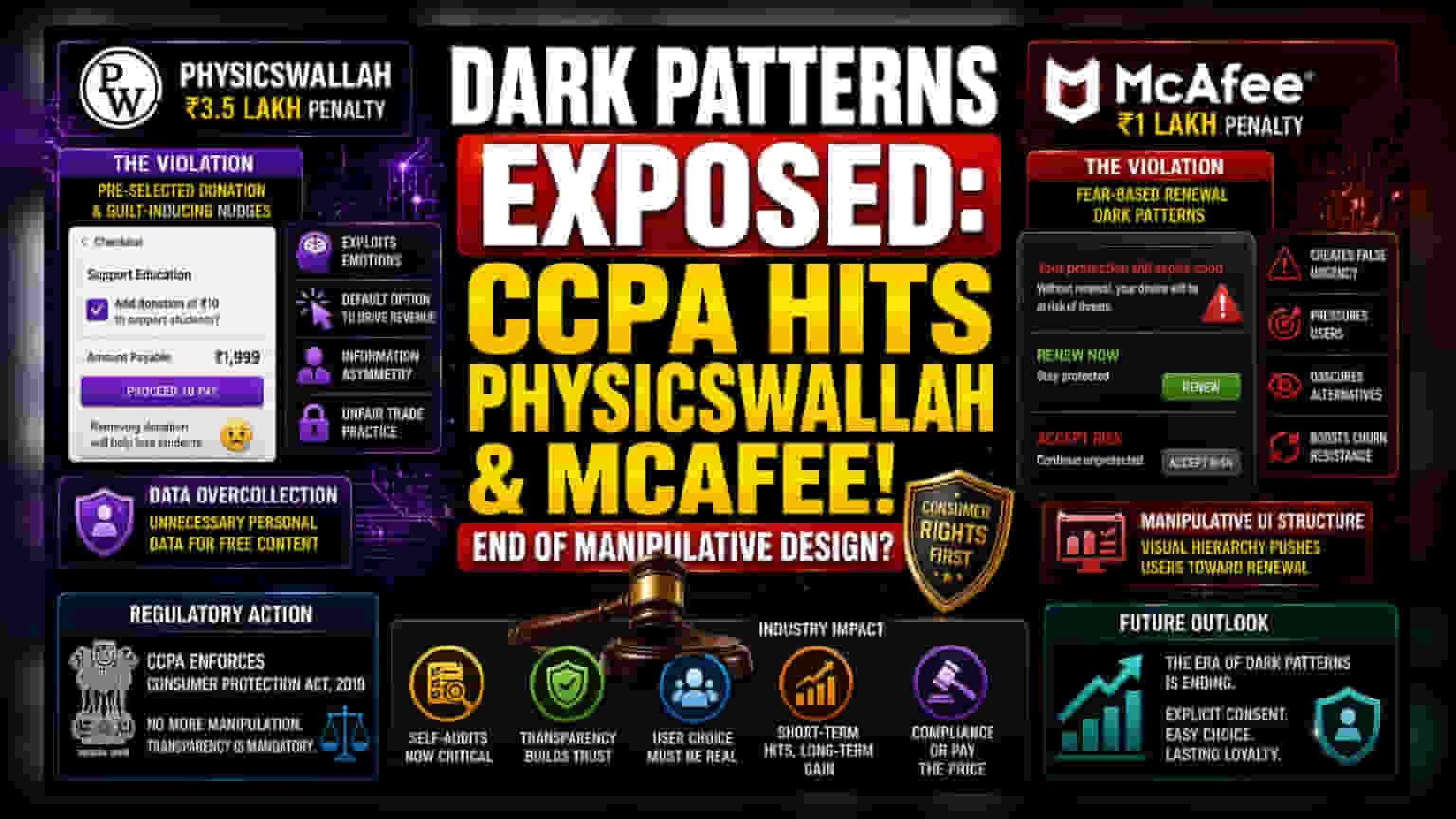


The Shift Toward Regulatory Oversight
The imposition of financial penalties on PhysicsWallah and McAfee signals a hardening stance by the Central Consumer Protection Authority (CCPA) against the digital industry’s reliance on behavioral manipulation. By targeting the mechanics of user experience, the regulator is moving beyond traditional advertising standards to address the architecture of choice itself. This regulatory action suggests that companies can no longer treat user interface design as a purely aesthetic or marketing-driven endeavor, as the scrutiny now extends to the psychological underpinnings of the checkout process.
Analyzing the Mechanics of Deception
The scrutiny of PhysicsWallah centers on the friction injected into the checkout flow. The automatic inclusion of a donation suggests a model designed to capture marginal revenue through consumer inertia rather than active participation. When software architectures include emotionally loaded prompts designed to prevent the removal of these add-ons, the platform effectively shifts from providing a service to executing a soft-coercion strategy. This approach creates a mismatch between user intent and final billing, which regulators increasingly classify as a direct violation of consumer autonomy under the 2019 Act.
The Cybersecurity Subscription Trap
McAfee’s penalty highlights a distinct, yet equally concerning, trend in the SaaS sector where renewal interfaces are weaponized. By framing a failure to renew as an active security compromise—or 'accepting risk'—the company creates a false dichotomy. This tactic forces users into an uncomfortable decision-making environment that favors retention over informed choice. The visual hierarchy of the interface, which explicitly highlights the renewal path while obfuscating alternatives, demonstrates a systemic effort to reduce churn through psychological pressure rather than value proposition.
The Forensic Bear Case: Reputation and Operational Risk
These findings expose a significant vulnerability in the growth models of digital-first firms. For PhysicsWallah, which relies heavily on a high-trust model within the competitive edtech sector, the identification of data collection practices—where free content is gated behind unnecessary personal information requests—risks eroding its brand equity. When consumer trust is sacrificed to optimize conversion metrics, the long-term cost of user acquisition often rises as the firm faces increased regulatory friction and public skepticism.
Furthermore, for McAfee, this penalty casts doubt on its current retention strategy, suggesting that its subscription base may be inflated by users who found the cancellation process confusing or unnecessarily fraught with anxiety. Should the CCPA demand deeper audits of these software flows, both firms may be forced to redesign their entire customer funnel, likely resulting in lower short-term conversion rates. Companies that fail to pivot toward transparent design risk not only further fines but also the loss of institutional investor confidence as governance and consumer protection become increasingly prioritized in enterprise valuations.
Future Outlook and Sector Implications
As the CCPA encourages widespread self-audits, the digital industry faces a broad transition. Firms that have historically benefited from opaque interface designs will need to reconcile their business requirements with a new era of strict consumer protection standards. The expectation is that the market will shift toward models that favor explicit, informed, and easily reversible consent, effectively closing the chapter on growth strategies built upon design-led manipulation.