 Whalesbook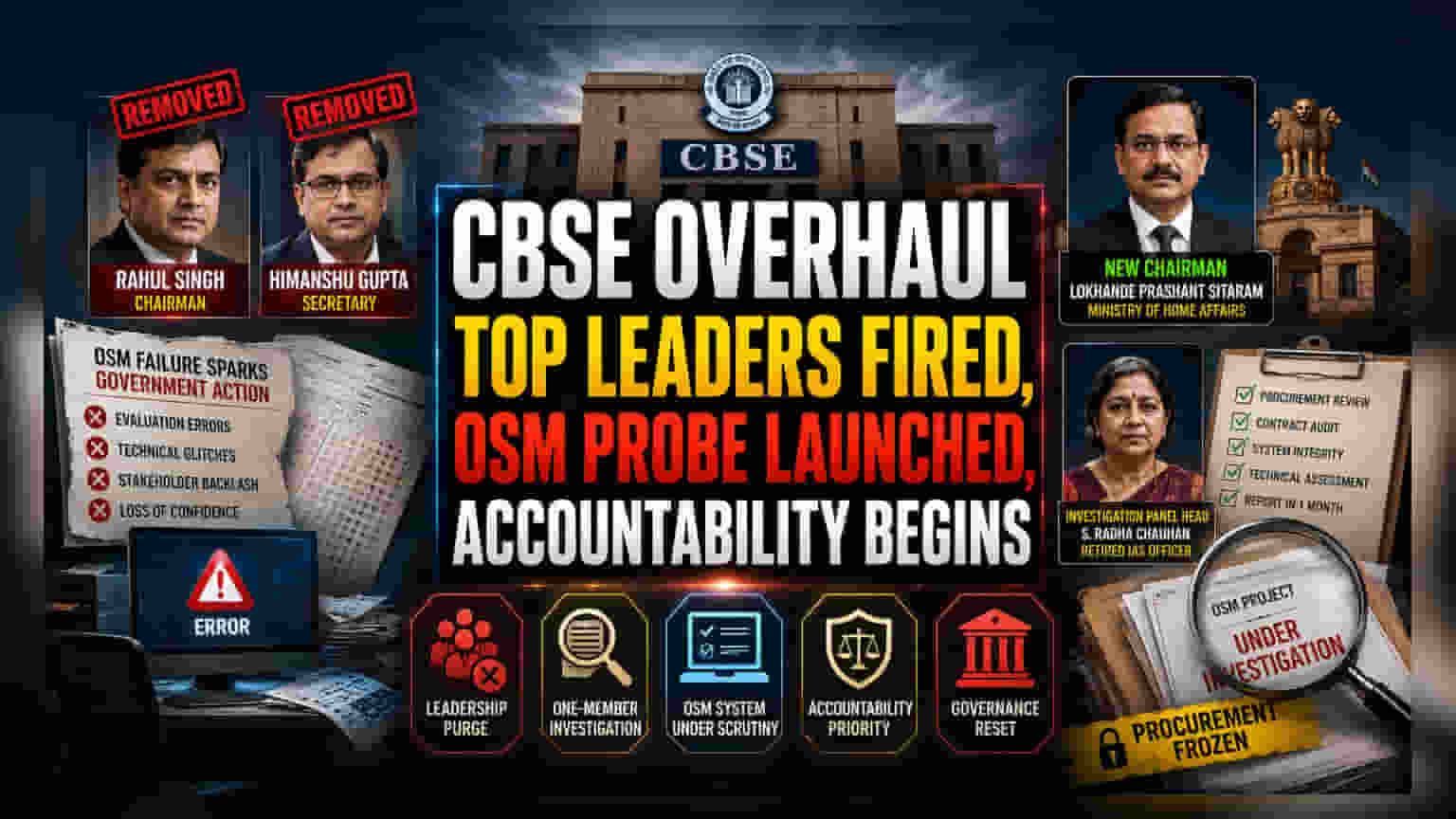


The Institutional Fallout
The sudden removal of Chairman Rahul Singh and Secretary Himanshu Gupta marks a significant collapse in administrative confidence regarding the board’s digital transformation efforts. This purge occurred with striking speed, surfacing mere hours after the outgoing leadership presented a defense of the On-Screen Marking (OSM) project to a parliamentary committee. The transition signals a harsh rebuke from the Ministry of Education, as the government installs Lokhande Prashant Sitaram, a seasoned official from the Ministry of Home Affairs, to stabilize the institution.
Procurement Under the Microscope
The appointment of S. Radha Chauhan to lead a one-member investigative panel elevates the stakes for the board’s technical procurement process. Chauhan, a veteran retired IAS officer, is tasked with auditing the selection and integration of OSM systems that have plagued the latest Class 12 evaluation cycle. The focus remains on whether the contract specifications were compromised or if the chosen infrastructure was unfit for high-stakes national assessments. This inquiry, scheduled to conclude within a month, poses a direct threat to the current technical roadmap established by the outgoing board executives.
Structural Fragility in Evaluation
The operational shift follows weeks of growing backlash from stakeholders regarding the accuracy of digitized answer sheet processing. Reports of severe discrepancies in marks awarded through the automated system suggest a deeper failure in quality control protocols. While the board previously championed the OSM initiative as a breakthrough for evaluation speed and transparency, the technical glitches encountered by examiners have effectively nullified these benefits. The investigation must now determine if these errors were the result of inadequate software architecture or a fundamentally flawed implementation strategy by the board’s technology partner, COEMPT.
Future Governance and Risks
Administrative continuity is now secondary to restoring institutional credibility. The incoming leadership faces the immediate burden of auditing existing evaluation records while simultaneously defending the integrity of the board against potential litigation or widespread appeals for re-evaluation. With the procurement process for future educational software now essentially frozen under the threat of this investigation, the board faces a difficult choice between reverting to legacy methods or undertaking a costly overhaul of its digital infrastructure. Market watchers note that similar large-scale public sector IT failures often lead to extended delays in vendor payments and a long-term freeze on new procurement projects, heightening the risk for stakeholders embedded in the board's supply chain.