

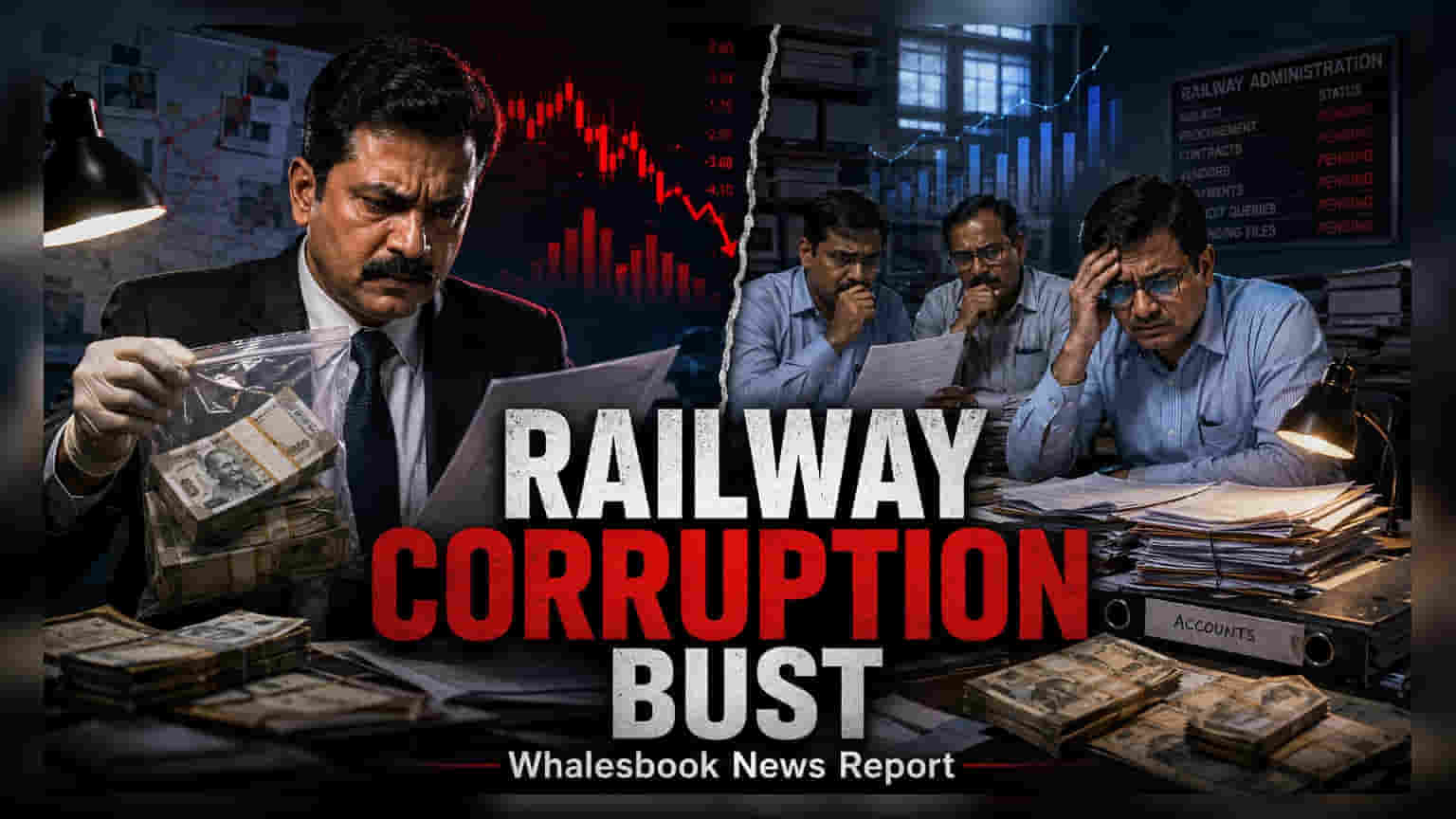
The Central Bureau of Investigation has arrested five North Western Railway officials in Rajasthan over bribery allegations related to company bill processing. The operation recovered Rs 2.66 lakh in bribe money and Rs 9 lakh in cash. For the broader railway ecosystem, such incidents highlight potential administrative risks and payment delays that can impact private contractors and project execution timelines.
The Central Bureau of Investigation (CBI) has arrested five officials from the North Western Railway (NWR) in Rajasthan following separate investigations into bribery allegations. The operation, which took place on August 13, 2026, targeted railway employees who were allegedly accepting illegal payments to expedite the processing of bills for private companies.
In Jaipur, the agency arrested an office superintendent, an assistant financial advisor, and a senior section officer, alongside an employee from a private firm based in Navi Mumbai. The investigation alleges that these officials were receiving bribes to speed up bill payments for ongoing work. A separate operation in Bikaner resulted in the arrest of a senior section officer and an accounts assistant, along with an employee from a Kolkata-based private company. During these combined operations, investigators recovered Rs 2.66 lakh in bribe money and seized an additional Rs 9 lakh in cash during subsequent searches in Jaipur and Delhi.
For market participants and investors tracking the infrastructure and railway sector, these events are significant beyond the immediate criminal charges. Indian Railways remains the largest buyer of engineering, construction, and supply services in the country. Corruption or administrative inefficiency in the processing of bills often leads to payment delays for private contractors. When such corruption is systemic or widespread, it can disrupt the working capital cycle of private companies that rely on government orders, as they may face unexpected delays in receiving payments for completed work.
This incident also draws attention to the governance and transparency standards within the procurement and billing departments of public sector entities. While the investigation is ongoing, such actions by the CBI suggest a crackdown on the facilitation of business transactions through unofficial channels. The arrest of employees from private firms alongside railway officials indicates that the investigation is looking into the role of both the providers and the beneficiaries of these bribes.
The key monitorable for investors and stakeholders in the railway infrastructure space will be whether this investigation leads to tighter, more transparent billing processes in the region. Historically, administrative crackdowns can lead to temporary periods of slower decision-making as departments implement stricter compliance checks. Investors in railway-related stocks often watch for such developments, as they can affect project execution timelines and the cash flow of contractors who are heavily dependent on timely government bill processing.