

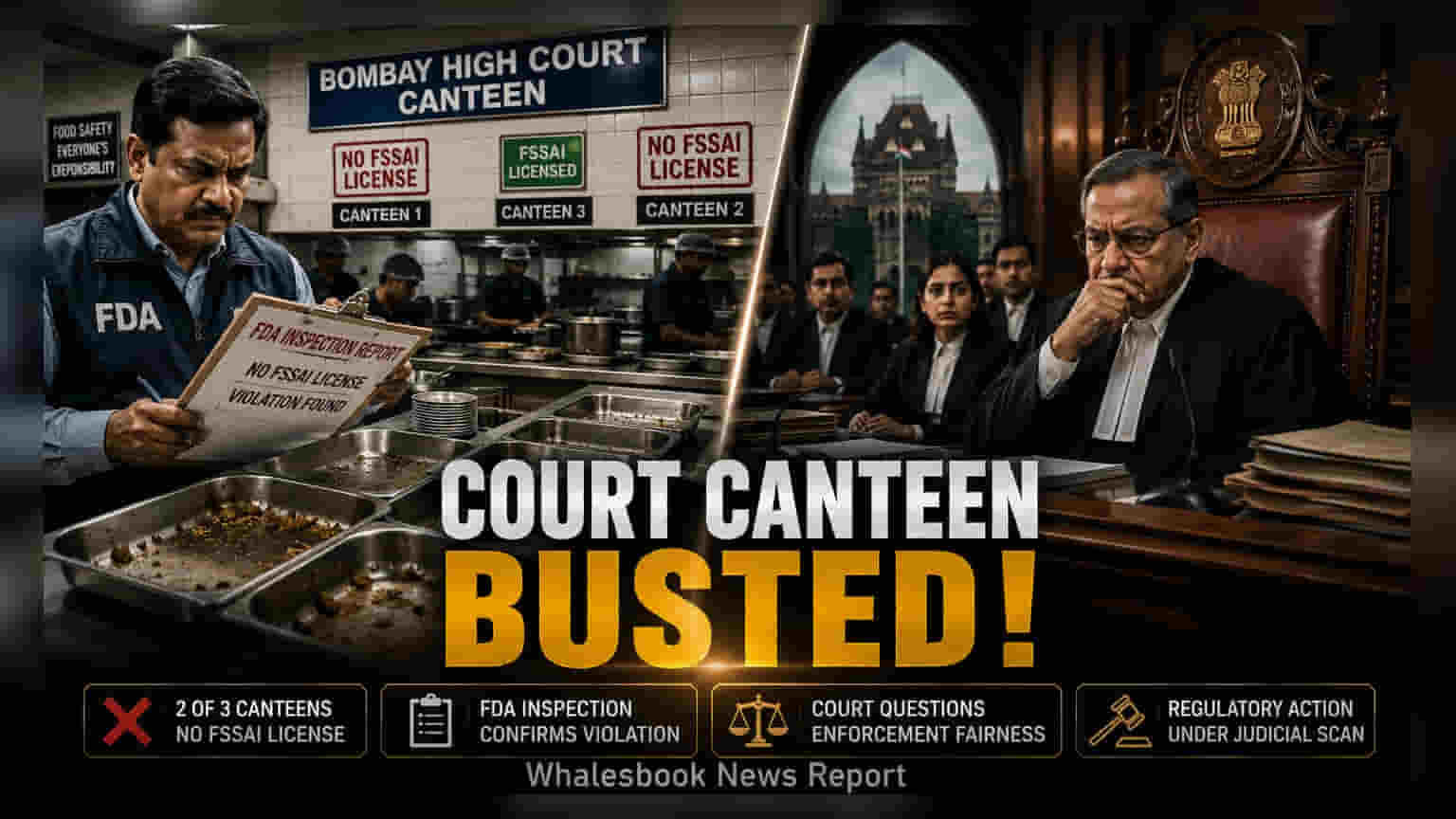
Maharashtra FDA inspectors found two of the three canteens at the Bombay High Court premises were operating without valid licenses. The surprise check followed judicial inquiries regarding the consistency of food safety enforcement across government and private establishments, highlighting a challenging regulatory environment for food businesses in the state.
The Maharashtra Food and Drug Administration (FDA) conducted an inspection of canteens within the Bombay High Court premises, revealing that two of the three facilities were operating without the necessary FSSAI licenses. This discovery follows a series of questions raised by the High Court regarding the consistency of food-safety enforcement, specifically asking whether the state’s rigorous inspection drives were applied equally to private businesses and government or semi-government establishments.
FDA Commissioner Tukaram Mundhe, who has been spearheading an aggressive food-safety crackdown across the state, confirmed the findings. He stated that the inspection was conducted in response to the court’s own queries about whether the FDA was targeting only private entities. The agency maintains that its enforcement mandate is to ensure compliance across all sectors, regardless of ownership, to uphold food safety standards.
Regulatory Tension and Judicial Scrutiny
This incident highlights the growing friction between the state’s food regulator and the judiciary. While the FDA has pursued a strict enforcement policy, the Bombay High Court has recently pushed back against what it perceives as overreach. In several instances, the High Court has criticized the FDA's standard practice of immediate license suspension for minor compliance issues, labeling certain actions as "perverse" or "overboard."
In a recent notable case involving a sweet shop in Pune, the High Court ordered the state to pay ₹5 lakh in compensation after determining that the FDA’s decision to suspend the shop’s license was disproportionate to the violation. These rulings indicate that while regulatory compliance remains a non-negotiable requirement for food and beverage operators, the courts are increasingly monitoring whether the regulator's methods align with legal standards of fairness and proportionality.
For businesses operating in the food and hospitality sector, particularly in Maharashtra, the regulatory environment has become increasingly complex. The aggressive nature of the FDA's current drives means that even minor documentation lapses can lead to operational shutdowns, which carry significant reputational and financial risks. Conversely, the judiciary’s ongoing scrutiny of these enforcement actions suggests that business owners have legal avenues to challenge excessive penalties. As the situation evolves, the consistency of FDA inspections and the outcome of ongoing legal challenges to their enforcement methods will remain key monitorables for operators and stakeholders in the food industry.