

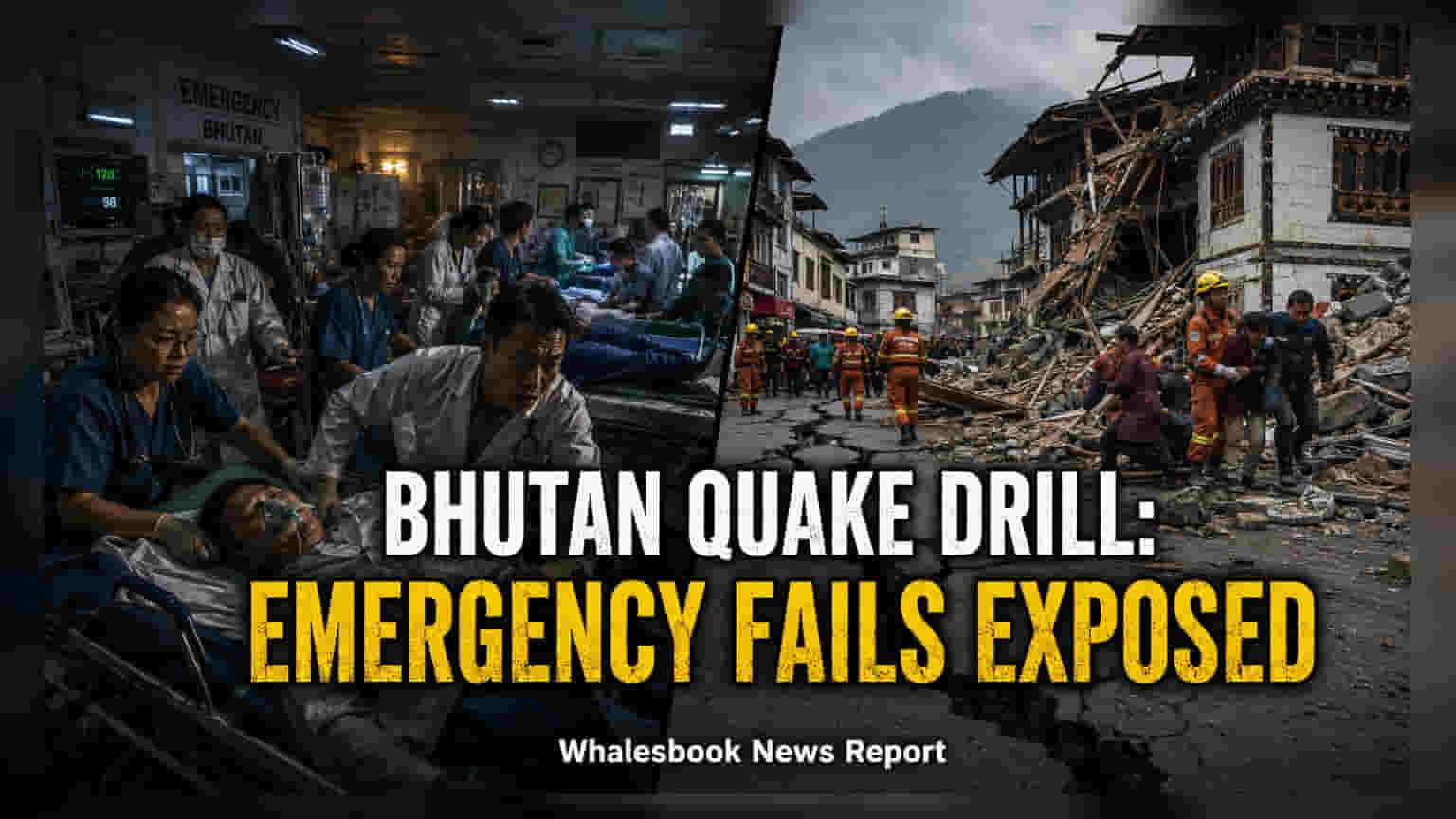
A simulated 7.5 magnitude earthquake in Thimphu has exposed significant gaps in Bhutan's emergency response, including medical mobilization and communication infrastructure. The findings, supported by the India-backed Coalition for Disaster Resilient Infrastructure (CDRI), highlight the urgent need for structural resilience in the Himalayan region, which remains a key focus for regional economic and infrastructure stability.
A large-scale earthquake simulation conducted in Bhutan’s capital, Thimphu, has provided a stark assessment of the nation’s disaster preparedness. The exercise, which took place in June 2026 and was detailed in recent reports, simulated a 7.5 magnitude earthquake to test the city’s response systems. For investors and stakeholders tracking regional development, the drill serves as a diagnostic tool for infrastructure resilience in the sensitive Himalayan geography.
The simulation, which involved technical guidance from Nepal’s National Society for Earthquake Technology (NSET) and collaboration with the Coalition for Disaster Resilient Infrastructure (CDRI), revealed specific operational deficiencies. Key challenges identified include a lack of immediately available resources to establish temporary field hospitals and weaknesses in backup communication systems during power outages. These findings are critical because such infrastructure is essential to maintaining business continuity and minimizing economic disruption in the event of a natural disaster.
The involvement of the CDRI is particularly relevant for observers of the Indian market. Headquartered in New Delhi, the CDRI is a global partnership that aims to promote the resilience of infrastructure systems to climate and disaster risks. The findings from the Thimphu drill are expected to feed into the broader regional strategy for disaster-resilient construction, a sector that increasingly influences investment decisions for cross-border projects, including hydropower and regional connectivity links that involve Indian companies and capital.
Following the exercise, authorities in Bhutan have initiated an after-action review to address these gaps. For stakeholders, the primary monitorable in the coming months will be the allocation of resources toward upgrading emergency response systems and the integration of disaster-resilient standards into new infrastructure projects. As the region prioritizes better preparedness, the focus is shifting toward practical improvements in supply chain logistics, reliable telecommunications, and the rapid deployment of medical infrastructure, all of which are fundamental to stable long-term economic growth in the region.