

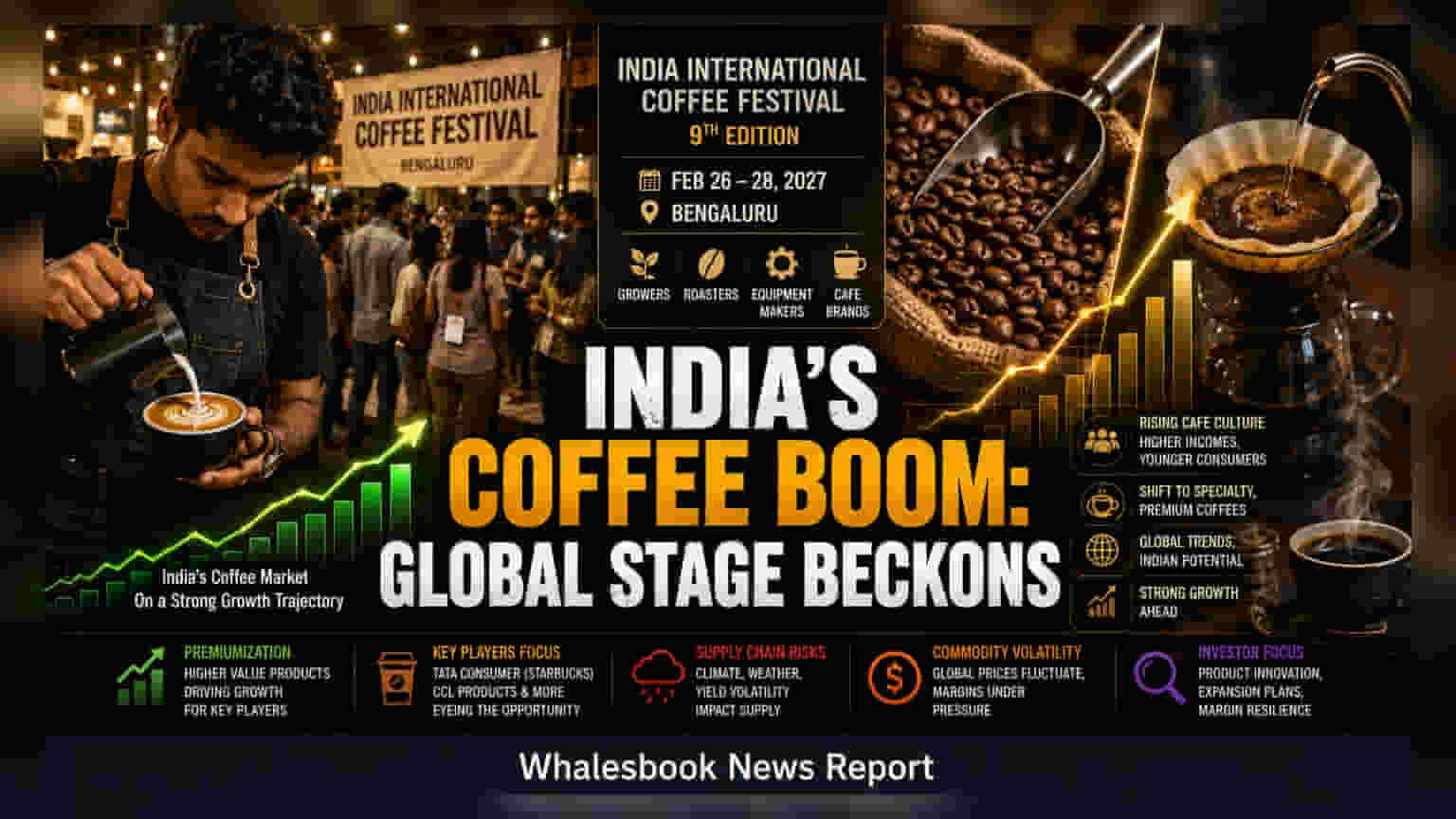
The 9th India International Coffee Festival is set for February 2027 in Bengaluru, highlighting the growing domestic and global appetite for Indian specialty coffee. For investors, the event underscores the ongoing 'premiumization' trend in the cafe and retail sector, which is a key growth area for major Indian FMCG and coffee-focused companies.
The India International Coffee Festival (IICF), organized by the Specialty Coffee Association of India (SCAI) and supported by the Coffee Board of India, is scheduled to take place in Bengaluru from February 26 to 28, 2027. This 9th edition of the event is designed to bring together key stakeholders across the value chain, including growers, roasters, equipment manufacturers, and cafe brands.
Premiumization in the Coffee Sector
While the festival itself is an industry event and not a listed company, it serves as a significant bellwether for the trends shaping India’s coffee market. The industry is currently witnessing a transition from traditional consumption patterns toward specialty, high-value coffee products. This shift is driven by a rising domestic cafe culture, higher disposable incomes among urban consumers, and a growing younger demographic willing to pay more for premium blends.
For investors, this trend is relevant as it directly influences the growth strategies of major players in the Indian market. Companies such as Tata Consumer Products, which operates the Starbucks joint venture in India, and CCL Products, a large manufacturer of instant coffee, are focused on capturing this shift in consumer preference. The move toward higher-value products is a standard strategy for these firms to improve their product mix and defend market share in a competitive retail environment.
Supply Chain and Commodity Risks
Although the outlook for domestic consumption appears positive, the coffee sector remains subject to inherent operational risks. The 'farm-to-cup' framework emphasized at the festival relies heavily on stable production. However, coffee cultivation is highly sensitive to climate conditions, including droughts, excessive rainfall, and phenomena like El Niño, which can cause significant volatility in crop yields.
Furthermore, as an agricultural commodity, coffee is subject to global price fluctuations. Companies involved in the coffee business often face pressure from varying raw material costs. When global coffee prices rise or supply chains are disrupted, companies must balance the need to pass these costs on to consumers without hurting demand. Investors typically track how these businesses manage their profit margins during periods of high commodity price volatility.
What Investors Should Monitor
Looking ahead, the development of the specialty coffee segment will likely remain a key indicator of growth for retail and FMCG firms. Investors may monitor how listed companies adapt to the rising demand for specialty coffee, specifically regarding their expansion plans, new product launches, and the ability to maintain profit margins despite fluctuating raw material costs. The upcoming festival will likely provide insights into the next wave of innovation in brewing and retail branding, which remains an important area of focus for the long-term competitiveness of the sector.