

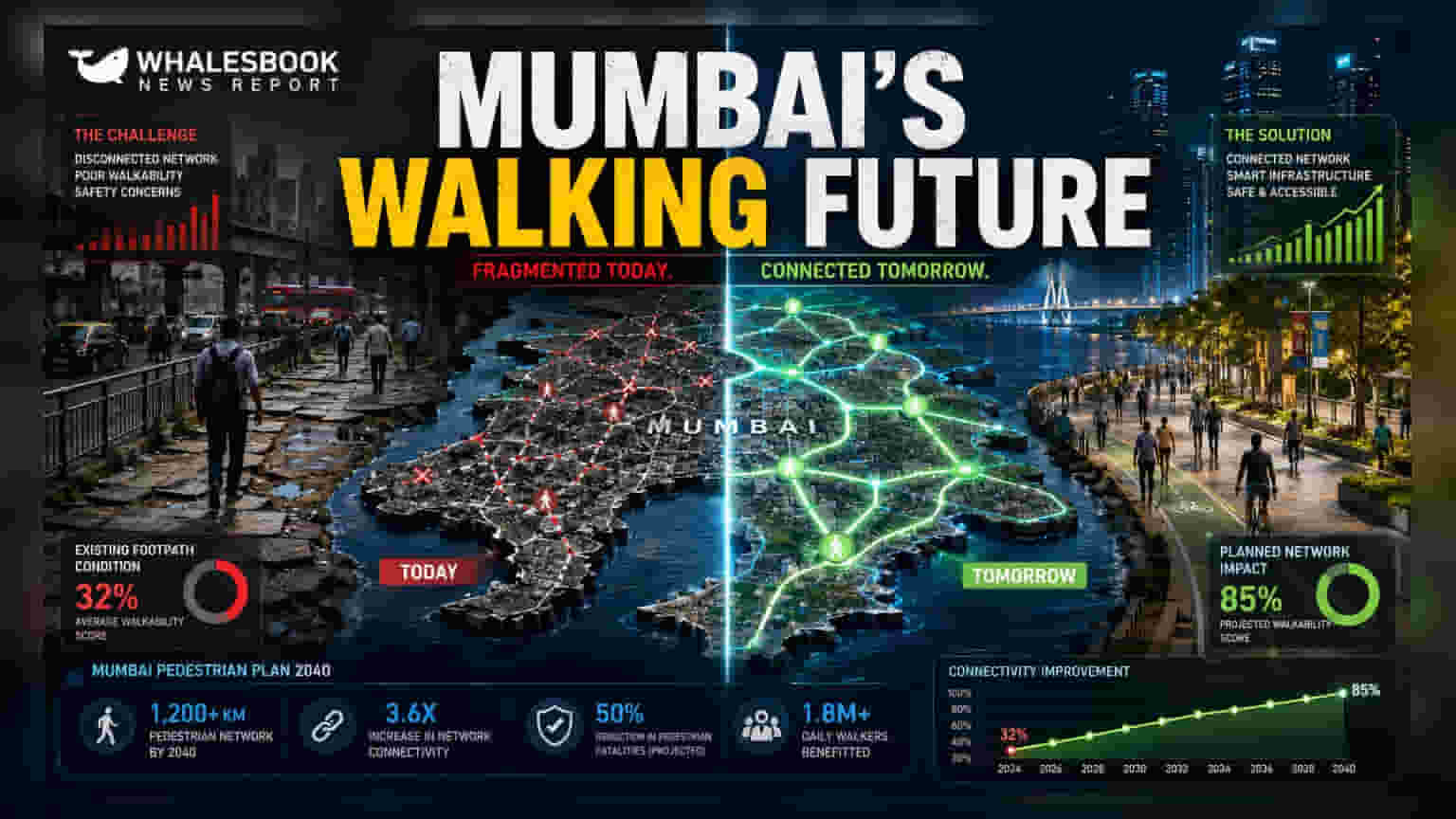
The Brihanmumbai Municipal Corporation is building a comprehensive master pedestrian network using GIS and drone mapping. This project, reported in a Supreme Court affidavit, aims to fix fragmented footpaths and improve city-wide walking access. Investors may note the potential for increased demand for urban infrastructure, survey, and geospatial technology services in upcoming public tenders.
What Happened
The Brihanmumbai Municipal Corporation (BMC) has initiated the development of India’s first city-wide master pedestrian network plan. The project, revealed in an official affidavit filed with the Supreme Court, marks a transition from disconnected footpaths to a planned, unified walking network. The civic body is using advanced technology, including LiDAR surveys, drone mapping, and Geographic Information System (GIS) tools, to create a 3D model of the city’s urban infrastructure. This digital approach is designed to identify missing links and accessibility gaps across Mumbai's wards.
The Role Of Technology In Urban Infrastructure
The move toward a data-driven master plan signals a shift in how municipal bodies manage urban assets. By building a geospatial inventory, the BMC intends to integrate pedestrian paths with existing public transport corridors. This reliance on high-tech surveying tools suggests a growing market for specialized companies that provide GIS mapping, satellite imagery analysis, and 3D city modeling services in India’s metropolitan regions. Such infrastructure projects often involve competitive bidding for consultancy and implementation, which may impact firms specialized in urban planning and digital mapping.
Legal Context And Accountability
The project is a direct response to a public interest litigation regarding pedestrian safety and the enforcement of universal footpath policies. The Supreme Court has been actively monitoring the situation since November 2025, directing the BMC to improve accountability and infrastructure auditing. With the next hearing set for September 3, 2026, the progress of this master plan will be tied to judicial oversight. This adds a layer of regulatory predictability to the project, as the BMC must report its findings and implementation progress to the court.
Balancing Infrastructure And Livelihood
The master plan must also account for the Street Vendors (Protection of Livelihood and Regulation of Street Vending) Act, 2014. The BMC has stated that it will balance the creation of continuous pedestrian corridors with the rights of street vendors under existing Maharashtra state rules. For contractors and urban developers, this means the execution of the plan may require complex site management, as urban spaces in Mumbai are often densely packed with competing infrastructure and commercial interests.
What Investors Should Track
Investors tracking the urban infrastructure and engineering sector should watch for upcoming tender announcements related to the execution phase of this master plan. Key monitorables include the budget allocation for the implementation of the geospatial findings, the timelines for the construction of identified connectivity corridors, and the appointment of project management consultants. Furthermore, as other major Indian cities face similar congestion and safety challenges, the success or failure of this Mumbai-based model could set a precedent for infrastructure spending in other urban municipal corporations.