

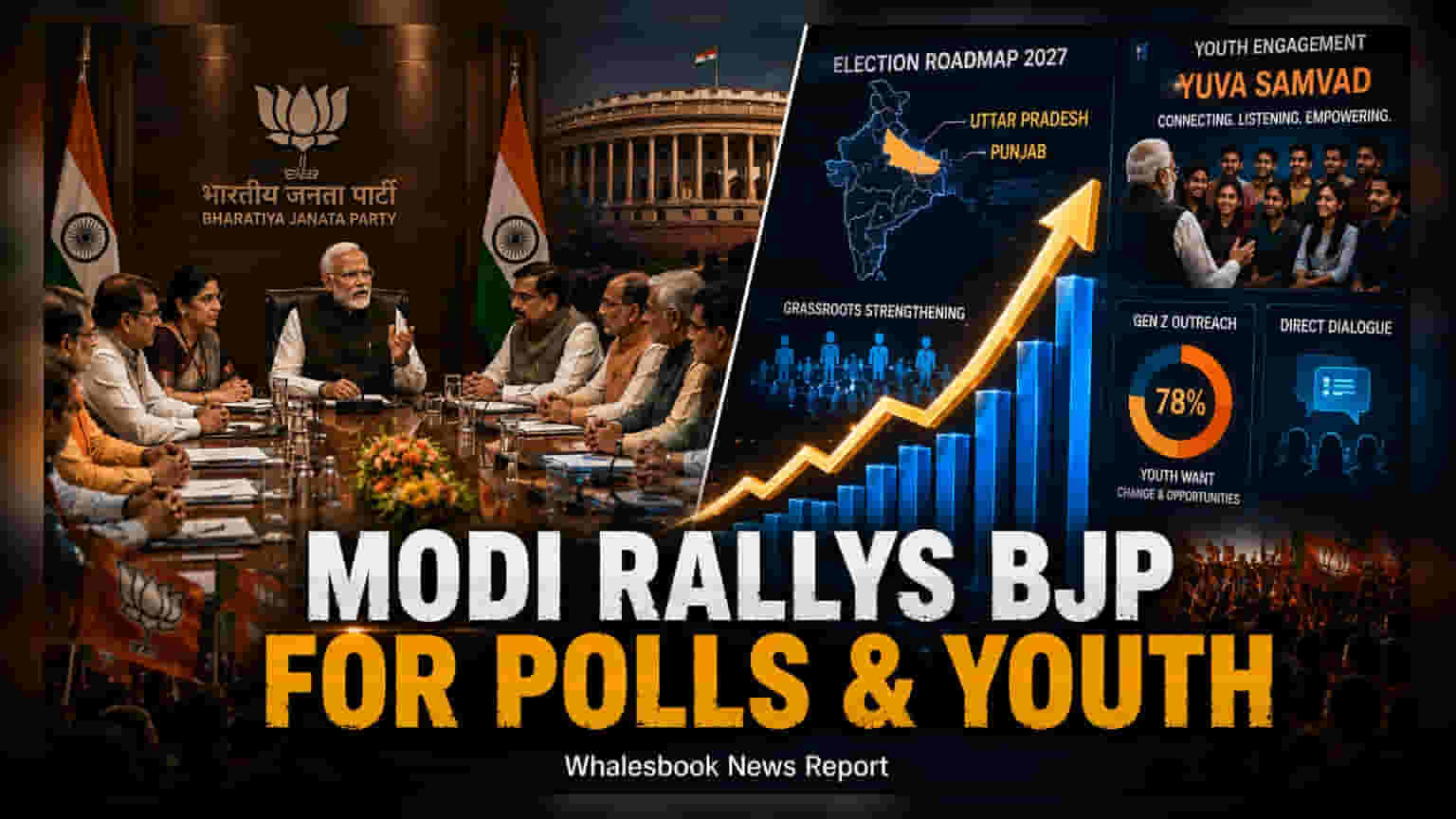
Prime Minister Narendra Modi met with the newly appointed 65-member BJP national office-bearer team to outline a roadmap for upcoming elections. A major focus is the 'Yuva Samvad' initiative, which aims to engage Gen Z voters and address concerns regarding examination irregularities. This organizational restructuring targets the 2027 state Assembly polls and long-term 2029 electoral goals.
Prime Minister Narendra Modi chaired the first meeting with the BJP's newly formed 65-member national office-bearer team in New Delhi. This event marked a significant organizational transition, with 51 new members joining the leadership under BJP National President Nitin Nabin. The discussions centered on structural changes and voter outreach strategies ahead of key state elections.
Youth Engagement and Strategy
A critical outcome of the meeting was the launch of 'Yuva Samvad', a targeted outreach program for Gen Z. A dedicated team of senior leaders, including Smriti Irani, Vinod Tawde, Harsh Sanghavi, and OP Choudhary, has been assigned to lead these efforts. This initiative is designed to establish direct communication with younger citizens, specifically addressing grievances related to recent examination irregularities that have been a subject of public debate. The party aims to use this dialogue to better understand the concerns of younger demographics and refine its communication strategy.
Election Preparedness and Organizational Review
The meeting also established the party's electoral roadmap for the 2027 state Assembly elections, with a specific focus on Uttar Pradesh and Punjab. Strengthening the organizational structure at the grassroots level was identified as a priority for the next phase. The party leadership intends to use these review meetings to ensure alignment between local cadres and national goals as they prepare for both state-level polls and the subsequent 2029 Lok Sabha elections.
Context and Market Perspective
The emphasis on youth engagement reflects an increasingly competitive political landscape where opposition parties are also intensifying their focus on younger demographics. For policy analysts and those tracking the political environment, these organizational moves signal the party’s intent to address social and economic concerns that can influence long-term governance stability. The effectiveness of these outreach programs in shaping public sentiment will be a key factor to watch, as the party navigates the challenges of balancing organizational reform with electoral performance. The next steps will involve follow-up reviews with state presidents to operationalize these strategies across different regions.