

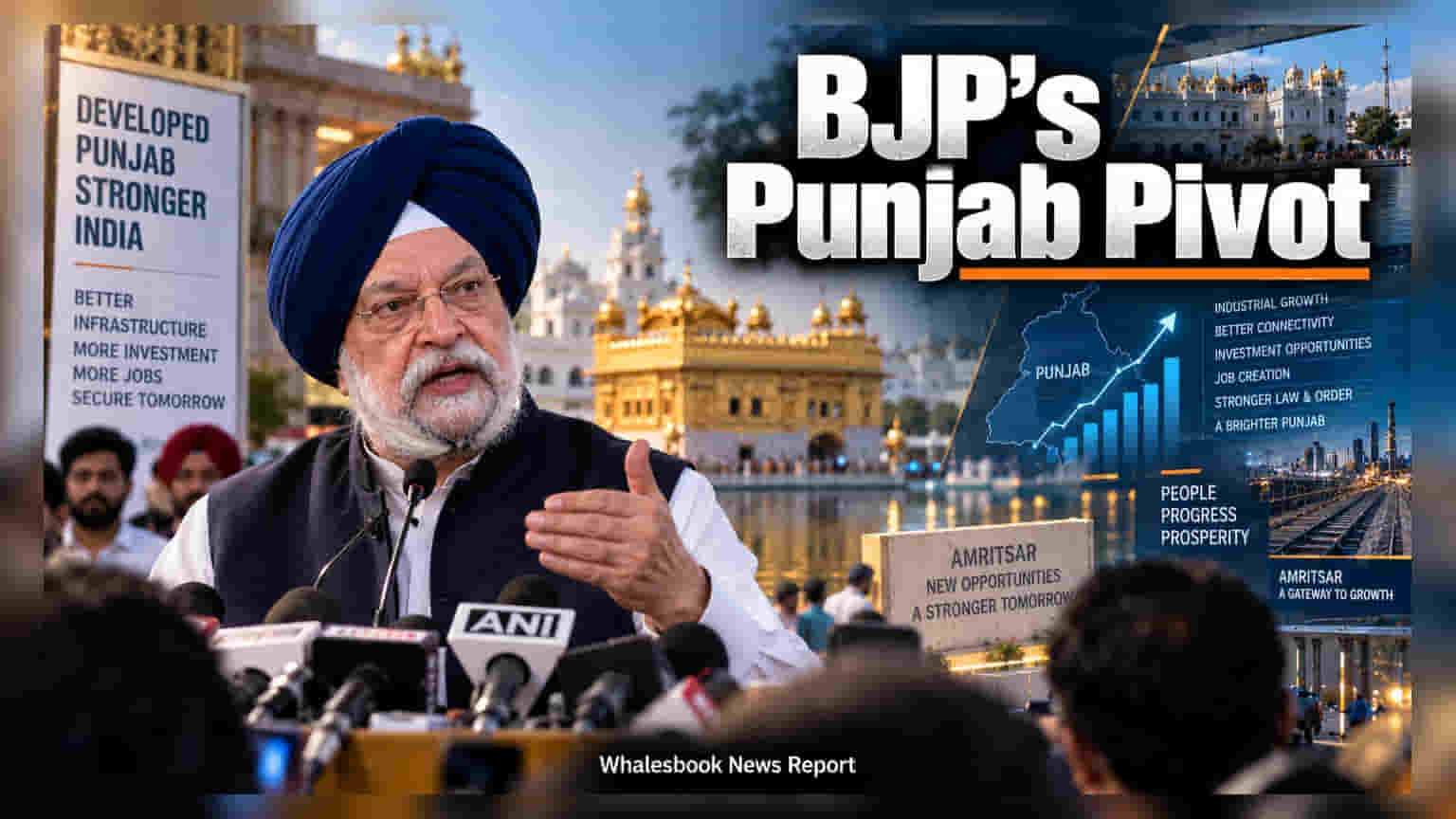
Union Minister Hardeep Singh Puri has stated the BJP will no longer accept junior partner status in Punjab, signaling a strategic shift for the 2027 elections. The party plans to prioritize industrial and infrastructure development in Amritsar to stimulate regional growth. Investors watch regional political shifts closely, as changes in state governance often influence infrastructure priorities and the overall business environment.
The Bharatiya Janata Party (BJP) has signaled a significant change in its political strategy for Punjab, moving away from past coalition arrangements. During a recent visit to Amritsar, Union Minister for Petroleum and Natural Gas Hardeep Singh Puri clarified that the party is no longer open to being a junior partner in any political alliance within the state. He specifically noted that the legacy 22-seat sharing formula is now considered obsolete, setting the stage for a new electoral approach leading into the 2027 assembly elections.
Industrial Focus in Amritsar
Beyond the political shift, the BJP is placing a strong emphasis on the industrial and economic development of Amritsar. The minister held discussions with local entrepreneurs and business leaders to identify specific infrastructure gaps and challenges. A core point of discussion was the lack of integration between local units and central government schemes, which has hindered the economic potential of the region. Amritsar, with its strategic location near the international border, is being viewed as an under-utilized economic hub. The administration has committed to prioritizing these issues to streamline business operations and improve the investment climate in the area.
Governance and Law and Order
The Minister also addressed the state's current administrative landscape, criticizing the Aam Aadmi Party (AAP) government led by Bhagwant Mann. He characterized the current law and order situation as a primary hurdle for development, citing concerns regarding public insecurity and rising incidents affecting police stations. From an economic perspective, the BJP is positioning its proposed 'double engine' governance model as a necessary step to bring central-level support to the state's development, arguing that the current political environment is failing to foster stable growth.
Energy Policy and Macro Stability
In his capacity as the Union Petroleum Minister, Hardeep Singh Puri defended the central government's management of domestic energy costs. He emphasized that despite significant volatility in global energy markets over recent months, the central administration has acted to shield the domestic market from the sharp price spikes seen in other major economies like the United States and Canada. The government maintains its focus on keeping fuel prices stable while simultaneously supporting job creation through large-scale initiatives such as the 'Rozgar Mela'. For investors, the stability of macro policies remains a key monitorable as the political climate in the state shifts toward the next electoral cycle.