

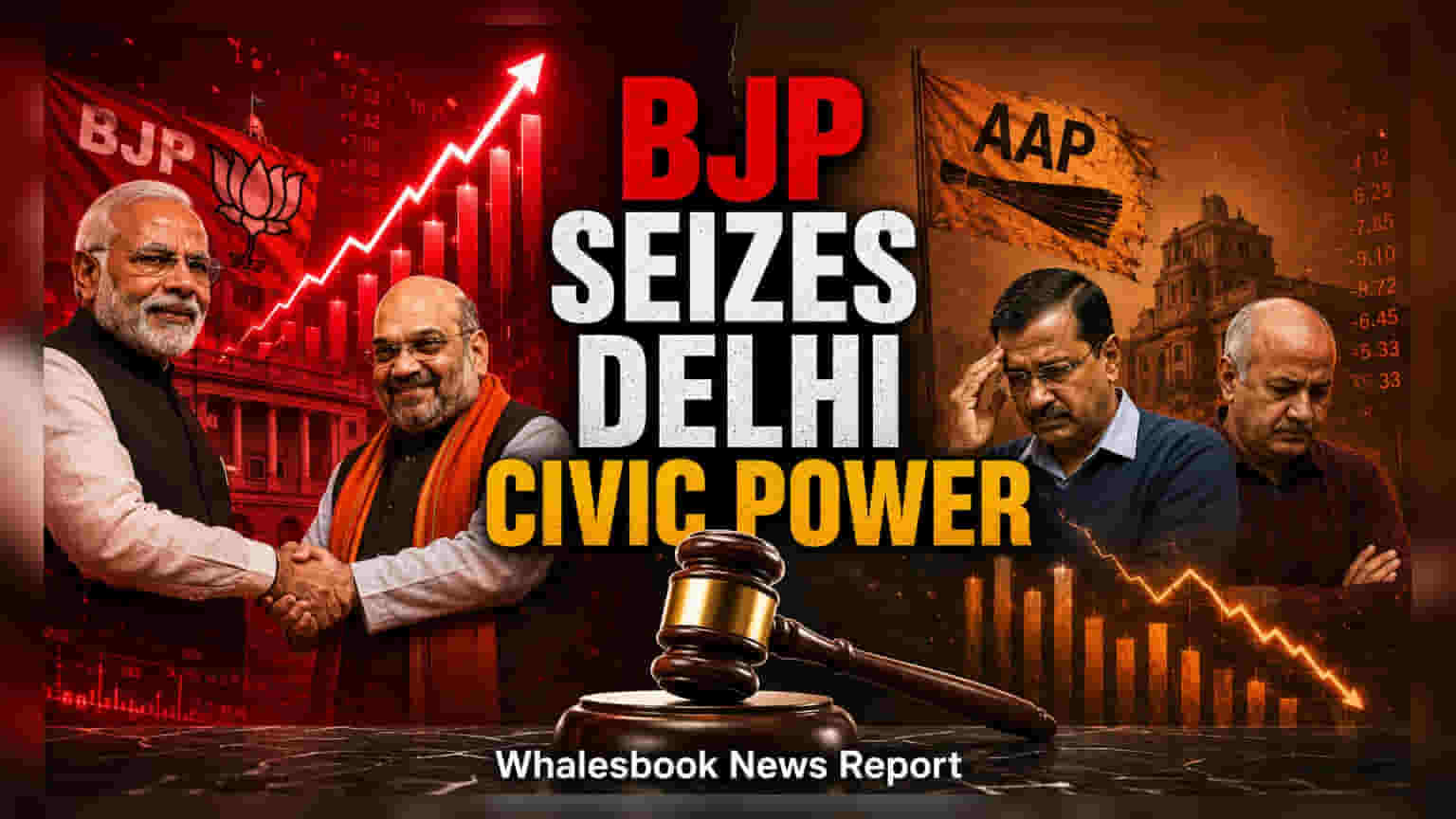
The Bharatiya Janata Party has won 10 of 12 ward committee chairperson posts and gained a dominant 12-seat majority on the 18-member MCD Standing Committee. This victory increases the party's control over the civic body's financial approvals, contracts, and major infrastructure policy decisions in Delhi.
The Bharatiya Janata Party (BJP) has significantly strengthened its administrative and financial hold over the Municipal Corporation of Delhi (MCD) following recent ward committee and Standing Committee elections. By securing chairperson posts in 10 out of 12 municipal zones, the party has established a firm leadership position across the city's civic structure.
Impact on Financial Governance
The most important shift from this election is the composition of the Standing Committee, which serves as the primary financial decision-making body for the MCD. With the recent results, the BJP now holds 12 out of the 18 total seats on this committee, while the Aam Aadmi Party (AAP) holds the remaining six.
This outcome is significant for stakeholders because the Standing Committee wields final authority over critical municipal functions. It is responsible for approving major contracts, setting policies, and clearing civic project proposals that exceed Rs 5 crore. With an expanded majority, the BJP can now exert greater influence over the approval process for these large-scale expenditures and administrative policy changes.
Zone-Level Performance
The BJP’s electoral success spanned multiple key zones, including Najafgarh, Shahdara South, Shahdara North, South, Keshavpuram, Narela, Civil Lines, City SP, Central, and West. In contrast, the AAP secured the chairperson positions in the Rohini and Karol Bagh zones. Some of these contests, particularly in the South Zone, were decided by narrow margins, with the BJP winning 12-10 in that specific region.
Political Context and Allegations
The election process saw public disagreement between the primary political rivals. AAP leadership alleged that the Congress party supported the BJP in the South Zone, questioning the role of smaller parties in the outcome. In response, Congress representatives denied these claims, suggesting that the focus should remain on the internal performance of the primary contesting parties rather than shifting responsibility to others.
For investors and observers tracking Delhi’s urban development, the next monitorable will be how this committee composition affects the speed and direction of new infrastructure contracts. The ability of the MCD to clear long-pending financial proposals or shift priorities toward new civic projects will depend on the functioning of this newly consolidated Standing Committee in the coming months.