

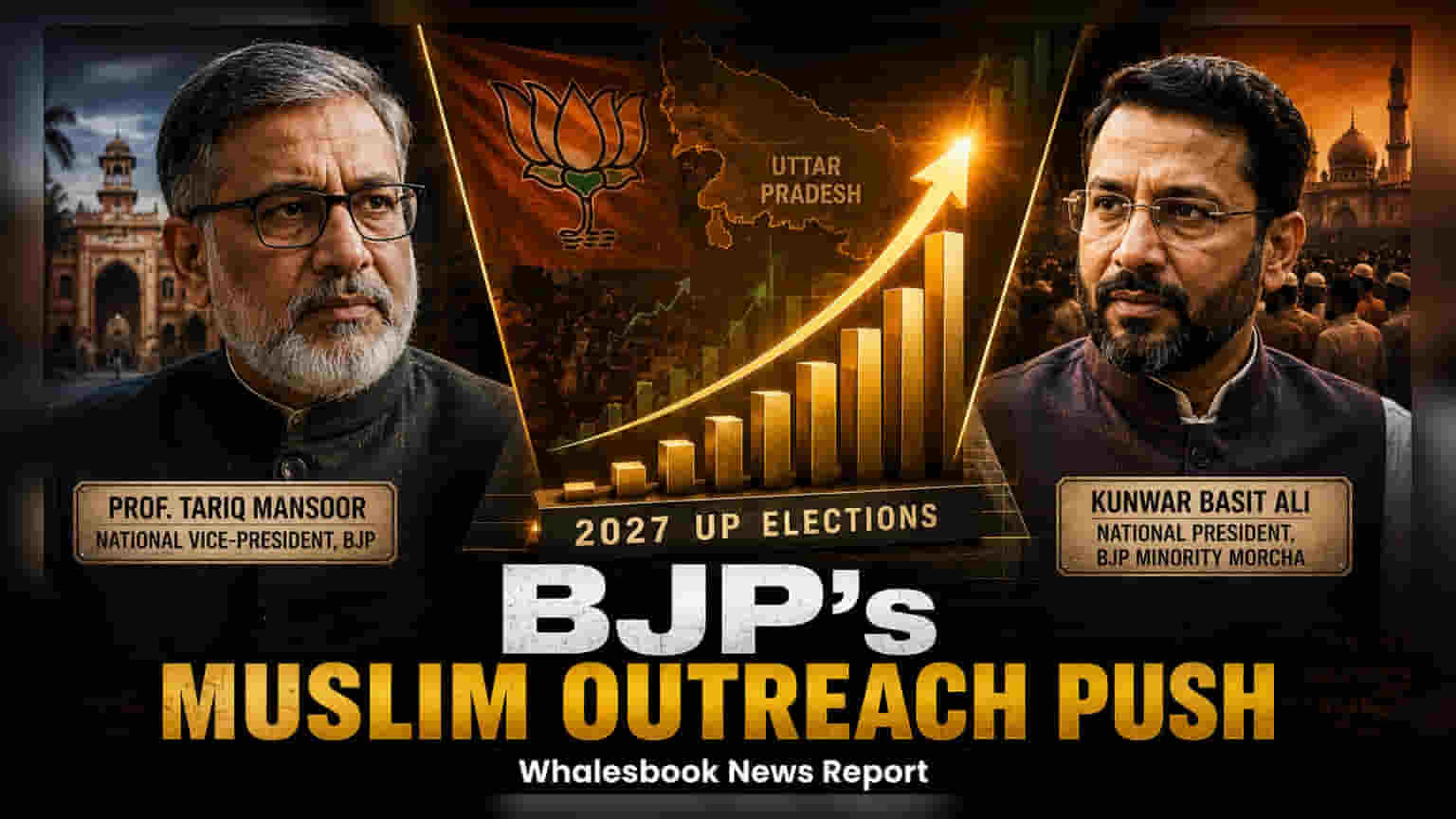
The Bharatiya Janata Party (BJP) has named Professor Tariq Mansoor and Kunwar Basit Ali to key national roles in a recent organisational reshuffle. These appointments are part of the party's strategic efforts to deepen its engagement with the Muslim community, particularly Pasmanda groups, ahead of the 2027 Uttar Pradesh Assembly elections.
The Bharatiya Janata Party (BJP) has announced a significant organisational reshuffle under party president Nitin Nabin, focusing on key leadership appointments from Uttar Pradesh. As part of this exercise, the party has appointed two prominent Muslim leaders to its national team, signaling a renewed strategic focus on voter outreach ahead of the 2027 Uttar Pradesh Assembly elections.
Professor Tariq Mansoor, the former Vice-Chancellor of Aligarh Muslim University (AMU), has been retained as a national vice-president of the party. His continued presence at the national level is seen by political analysts as an effort to maintain a bridge between the party and specific segments of the Muslim community, leveraging his academic and public background. Alongside him, Kunwar Basit Ali, a seasoned organisational leader from Meerut, has been elevated to the position of national president of the BJP Minority Morcha.
These appointments are closely tied to the party's broader political strategy in Uttar Pradesh. The state remains a crucial battleground, and these moves highlight an intensified effort to engage with the Pasmanda, or backward, sections of the Muslim community. By placing leaders with roots in these demographics into national roles, the party aims to strengthen its grassroots presence and broaden its appeal.
It is important for readers to note that political parties, unlike publicly traded companies, do not have share prices, quarterly financial results, or market caps. However, political shifts and the strategic priorities of major parties often influence policy, governance, and the overall economic environment. Political analysts and those tracking policy changes often monitor these organisational shifts as they provide early signals regarding the party's electoral focus, social policy priorities, and potential legislative agendas.
For those observing the political landscape, the primary monitorables will be how these leaders manage their new roles and whether their outreach efforts translate into broader support during the 2027 state elections. The party’s effectiveness in implementing its social outreach programs and managing its organisational structure in poll-bound states will be key updates to watch as the election cycle progresses.