

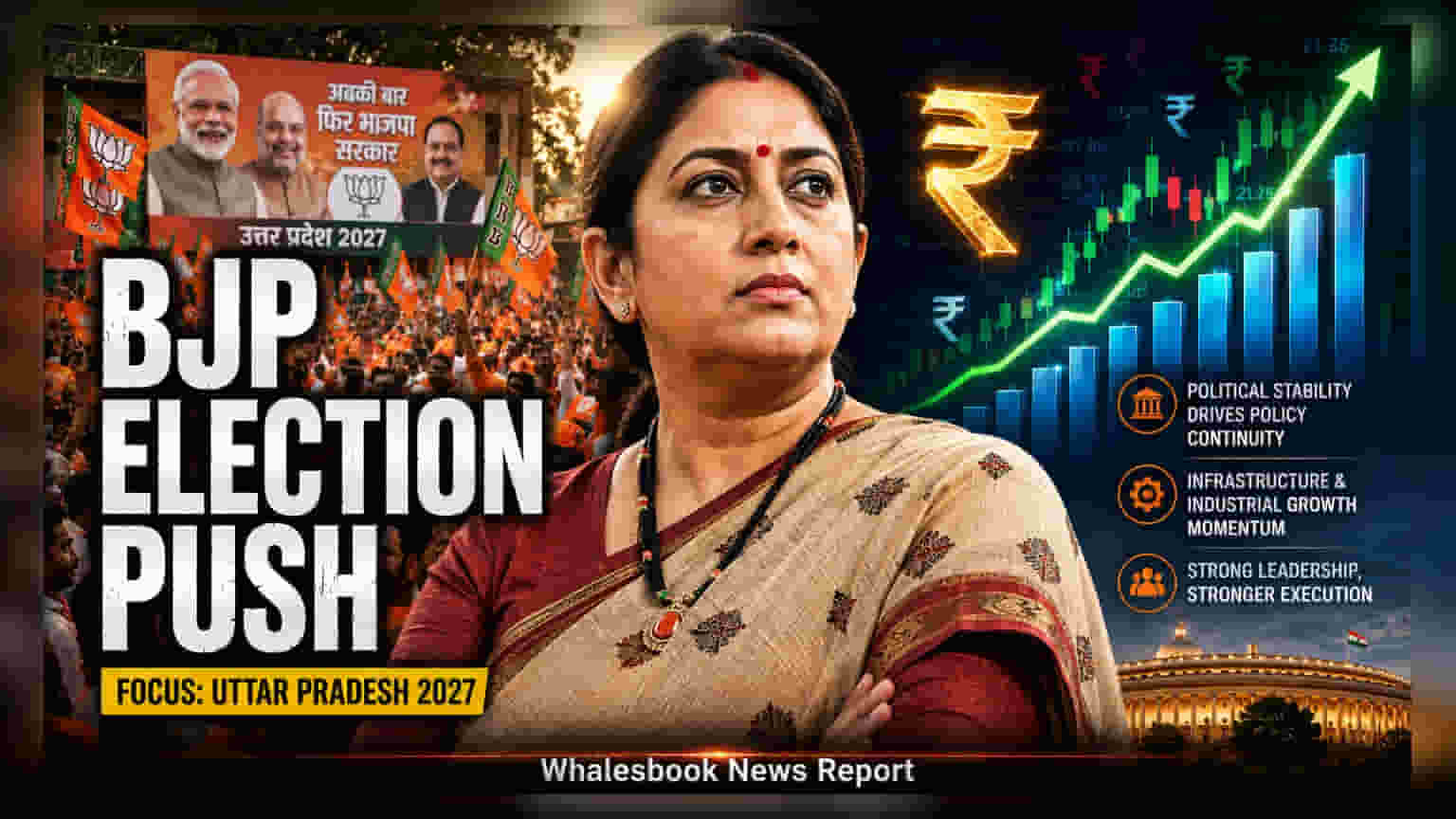
The Bharatiya Janata Party has implemented a significant organizational restructuring under President Nitin Nabin. Former Union Minister Smriti Irani has been appointed as a National General Secretary, while Ram Madhav and Piyush Goyal have taken on the roles of National Vice President and National Treasurer, respectively. This realignment is widely seen as a strategic step to strengthen party operations ahead of the 2027 state assembly elections, particularly in Uttar Pradesh.
The Bharatiya Janata Party (BJP) has announced a major reshuffle of its central leadership team, marking a strategic shift in its organizational structure. The move comes as the party looks to consolidate its position ahead of critical state assembly elections slated for 2027. Under the leadership of Party President Nitin Nabin, the changes involve the return of high-profile leaders to active roles within the party's central command.
Former Union Minister Smriti Irani has been reinstated as a National General Secretary. In this role, she is expected to spearhead organizational efforts with a specific focus on Uttar Pradesh, a state crucial to the party's electoral strategy. The restructuring also includes the appointment of veteran leader Ram Madhav as a National Vice President and Piyush Goyal as the National Treasurer.
For investors and market observers, organizational stability within the ruling political framework is often associated with the continuity of policy decisions. Market sentiment frequently tracks electoral preparedness in large states like Uttar Pradesh, as it can influence the pace of infrastructure projects, industrial development, and legislative reforms. A strong, cohesive party structure is generally viewed by analysts as a factor that may support clearer policy execution and inter-departmental coordination.
The party is currently navigating a period of adjustment following the 2024 Lok Sabha election results. The strategic realignment reflects an effort to address previous electoral challenges and refine the party's communication and mobilization strategies. While these changes are internal, the effectiveness of the new team in managing state-level dynamics will be an important factor to observe, as it impacts the implementation of central schemes and development initiatives at the grassroots level.
Investors and stakeholders typically monitor these developments for cues on political stability and the potential for policy consistency. The focus for the party moving forward will be on integrating these experienced leaders into the existing organizational framework to regain momentum. The market will likely watch for how these leadership changes influence upcoming policy announcements and the government's approach to state-level administrative and economic agendas as the 2027 elections approach.