

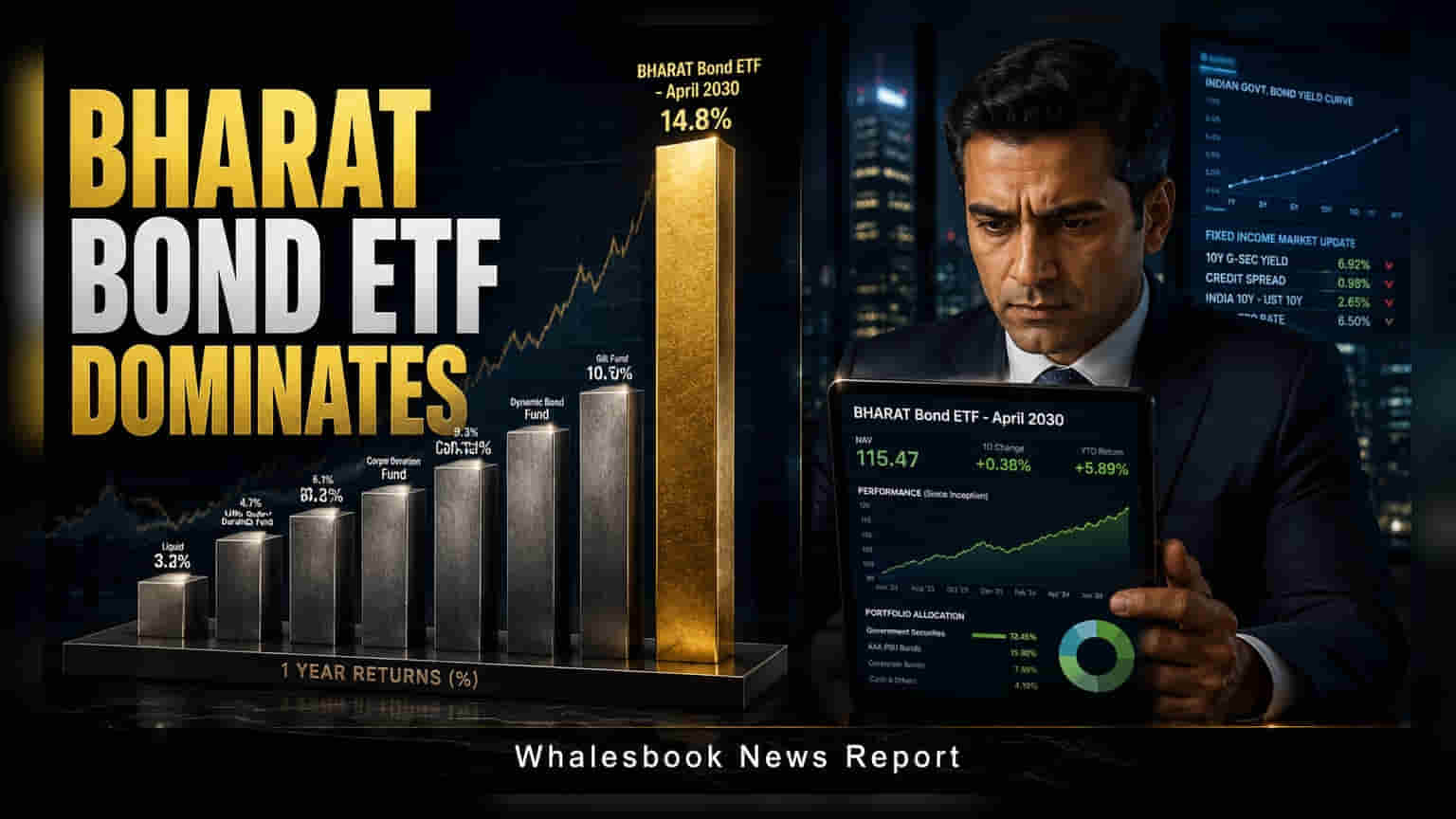
The BHARAT Bond ETF maturing in April 2030 has secured the top spot among debt ETFs with a 5.8% one-year return. With an asset base of nearly Rs 24,868 crore, the fund remains a popular choice for those seeking predictability. Investors should, however, consider interest rate sensitivity and align the fund’s maturity with their personal investment timeline.
The BHARAT Bond ETF maturing in April 2030 has emerged as the top performer in the debt ETF category, delivering a one-year compound annual growth rate of 5.8 percent. As of mid-August 2026, this fund continues to be a significant player in the market, managing an asset base of approximately Rs 24,868 crore. Its performance stands out, having outperformed its benchmark index by 2.8 percentage points over the last year.
This fund is a target maturity ETF, which means it holds a portfolio of high-quality, AAA-rated government and public sector company bonds until they mature. Unlike traditional mutual funds that may actively trade bonds to generate returns, this structure provides more predictability for investors who plan to hold the investment until the target date. The fund’s appeal is further supported by its low expense ratio, which is just 0.01 percent, keeping more of the returns in the investor's pocket.
While the April 2030 series is leading on a one-year basis, market performance data shows that returns can vary depending on the timeframe. For instance, other series like the BHARAT Bond ETF maturing in April 2033 have delivered stronger results over shorter one-month and three-month windows. This indicates that investors should look beyond just the top-performing fund of the moment and consider which maturity date best fits their specific goals.
It is important for investors to understand the risks involved with this type of investment. Because the fund invests in fixed-income securities, it is sensitive to changes in market interest rates. When interest rates rise, bond prices typically fall, which can impact the net asset value of the ETF. While the underlying assets are highly rated, they are not immune to broader market fluctuations. Additionally, there is a small risk of tracking error, where the fund’s returns might not perfectly match the benchmark index due to fees and cash management.
Investors currently holding or considering these ETFs should focus on their individual time horizons. Since these funds are designed to mature on specific dates, they are generally most effective for those whose financial goals align with those maturity windows. Monitoring the fund’s expense ratio and the overall interest rate cycle in the Indian economy remains a key practice for those managing a debt-heavy portfolio.