

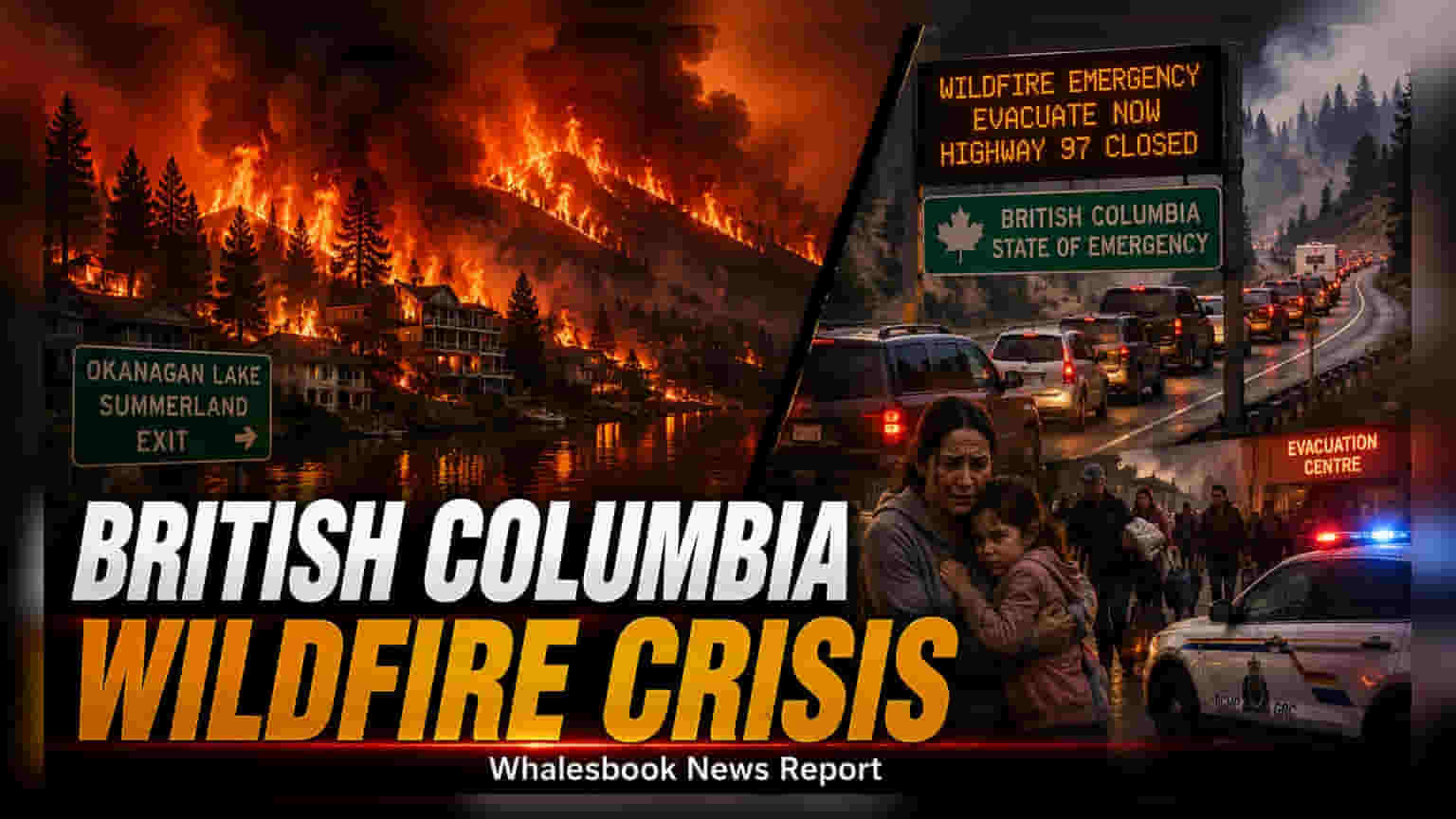
A massive wildfire in British Columbia, Canada, has forced over 20,000 residents to evacuate and resulted in one fatality. The disaster has heavily impacted the Okanagan region, a key hub for Canadian agriculture and wine production. The crisis underscores the growing economic and infrastructure risks posed by climate-driven disasters, which continue to strain emergency resources and regional supply chains.
A severe wildfire emergency is unfolding in the Canadian province of British Columbia, where the 'Bald Range' blaze has forced the evacuation of approximately 20,000 people. The wildfire has caused widespread destruction to residential properties and critical infrastructure, particularly near Okanagan Lake. Authorities have confirmed the death of an 80-year-old woman in the Summerland area, marking a tragic toll as the province battles the disaster.
Economic Impact on the Okanagan Region
The Okanagan region is not just a residential area; it serves as a cornerstone of Canada’s agricultural sector. It is notably the country’s second-largest wine-producing region. The ongoing fire presents significant risks to local vineyards, orchards, and agricultural businesses, which are now facing potential crop losses and operational shutdowns. While the direct financial impact on specific listed corporations may be localized, such events are closely monitored by global commodity analysts and insurance sectors for their broader economic ripples, including potential supply chain disruptions and increased insurance risk premiums.
Emergency Response and Scaling Risks
The provincial government of British Columbia has declared a state of emergency to manage the crisis, which is being amplified by dry, windy conditions. Officials have secured over 1,600 hotel rooms and significant group-lodging capacity to accommodate the displaced population. The response effort has expanded to include international support, with crews from Mexico assisting local firefighters. Despite these efforts, officials warn that over 100 active wildfires across the province create a high-risk environment. The threat of new ignitions remains a concern due to dry lightning, keeping emergency services and local authorities in a state of high alert.
Monitoring Climate-Related Business Risks
For investors and global market observers, this disaster highlights the tangible risks associated with climate volatility. Beyond the immediate humanitarian tragedy, incidents of this scale can cause sudden, material shocks to regional economies. Market participants often track how governments manage the long-term recovery of impacted infrastructure—such as the vital Highway 97—and the subsequent impact on the cost of doing business in high-risk zones. The primary monitorable in the coming weeks will be the containment status of the fire and the government's assessment of the structural damage to the local economy and essential transportation links.