 Whalesbook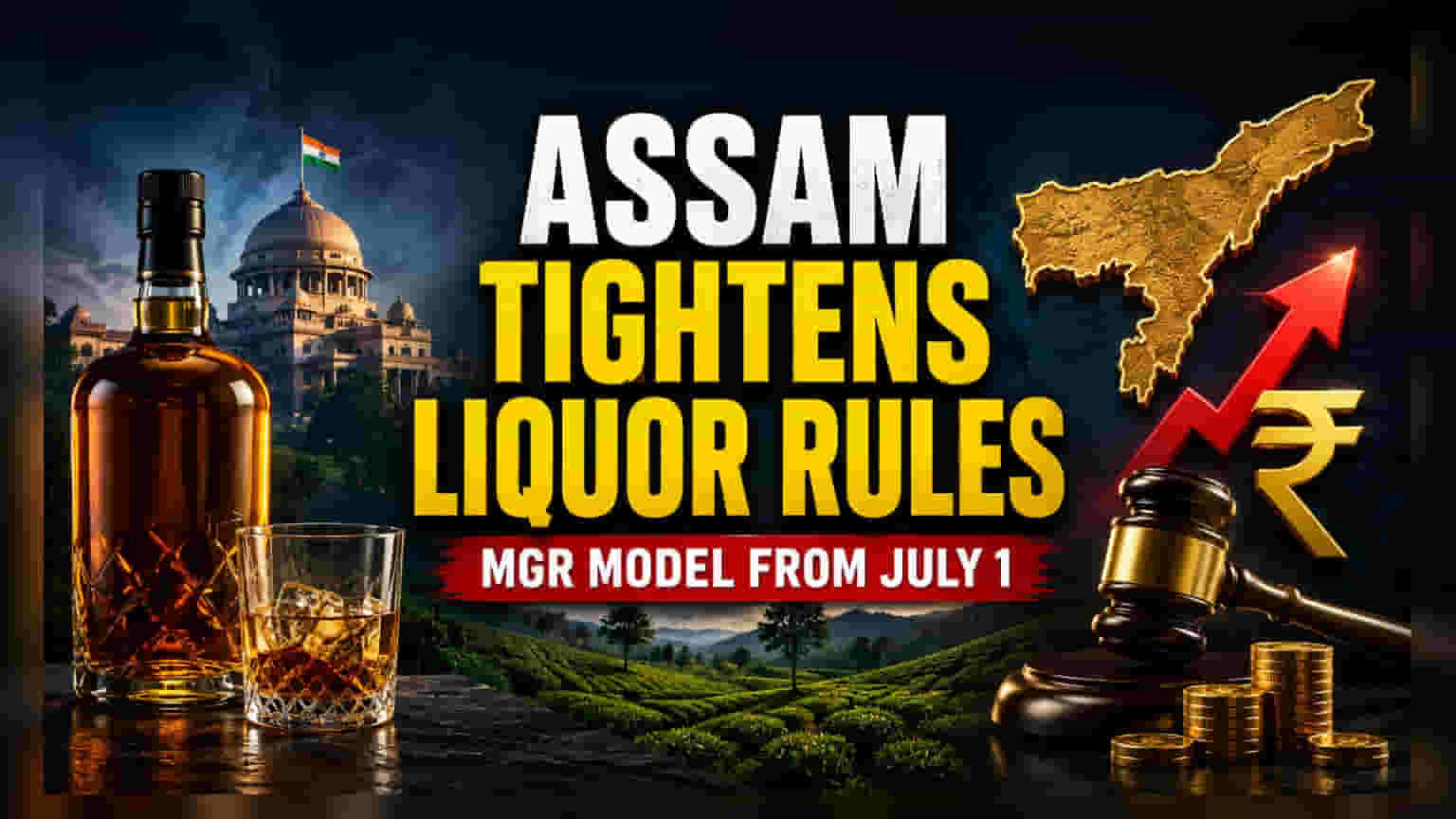


Assam has notified the Excise (Amendment) Rules, 2026, introducing a 'Minimum Guaranteed Revenue' for license holders. This policy change is expected to increase liquor prices by 7-12% starting July 1, impacting both retail and wholesale operations. Investors should monitor how these regulatory costs and new operational rules, such as stricter bottle size mandates for 'On' licensees, affect profit margins and consumer demand in the region.
What Happened
The Assam government has officially notified the Assam Excise (Amendment) Rules, 2026, introducing significant structural changes to the state's liquor licensing and revenue collection framework. Effective July 1, 2026, the state will implement a 'Minimum Guaranteed Revenue' (MGR) model for all wholesale and retail liquor license holders. Under this new mandate, licensees are required to deposit a fixed revenue amount to the state government in four quarterly installments. The specific rates for these installments have been set at 22%, 25%, 27%, and 26% across the financial year. Failure to meet these payments will attract a 10% penalty on outstanding dues, along with a monthly interest charge of 1.5%.
Impact on Pricing and Business
Industry analysts anticipate that these additional financial obligations on dealers and retailers will lead to a price increase of 7% to 12% for consumers across the state. This move is part of a broader government effort to regulate the sector more strictly and improve state revenue generation. Beyond the MGR, the amendment also includes operational restrictions. 'On' license holders, such as bars and restaurants, are now prohibited from selling or stocking sealed liquor bottles smaller than 750 ml. Additionally, the government has introduced a new category called 'Assam Made Liquor' to prioritize locally produced beverages and provide legal support to indigenous communities producing traditional heritage drinks.
How Investors May Read This
For investors, the primary concern with such regulatory changes is the impact on profit margins and sales volume. Historically, when excise duties or license fees rise, companies often pass these costs to the consumer. While this helps maintain margins, a price increase of 7-12% can sometimes lead to a decline in sales volume, particularly if consumers choose to switch to lower-priced segments or reduce consumption. The requirement for 'On' licensees to only sell 750 ml bottles is also a notable operational shift, as it could change the purchase behavior of customers who might prefer smaller quantities. Investors should watch whether liquor brands and retailers can successfully pass these cost increases to consumers without causing a significant drop in demand.
Peer and Sector Context
The Indian alcoholic beverage industry is largely regulated at the state level, making such policy shifts common. State governments frequently adjust excise policies to balance the need for tax revenue with the goal of regulating alcohol consumption. Recent policy trends in other states have seen similar moves, where governments rely on increased license fees and reserve prices rather than just simple duty hikes. These changes often favor organized players who have the scale to absorb compliance costs, while smaller, unorganized retailers may face higher pressure. The success of the 'Assam Made Liquor' category will also be an interesting space to watch, as it could alter the competitive landscape for national brands within the state.
What Investors Should Track
The most important monitorable for investors will be the volume growth in the coming quarters. Specifically, stakeholders should track whether demand remains stable following the price hike on July 1. Other key areas to watch include management commentary on the impact of the MGR on distributor health, the speed at which the market adjusts to the new bottle size restrictions, and any changes in the competitive positioning of major brands versus the new 'Assam Made Liquor' category. Monitoring the enforcement of the new rules and any further amendments to the excise policy will also be crucial for gauging long-term stability in the state's liquor market.