

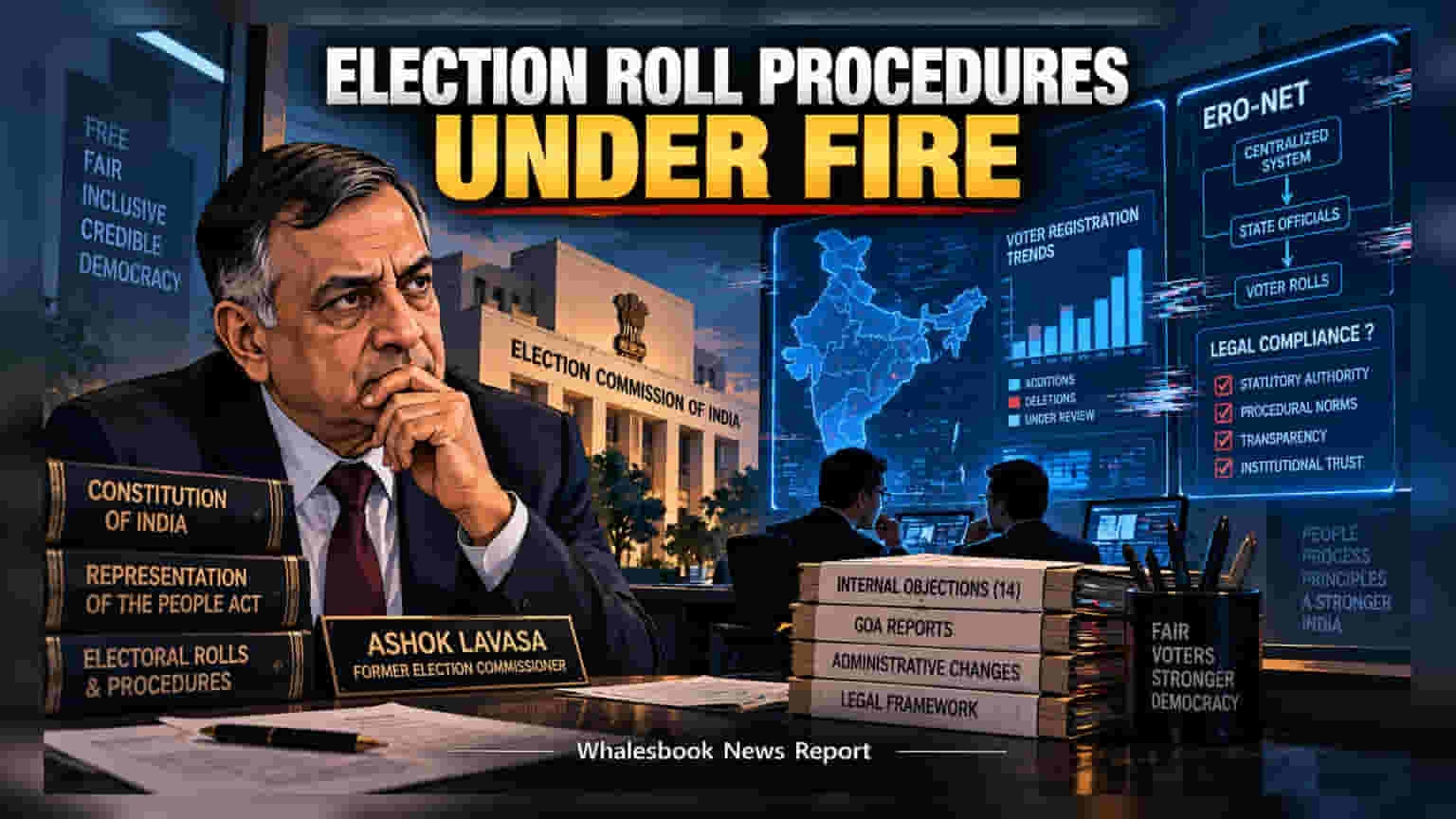
Former Election Commissioner Ashok Lavasa has raised legal concerns over the Election Commission's recent Special Intensive Revision processes. His critique focuses on the impact of ERO-Net centralization and a lack of transparency regarding internal objections between current commissioners. These issues highlight potential governance risks in electoral management that affect institutional credibility.
Former Election Commissioner Ashok Lavasa has publicly questioned the legal adherence of the Election Commission’s recent Special Intensive Revision processes. He raised concerns regarding administrative changes, specifically the move toward centralization in voter roll management, which he argues may bypass established legal frameworks.
At the center of the debate is the ERO-Net system, a centralized platform used for managing electoral registration. Under Indian law, Electoral Registration Officers are granted exclusive statutory authority to include or remove names from the voter lists. Lavasa warned that if technical centralization prevents these officers from independently exercising their mandated duties, it could create procedural lapses. He highlighted specific reports from Goa, where officials were allegedly blocked from adding verified eligible voters to the final electoral rolls, raising questions about whether administrative efficiency is overriding statutory requirements.
Transparency regarding internal decision-making has also come under scrutiny. Reports suggest that current Election Commissioners Sukhbir Singh Sandhu and Vivek Joshi raised fourteen formal objections over a ten-month period. Lavasa argued that the commission must clarify whether these internal communications were genuinely considered in the decision-making process or ignored. He noted that the commission is required to explain why such internal disagreements were directed toward the Cabinet Secretary, as this is an unconventional step for the poll panel.
The lack of public disclosure regarding these internal communications is a primary driver of skepticism. Lavasa maintained that without clear documentation showing how these decisions were reached, the institution risks damaging its credibility. The current situation highlights a need for stronger checks and balances to ensure that administrative actions remain consistent with legal mandates.
The key monitorable for observers and the public will be whether the Election Commission provides a formal response or clarification regarding the internal disputes and the specific legal concerns raised about the Special Intensive Revision. Ongoing transparency in how these disagreements are resolved will remain essential to maintaining institutional trust.