

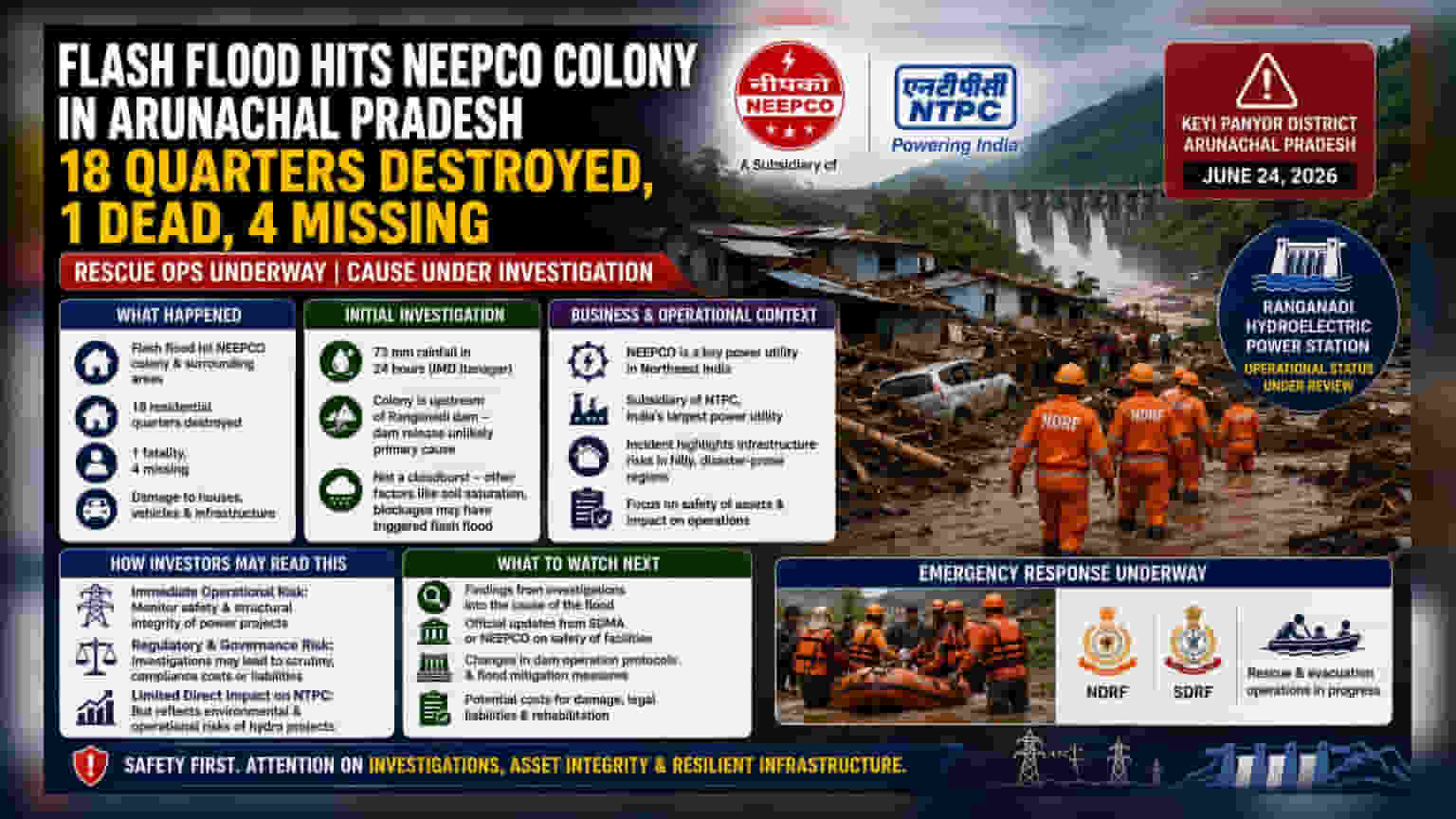
A flash flood in Arunachal Pradesh's Keyi Panyor district destroyed 18 residential quarters belonging to NEEPCO, a subsidiary of the state-owned power giant NTPC. The incident resulted in one casualty and four missing persons. While local concerns initially pointed to dam operations, meteorological data currently suggests natural causes are under investigation. Investors may monitor potential infrastructure costs or regulatory updates regarding dam safety protocols.
What Happened
A flash flood struck the NEEPCO colony and surrounding areas in Arunachal Pradesh’s Keyi Panyor district on June 24, 2026. The disaster resulted in the destruction of approximately 18 residential quarters owned by the North Eastern Electric Power Corporation (NEEPCO), a wholly-owned subsidiary of NTPC Limited. The flood caused one fatality and left four individuals missing, alongside significant damage to nearby houses, vehicles, and local infrastructure. Emergency response teams from the SDRF and NDRF have been deployed to manage rescue and evacuation operations.
The Business And Operational Context
NEEPCO is a key player in the power sector in Northeast India and is a subsidiary of NTPC, one of India's largest power utilities. The Ranganadi Hydroelectric Power Station is located in the vicinity of the incident. The damage to the residential colony highlights the infrastructure risks that power companies face when operating in hilly, disaster-prone regions. While the residential colony was directly hit, the operational status of the nearby Ranganadi project and its impact on the company’s assets are aspects that stakeholders typically assess during such events.
Investigating The Cause
Initial reports from local residents speculated that the discharge of water from the Ranganadi dam gates could have caused the flood. However, the geographic layout and meteorological data provide a different perspective. NEEPCO’s colony is situated upstream of the Ranganadi dam, making a direct release of water from the dam gates unlikely to be the primary cause of flooding in that specific upstream location. Furthermore, data from the India Meteorological Department (IMD) in Itanagar recorded 73 mm of rainfall in the 24 hours prior to the event. This does not align with the definition of a cloudburst, which requires significantly higher rainfall intensity, suggesting other factors such as localized extreme weather, soil saturation, or natural blockages in mountain channels may have contributed to the sudden surge of water.
How Investors May Read This
For investors, the primary concern in such events is usually two-fold: immediate operational disruption and potential long-term infrastructure or governance risks.
First, investors may monitor official updates regarding the safety and structural integrity of the power projects in the region. If investigations indicate that infrastructure design or maintenance contributed to the severity of the flooding, it could lead to regulatory scrutiny or increased compliance costs.
Second, while such incidents often have limited direct impact on the massive, pan-India operations of a company like NTPC, they do represent a form of environmental and operational risk that is inherent to hydroelectric projects. The focus will be on the company's disaster management response, the extent of the damage to its assets, and any potential legal or rehabilitation costs arising from the incident.
What To Watch Next
The most important monitorables are the findings from the ongoing investigations into the cause of the flood. Investors may track any official statements from the State Disaster Management Authority (SDMA) or NEEPCO regarding the safety of their facilities. Additionally, any potential changes in operational protocols for dams in the region, aimed at mitigating future flood risks, will be a key indicator for how the company manages environmental liabilities.