

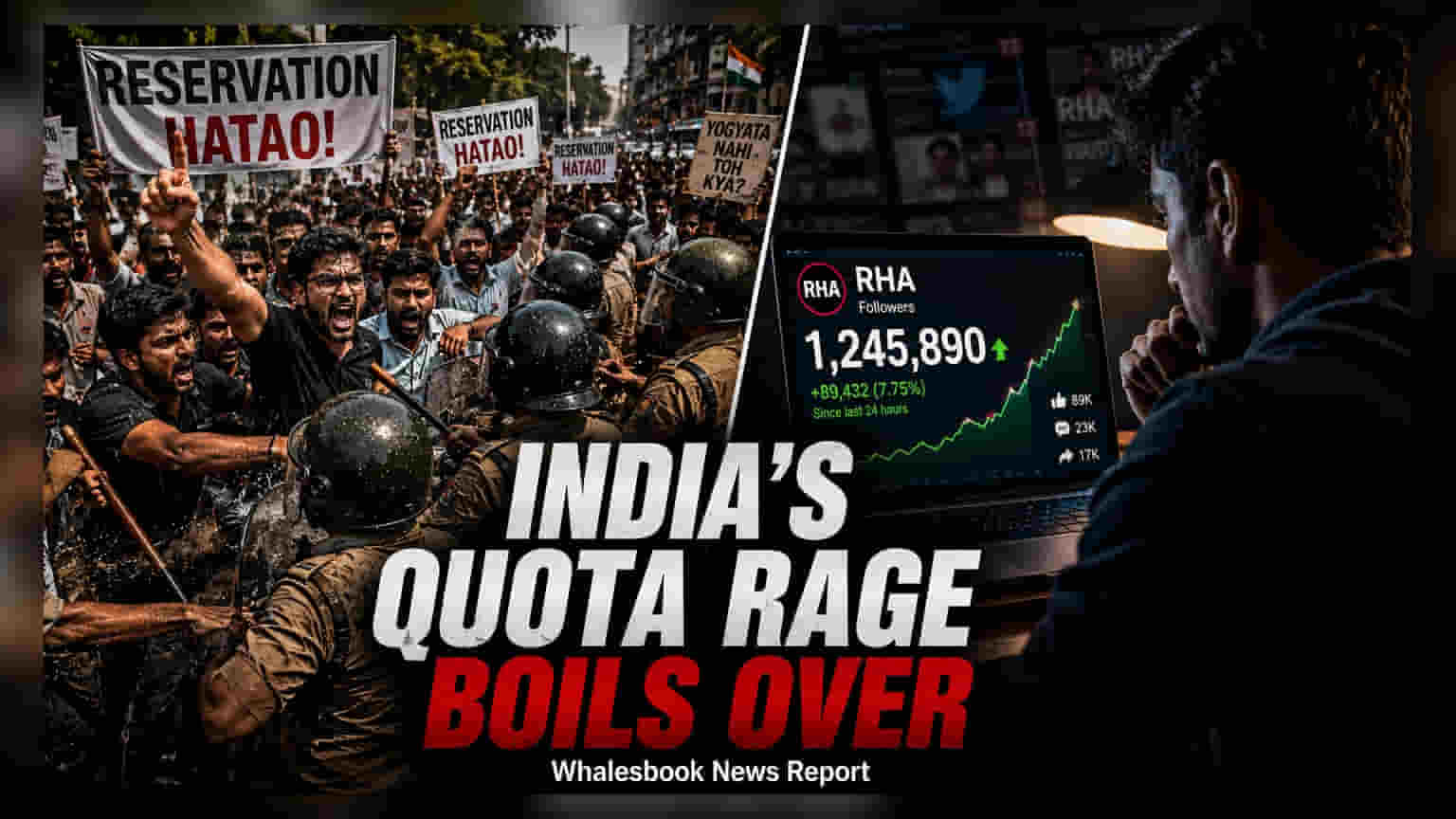
Anti-reservation sentiment is rising, driven by the digital-led Reservation Hatao Andolan and physical protests by the Shri Rajput Karni Sena. Triggered by new UGC equity regulations, these groups are demanding a shift toward income-based policies. The situation presents a growing political challenge, with investors monitoring the potential for increased civil unrest and legislative uncertainty ahead of upcoming assembly elections.
India is experiencing a notable rise in anti-reservation sentiment throughout August 2026, as both online and physical protests gain momentum. The unrest is primarily driven by opposition to the University Grants Commission's (UGC) recent 'Promotion of Equity in Higher Education Institutions' regulations. The movement has split into two parallel tracks: a massive digital campaign and on-ground street demonstrations that have occasionally led to confrontations with law enforcement.
The digital-led movement, known as the Reservation Hatao Andolan (RHA), has seen rapid growth in recent weeks. Data indicates the campaign reached over 5 million followers on Instagram within a week of its emergence in late July 2026. The RHA is advocating for structural reforms to the existing affirmative action framework, specifically calling for a move away from caste-based quotas toward an income-based system. Their proposals include a 'one family, one reservation' policy and a sunset clause for current reservation programs, emphasizing merit-based admissions and recruitment.
Simultaneously, physical protests have intensified, notably in Rajasthan. The Shri Rajput Karni Sena has been at the forefront of the on-ground agitation, organizing events like the 'Savarna Nyay Yatra.' On August 3, 2026, a protest march in Jaipur led by the organization resulted in clashes with police, involving the use of water cannons and lathi-charges. The situation escalated significantly following reports of the death of a protestor, identified as Devraj Singh, a member of the organization, during the events.
From a financial and macroeconomic perspective, investors typically view such developments through the lens of political risk and policy stability. While the protests are not direct market events, the potential for widespread civil unrest or significant policy shifts creates uncertainty. Increased agitation can lead to operational disruptions, such as local internet shutdowns, transport blockades, or regional curfews, which may affect business activities in affected states. Furthermore, with several assembly elections on the horizon, political parties face a difficult balancing act, which may lead to legislative delays or sudden policy changes to address public anger.
The core monitorable for the coming weeks is the government's response to these dual-pronged protests. Markets will track whether authorities prioritize maintaining the current legislative framework or if they initiate talks to address the grievances raised by these groups. Any significant shift in policy regarding educational or employment quotas could have long-term implications for the workforce and the corporate environment, making it a critical area for observers of the Indian political and socio-economic environment to watch.