

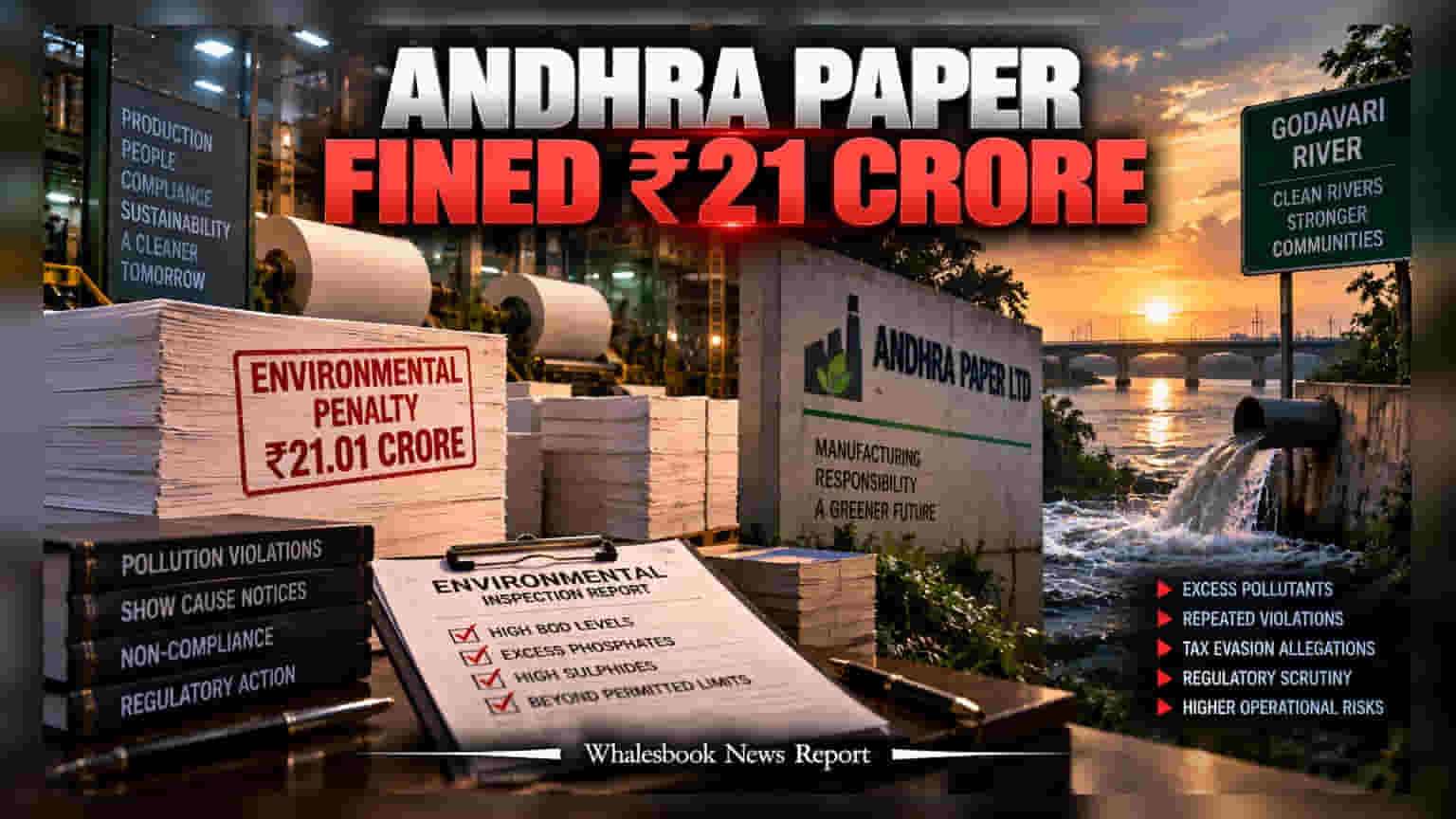
The Andhra Pradesh Pollution Control Board has fined Andhra Paper Ltd ₹21.01 crore for failing to properly treat waste discharge at its plant. This penalty, paired with allegations of unpaid local taxes, increases the regulatory pressure on the company. Investors should monitor how these compliance issues affect ongoing operations at the firm's Kadiyam unit.
Andhra Paper Ltd has been hit with an environmental compensation penalty of ₹21.01 crore by the Andhra Pradesh Pollution Control Board (APPCB). The state regulator imposed the heavy fine after finding that the paper manufacturer repeatedly failed to meet environmental standards, specifically regarding the discharge of treated water into the Godavari River.
The board’s inspection revealed that pollutant levels in the factory's effluent—including Biochemical Oxygen Demand (BOD), phosphates, and sulphides—were significantly higher than the permitted legal limits. Despite receiving multiple show-cause notices and opportunities to correct the discharge issues, the company failed to take the necessary action to fix these gaps, according to the regulator.
Beyond the environmental fine, the company is facing scrutiny on other fronts. Deputy Chief Minister Pawan Kalyan, who was part of the inspection team at the company’s Kadiyam unit, has alleged that Andhra Paper has evaded local taxes amounting to approximately ₹21.34 crore since 2016. This claim adds a significant layer of regulatory pressure, suggesting that the company is currently under intense observation by state authorities.
This incident is not the only operational hurdle the company has faced recently. In May 2026, the same Kadiyam unit experienced a production lockout following an illegal labor strike. The combination of past labor friction and these new regulatory issues raises questions about the stability of the company’s manufacturing operations.
For investors, the immediate impact is the financial cost of the ₹21 crore penalty. However, the more significant risk to monitor is the potential for stricter regulatory actions. If environmental compliance does not improve, the company could face further consequences, such as temporary suspension of operations, seizure of facilities, or even license cancellation. The ongoing tax evasion allegations, if proven, could also lead to additional financial penalties and increased legal expenses. Investors should track future exchange filings and management commentary to see how the company intends to resolve these compliance issues and whether these challenges will result in higher long-term operational costs or impact future profitability.